Posts Tagged ‘Lydia Lunch’

Interview: John Wisniewski

Introduction: Christopher Nosnibor

It’s fair to say that Mars was a band ahead of its time. Formed in 1975, they were early to land on the No Wave noise-rock scene, and they’d called it a day before the scene really broke, and with only a handful of performances under their belts.

The history goes that Mars played live about two dozen times, and never ventured beyond Manhattan. Their first show was at CBGB’s in January 1977; their last one was at Max’s Kansas City on December 10, 1978. Their sole release during their brief existence was a seven inch single, plus a track on the influential No Wave New York compilation, produced by Brian Eno, although a live EP would emerge shortly after they called it a day, and their entire recorded output – which totalled half an hour’s music – would be released a couple of times in the mid ‘80s and in the ‘00s.

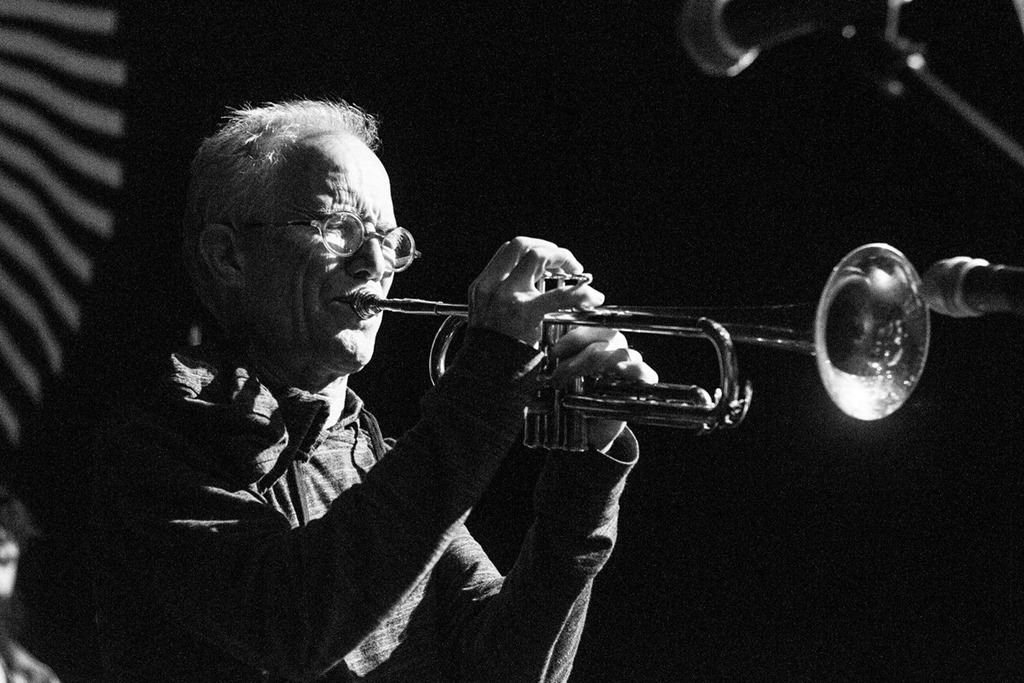
As is often the case, the legacy and influence far exceeds their brief history and scant catalogue, no doubt enhanced by the fact they never reformed. However, while most of the band’s members have disappeared from view, and both co-founder Nancy Arlen (drums) and vocalist Sumner Crane died in the early 2000s, since the end of Mars, bassist Mark Cunningham has remained active, and very much forward-facing in his musical output, most recently with solo albums Odd Songs (2020) and Blue Mystery (2023)

John Wisniewski caught up with Mark Cunningham to ask about Mars and their legacy, his recent releases, and plans for the future.

JW for AA: How did you get involved with music, Mark?

I’ve been playing since I was a kid. my uncle was a jazz drummer and he hooked me up with my first horn, and I played in the school band growing up. and as a teen I picked up guitar and bass to play in cover bands, but when I learned to really play and improvise was at college, surrounded by likeminded rock, free jazz and acid freaks studying avant-garde movements and playing all the time.

Any favorite music artists?

Lots, I grew up in the 60s, out in Jersey, and started going to shows at the Fillmore East in 68. saw a lot of the greats there, as well as little known strange psychedelic bands. I ate it all up, not discriminating too much, but of course Hendrix, The Doors, Jefferson Airplane, Zeppelin and a few others were extra special, and Electric Miles, who I first saw in 69 and showed me the future. Later at college I discovered the Velvets, Eno, Bowie and all the free jazz greats. I still followed Miles though.
0018927842_10

When did you join MARS, and what was the idea for how MARS should sound? Did you improvise?

Mars came together in late 75, a chance meeting that led to a year of working out our own way of expression before playing shows. At first we took the Velvets as a model, even jammed on some of their songs, and from there started making our own, somewhat similar frameworks and improvising on them. But we weren’t free improv. The character of the song and lyrics always came first. This has stayed with me through all my bands, although i do play 100% free in some duos and trios dedicated to that.

Why did you want to form your own record labels?

The first and most serious venture was Hyrax Records, which I managed to make happen in 1980 to release the John Gavanti LP and a Don King cassette. In those days it was possible to get distribution in the States and we sold quite well. But it still became a hassle and an expense to keep it going. DIY labels started getting popular in the 80s, when cassette recording and reproduction got cheap and easy. And in the 90s with CDRs. So I did some of that, especially with our duo Convolution, with my partner Silvia Mestres. We put out all our albums on CDR. Of course streaming killed that off completely. Nowadays all you have to do is put it out on Bandcamp and / or use the streaming platforms, which suck but do get it out there. So I do that with the more experimental stuff which we record on the cheap.

What were audience reactions to the music of Mars?

We had a pretty loyal and very vocal fan base in the city, which you can hear on some of the live stuff I’ve curated through feeding tube records and bandcamp. We always managed to draw enough of a crowd to keep things moving, even playing once or twice a month in the same clubs, which we did in Manhattan for two years, in *77 and *78. Unfortunately we never made it out of the city. Sometimes we got on bills with some more conventional bands and a mixed crowd, which provoked some interesting reactions. When we opened for Patti Smith at CBGB Theater, we had screamers both for and against, it was great!! We certainly were extreme, but never for its own sake, for us it was always about the music.

Mars,_12__EP_cover

What did you think of the No Wave New York scene?

That’s quite a question. At the time it was mainly a lot of work and fun. all of those bands worked hard to make their own music and sound. Mars rehearsed at least 5 days a week and sometime more. Something that could never happen later, when life became too expensive and distracted. So we were really a product of a time and place very special, with a lot of music and art movements sharing the same neighborhoods. It was a 70s phenomenon, which continued into the 80s but wasn’t the same as everything else was changing too quickly. It was over for us by the mid 80s, when I was working with my band Don King and started going to Europe, and in 91 I moved to Barcelona. Another thing altogether is the echo it’s had over the years, which keeps expanding, especially for Mars.

What was it like working with Brian Eno?

We got on really well. in fact we’d become quite good friends in those months he was in the city, I was living with Arto Lindsay at the time and he used to come over and listen to our records, as we had a lot of African and Asian stuff. So actually working with him was great though it was only a couple days, one for recording and the other for mixing. Recording he just let us get on with it, but then he was really hands on with the mixing, and had great ideas.

Tell us about your latest Blue Mystery album, and Odd Songs, your 2020 release? What was it like recording these albums?

Odd Songs, which came first, was half collaborations which I’d recorded over the previous few years and the other half playing everything myself, and on Blue Mystery I got deeper into that, plus it was during the Covid lockdowns, so it was really easy to spend all day working at home. Now I’m working on the third volume, Asombra7, which I’m recording at a rehearsal space I have in an arts factory in Barcelona, and some of the other residents are helping me out. Promising stuff, which I hope to finish by end of summer or so. I like taking my time and going as deep as I can, songwise and soundwise.

AA

Any future plans and projects?

I have lots of other projects already, some full time like my band Blood Quartet. which is marking 10 years now, others occasional, duos and trios with improvisers mostly. I have two recent LPs out, one, Infini with Marc Hurtado, formerly of the French industrial band Etant Donnes, the other Next, also a duo, with Jørgen Teller, a Danish experimental guitarist.
Intro: Christopher Nosnibor

Interview: John Wisniewski

Images: individually credited, via Foetus.org

It’s been over forty-five years since Melbourne-born James George Thirlwell washed up on English shores, and having played some keyboards on the album No Cowboys by post-punk act PragVec in 1980, he embarked on what would become a truly remarkable and lifelong musical journey of his own.

Along the way, he’s released no fewer than eleven studio albums under an array of variants of the Foetus moniker, not to mention quite literally dozens of other musical vehicles from big band (Steroid Maximus) to more experimental instrumental work (Manorexia) and almost everything in between, not to mention powerful collaborations with Marc Almond (Flesh Volcano), Jim Coleman (Baby Zizane), Lydia Lunch (Stinkfist), and the late Roli Mosimann (Wiseblood), to name but three of many. And then there are the numerous scores… and yet whatever he turns his hand to, his work has a certain distinctive style, a sense of drama.

Foetus may have been on hiatus since 2013, but at the age of sixty-four, Thirlwell is showing no signs of slowing down. John Wisniewski managed to catch a window in the man’s relentless schedule to ask about his myriad projects past, present, and future…

JW: Did you formally study music, JG?

JGT: I briefly learned cello and percussion when I was a kid. But I was very slow with sight reading.

Later I just taught myself everything from instruments to recording, programming, scoring etc.

Tell us about your first music project, Foetus. What did you want to present?

The initial catalyst for Foetus was to create something totally by myself, where I played wrote and produced everything, as a reaction to the democracy of playing with other people. I wanted to make the music in my head and the music I wanted to hear. I also wanted to create artifacts, a work of art as a multiple where everyone owned an original. It took me a long time to be able to fully realize what was in my head. I’m still not always successful with that transfer process.

How did the Lydia Lunch collaboration come about?

I knew Lydia’s work and was introduced to her when she moved to London in about 1982 through the Birthday Party. At first she asked me to write her a press bio as I had been writing fanciful bios for the Birthday Party! First I played sax with one of her projects which we toured with in Sweden. Then we started writing songs for something called The Hard Diamond Drill, which was never realized. Then we created Stinkfist and went on to make Immaculate Consumptive. We became involved romantically and moved to NYC together. I was with her until about 1989 / 1990.

Any favorite music artists?

Many favorite artists, it changes daily. I become obsessed with someone for an afternoon. I like to hear new things all the time. I am a cultural sponge. I publish a monthly playlist on my Tumblr blog. https://jgthirlwell.tumblr.com/

What inspires you to create?

Everything. I have so many ideas, it is an infinite renewable resource. I also have a hungry legacy and I have to make sacrifices to its insatiable maw.

Another legendary early collaboration was with Nick Cave. How did that one come about?

The Birthday Party broke up. Nick was looking to work with other people and we were friends. We wrote the music for one song together, which was Wings Off Flies on the first Bad Seeds album. When he came to record that album I went to some sessions, but drifted away as I was in the midst of a big bout of recording of Foetus material, the sessions that became the Hole album. A bit later we had the Immaculate Consumptive project – Oct 1983.

Do you like collaborating with other artists?

I have gotten better at it.

tumblr_lqecdl1bnu1r26hzho1_1280

Photo by Marylene May

What was the experience like working with Marc Almond and Trent Reznor’s material?

Marc is very open minded and works very fast and is excited by music that challenges him and stretches the boundaries of what he has done. So that is stimulating. For Trent I remixed two of his songs, “Wish" and "Mr Self Destruct". I did my work on it, mutating the original material. he wasn’t involved. He liked what I did.

Do you like to work within different genres of music?

You may have noticed one of the hallmarks in my music, is that I combine multiple styles often within one song.

What are you working on now?

New Xordox album Terraform, Venture Bros Volume 3 and Foetus HALT should all be out in 2025.

Also under way are two albums of symphonies for chamber orchestra, and album of soundtracks I have written for Ken Jacobs. An EP with Laura Wolf, a triple box of music I created for sound and art installations. Hopefully another Archer soundtrack album. And much more.

Why do you have so many projects on the go (and how do you manage it)?
I like to work in a lot of styles and on a lot of projects in different forms – solo pieces, ensemble pieces, multi channel, electronic, acoustic, vocal, instrumental. Concert works, classic songs, scoring. I have a lot of ideas to get out of my system. There’s no one project that can harvest everything. There are things that I get out of my system with Foetus which are totally different to the place I am in when I create a sound installation, or a soundtrack,

My projects are usually staggered, which is to say a lot of projects in different states of completion. So I shunt them all along and they get completed in different paces. Then new ones sprout up. I couldn’t just work on one thing.

AA

2009-jgthirlwell-circa-2

Do you ever take time out and what do you do to unwind?
Yes I stop to watch movies, see art and travel. But my work is perpetual motion, I don’t need to unwind from it. I believe in being creative every day. That’s also manifested on ideas I have for visual art, photography etc
>
I’ve read elsewhere that the upcoming Foetus album, as the title alludes, is slated to be your last. What can we expect from it?
Tying up forty five years of Foetus is no mean feat and I have been working on it for seven years. There are parts that make it seem like a continuum and other parts that have never been done in the Foetus context. It’s going to be epic.

AA

Catch up on JG Thirlwell’s output on his Bandcamp page.

2010-jgthirlwell-circa-2

Cold Spring – CD 3rd August 2018 / LP 10th September 2018

Christopher Nosnibor

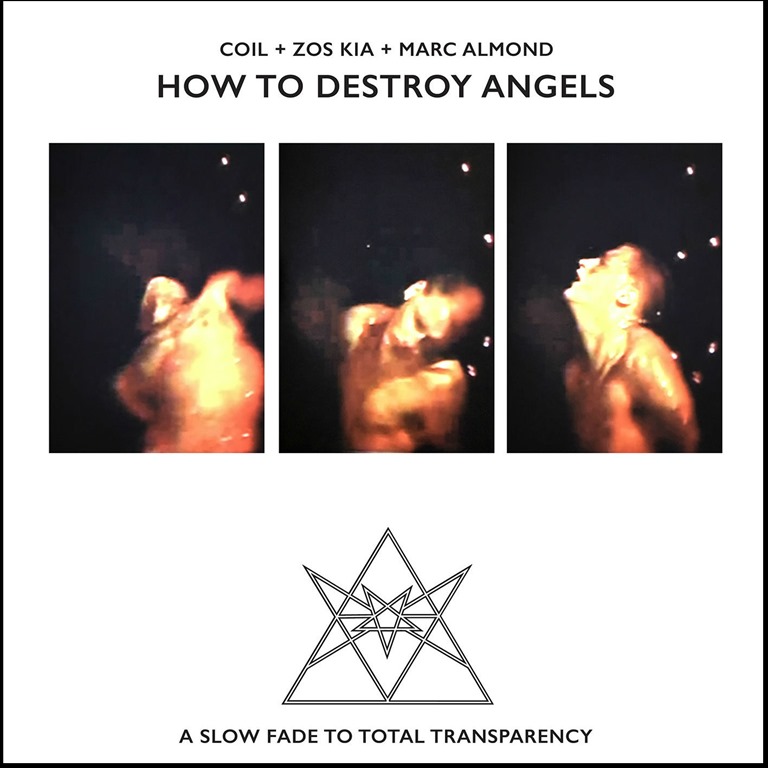
There are so many moments lost in the annals of history. This particular one has been languishing, unheard and unreleased for some 35 years. As collaborations go, this one is particularly special, and captures the spirit of the underground scene in the early 80s, with the original Coil lineup of John Balance and Peter Christopherson joined by John Gosling and Marc Almond. Although renowned as a pop singer, both solo and with Soft Cell, Almond has a raft of interesting collaborations to his credit: his work with JG Thirlwell as Flesh Volcano is a persona favourite, the pair amping up the sleaze and grime to deliver something quite dank and slimy. Better still, their live rendition of ‘Ghostrider’ for the BBC. And, lest we forget, undocumented save for some (painfully) ropey bootlegs, The Immaculate Consumptive, a short-lived live project (just three shows in three days in October / November ‘83) which featured Almond, Thirlwell, Nick Cave, and Lydia Lunch.

‘How to Destroy Angels’ was recorded shortly before The Immaculate Consumptive broke Brian Eno’s piano, on 24th August 1983, at the Air Gallery in London. And the recording has languished ever since, until now, emerging cleaned up and consumable. Although it’s still pretty raw, and if truth be told, sounds little better than some of the recordings of my own spoken word performances recorded on my phone. Of course, this has rather more cultural significance and wider interest.

As the liner notes observe, ‘the music bears only scant resemblance to the ‘How To Destroy Angels’ 12” that Coil would release as their debut vinyl the following year.’ And so the performance which would preface Coil’s studio debut was very much an experimental effort, a collaborative piece born of happenstance and a coalescence of creative fermentation that was bubbling around the time.

It’s Lunch’s influence that seems strongest on Almond’s contribution here: his narrative – a bitter tirade against an ex-lover – is full of bile and expletives as he spits the words quickly and abrasively against an eerie, unsettling dark ambient backdrop. Challenging is the word – but then, that’s entirely the point.

The Kos Kia remix of ‘How To Destroy Angels’, which whittles 23 minutes of audio to just over eight, feels a little redundant here. It’s not bad by any stretch: in fact, as weirdy ambient remixes go, it’s pretty good. It’s just a question of fit.

‘Baptism of Fire’ is an unreleased recording of Zos Kia and Coil at Recession Studios, London: dating from 12th October 1983, it’s contemporaneous with ‘How to Destroy Angels’. It’s the shortest piece here, and concludes the set with four and a half minutes of battering percussion, howling ululations and clanking, clattering noise that’s very Throbbing Gristle and very uncomfortable indeed.

While so many archival recordings and onus cuts on anniversary reissues – often of bands who were only of limited merit in the first place – feel like sloppy cash-ins, digging out second-rate demons , acoustic versions, remixes outtakes and live recordings of well-known studio tracks, this is a real rarity, which sheds new light on the origins of band whose effect has been significant and enduring. Moreover, it’s not only vastly illuminating in context of the nascent Coil sound, but a document which joints a number of dots in the wider context: and for that, this is an essential release.

AA

COIL ZOS KIA MARC ALMOND - Lo res album cover for web