Posts Tagged ‘Landscapes’

Kranky – 2nd May 2025

Christopher Nosnibor

Landscapes, in all their forms, have always been significant in the inspiration for loscil works. Scott Morgan is an artist who seems sensitive to his surroundings, and also responsive to them when it comes to the creative process.

This is true of many artists, of course, and any artist who isn’t in some way influenced by their surroundings and the things which happen around them are… largely incomprehensible to me on a personal level. It simply seems unnatural to create art in a void, detached from experience. I’m not advocating that all art should be grounded in the here and now, or even in reality, but even the most imaginative of scenarios require an element of grounding in order to be credible. The most wildly-imagined sci-fi and fantasy only work when there’s a demonstration of an understanding of human character, or how dialogue works, and so on.

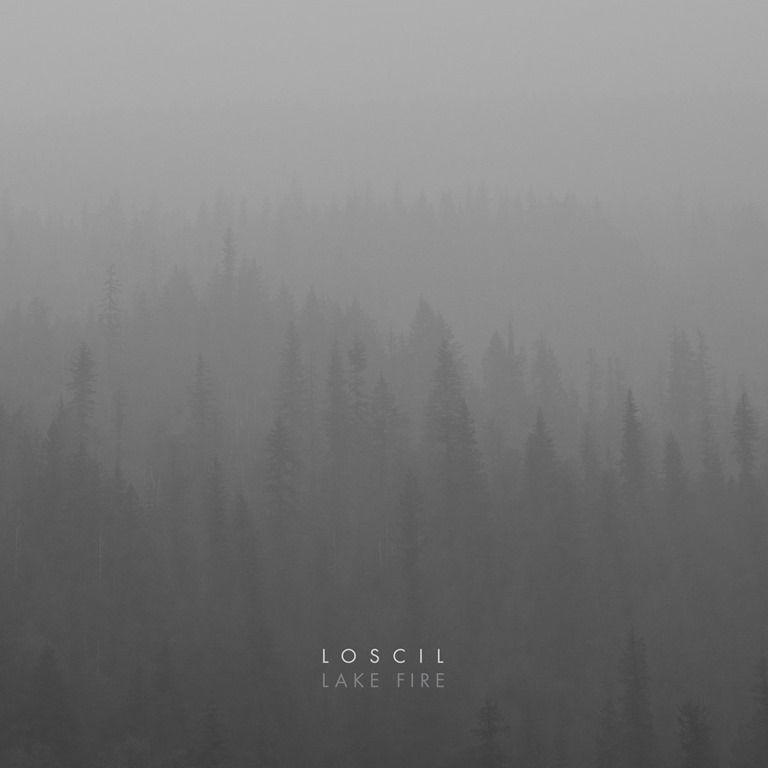
The misty, murky shadings of the cover are replicated in sonic form on ‘Arrhythmia’, the first of the album’s nine compositions. Where are indecipherable whispers eddying behind the piano notes, which gradually blur into a watercolour wash, and a slow pulsing tide slowly rises, only to fall and resurface and fall again.

Interweaving layers create an aural latticework on ‘Bell Flame’, the different tempos of the rippling waves merge together effortlessly to create a shimmering, ever-shifting fabric that’s soft, almost translucent. These supple, subtle ambient works are far from abstract, although their forms are vague to distinguish, and single release ‘Candling’, it so proves, is exemplary of the album’s finely-balanced layerings and contrasts.

With ‘Sparks’ preceding ‘Ash Clouds’, one might be tempted to perceive some form of narrative, or at least a linearity in their pairing: the two six-minute pieces drift invisibly from one to the next, although ‘Ash Clouds’ is heavier, darker, an elongated drone providing one of the album’s moodiest, most oppressive pieces. ‘Flutter’ is appropriately titles, and warps and bends in a somewhat disorientating, disconcerting fashion, creating an effect not dissimilar from the room-spin of inebriation, while the title track concludes the album with a lot of very little, as long, low droning notes hang heavy. It’s pure desolation, and yet… there is something which rises upwards other than smoke and flame – a gasping breath and the sound of a thousand souls transported in vapour.

There are beats on this album, but they’re almost subliminal, a heartbeat underneath the mix, and provide a sense of orientation like fence posts visible through fog or low cloud on a barren moor. More often than not, though, the rhythms come from the interactions between the different elements as they meet and then separate once again. The abstract nature of the work somehow compels the listener to not only fill the blank spaces with their own sensory and emotional input, but also to visualise in the mind’s eye what they may look like. As such, Lake Fire, while largely tranquil, sedate, and even soothing in parts, is stimulating, and to more than just the ears.

AA
a2277207601_10

10th January 2025

Christopher Nosnibor

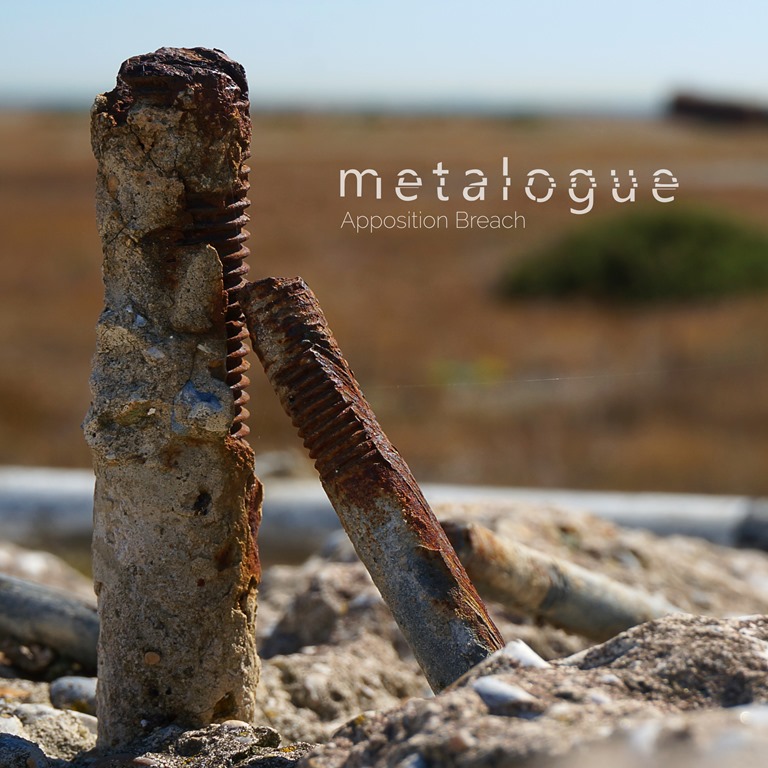
Metlaogue’s Bandcamp pitches the project as ‘Industrial/IDM/breakcore with cinematic tendencies’, while the notes for Apposition Breach note how it ‘explores the threshold of geography and inner world – where landscape becomes the medium for emotion’. This, for me, seems to carry almost Ballardian connotations, the idea of inner geographies, the way in which the geometry of a landscape can slide between the literal and the metaphorical, how one can become an analogue of the other. The inner and outer worlds exist almost separate of one another, and the only point at which they intersect is in the mind as one processes the physical world as experienced through the shading of the emotional state. A sunny day may be a joy to behold, but may not bring joy in the face of a trauma. How we respond to our surroundings is influenced by not only circumstance, but the way we react to it. Yet rarely do we pause to consider these variables. Why did you have a shit day at work? Was the work itself shit, or did you arrive carrying the burden of something else which made something comparatively minor a catastrophe? You may walk the same route daily for a year, but it will never be the quite the same experience. The variables are infinite, and on Apposition Breach, Metalogue interrogates those variables and the reflex of memory and their complex relationship on a nuanced suite of compositions, some six years in the making.

The atmospheric ‘Threshold’ draws the listener into that fluid space, where soft ambience wraps itself around hard mechanical drones, and the percussion shifts in pace and intensity, at first muted, subtle, but firing forth in explosive bursts to become the dominant feature, and in doing so marking a dynamic shift in mood. It’s somewhat akin to climbing a gentle hill and suddenly finding a sharp crag just as the wind picks up and clouds darken the sky. The temperate changes with the change in tone.

While the images which accompany the release are illustrative, the soundscapes themselves evoke rusted machinery, dilapidated mills and farming equipment gradually yielding to the elements. As much as it’s industrial, Apposition Breach offers haunting echoes of industry, once-thriving communities and factories abandoned – not the collapse of civilisation, but the decline which comes with ‘progress’. Wraith-like synths wisp and envelop pulverising beats on ‘Triangulation’, a composition which builds and transitions through a series of different forms. The pieces tend to be on the longer side, in excess of six minutes and pushing to almost twelve on ‘Outer Margin’. This gives them time and space in which to evolve at a pace which feels natural and necessary.

‘Ilira’ is ominous, scraping drones create an eerie fog of tension which is punctured by hard, violent beats. Between the snarling mechanical grind of ‘Reflection’ and the dark, pulsating title track, Metalogue conjures an array of sonic sceneries which present a journey of sorts. Not a linear journey whereby one travels from A to B, B to C, but one which seers the retinas and scours the mind with a succession of scenes, flashbacks, rapid cuts, with the effect being not dissimilar to the way memory skips here and there in time and space when triggered by seemingly unconnected and unrelated prompts – a word, a sound, a smell, nothing at all – or a dream, in which one suddenly finds themselves in a different location or setting seemingly apropos of nothing. Just as William Burroughs remarked of his discontinuous narratives that he was not concerned with explaining how characters get from one place to the next, so it is that we, as participants in the immersive experience that is Apposition Breach, find ourselves effectively teleported.

There’s the hard attack of ‘Redoubt’ and the echoing mystery of the swampy but hypnotic ‘Day Marker’, and in between, all shades of hefty percussion and cold, razor-edged synths shiver and scrape kneed and throb to render an altogether uncomfortable experience. Apposition Breach is expansive, ambitious, and meticulously realised.

AA

cover

Kranky – 23rd February 2018

Christopher Nosnibor

Tahoe is the second album from Northern California producer Fred Welton Warmsley III in his solo guise as Dedekind Cut. It’s named after the mountain lake town where he now resides, and it’s fitting that an album of such grandeur should relate to a vast expanse of natural beauty. For all the ruination mankind has inflicted on nature, however badly we as a species have damaged and decimated resources and scarred the landscape, hunted species to extinction and generally fucked everything up, the fact remains that nature will always win.

Over millennia, ice ages haves come and gone, mountains have emerged and heatwaves have created new deserts. We may have all the television, cars, space stations and satellites, but nothing man-made can protect against a volcanic eruption, flooding, landslides, mudslides, avalanches, blizzards, wild fires, earthquakes and tsunamis.

The eight compositions on Tahoe are centred round drifting, wafting drones and soft-edged, vaporous tones. It’s as ambient as the breeze, as the rippling of water in a slow-moving river. It’s the sound of drifting clouds, of tranquillity. Tahoe is an album of space, of distance, of earth and air.

It’s on the album’s three longer tracks, each of which extend beyond ten minutes that Tahoe reveals the full extent of Warmsley’s attention to detail and nous for texture ad layering. The second of these, ‘MMXIX’ picks up the pace and accentuates the dramatic tension, and it’s surge and swell arrives quite unexpectedly after the mellowness that is the title track. It’s overtly beaty – shuddering, juddering, thuds hammering dense and muddy through a bassy cyclone and booming low-end notes that hover into the abyss dominate – and the piece is just more up-front overall. Contrasts abound and the textures become more prominent as the track progresses, with skittering melodies and twittering notes flitting in all directions. The third, ‘Hollow Earth’ stretches our dark rumbles over turning air and a sense of foreboding over twelve and a half minutes, with interweaving lattices of aural contrails providing the core tone of the piece.

For all of its space, the exploratory sonic expanses conjured by soft, sweeping tones, and for its cinematic softness, Tahoe is not an ambient album. It is not background or wallpaper. It’s an engaging, detailed and in places gripping piece of work. It’s really quite something else.

AA

Dedekind Cut – Tahoe