Posts Tagged ‘Installation’

Dret Skivor – 3rd October 2023

Christopher Nosnibor

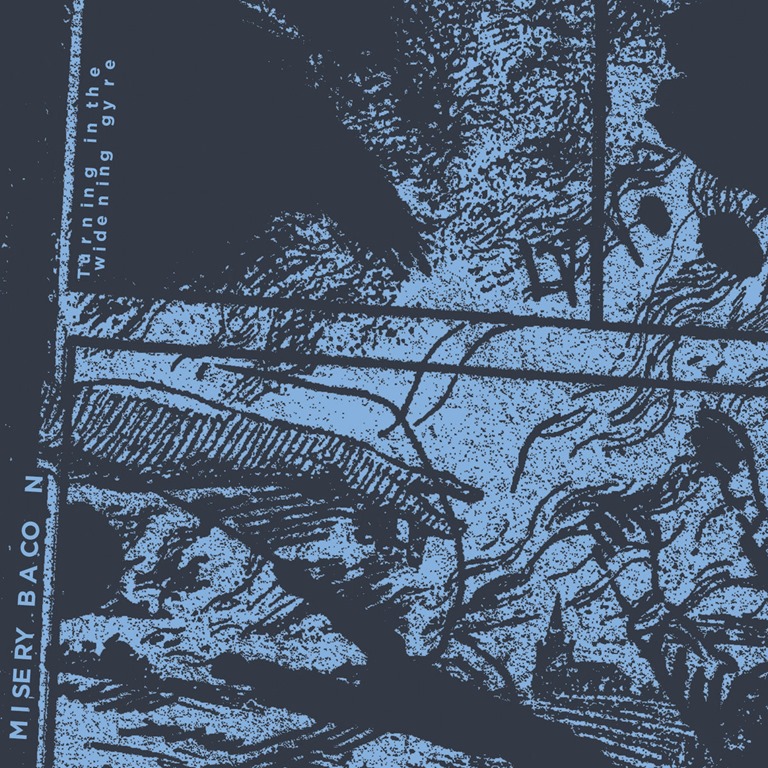
This is proving to be a particularly good week in the world of noise, what with Foldhead’s Paris Braille and this being released on the same day. There’s more information given about this release than most to slip out from Swedish underground label Dret Skivor – in that there is actually some. We learn that the work was ‘Recorded and assembled on residency at Bergen Centre for Electronic Arts, Leveld AIR and Gallery ASK, Norway 2025’, and that the ‘Album and song titles taken from / inspired by WB Yeats ‘The Second Coming’’. We also learn that Misery Bacon is the vehicle of Bergen’s Luke Drozd. It’s not clear if this is one of those monikers that’s amusing because translation, or if it’s a case of humour that doesn’t translate geographically, like Die Toten Hosen. I’m sure dead trousers are a massive wheeze in Germany, but here it’s vaguely surreal but mostly a bit odd. Then again, ‘Misery bacon’ makes me think of all the moaning gammons we have here in the UK, red-faced and chuntering into their Carling about ‘immagrunts’ and how everything’s ‘bloody woke’ nowadays.

It contains two longform pieces, each filling a side of the cassette release – of which there are just six copies – ‘Every finger double crossed as things fall apart’, and ‘Shambling onwards in the shadows of indignant birds’, and neither literary allusions or social commentary are apparent in the work itself.

‘Every finger double crossed as things fall apart’ starts with some sampled dialogue and an array of pops, clicks, whirrs and glops, a swampy collage of seemingly random elements layered across one another. It’s atmospheric, but also difficult to get a handle on any idea of where it’s headed, if there’s any theme or concept that connects the diverse sources. But soon, serrated drones and distortion build to a sustained whorl of noise atop a quivering bass judder. Five minutes in, and it’s an all-out assault worthy of Merzbow or Kevin Drumm. It’s noise, and it’s harsh, but it’s an ever-shifting, seething mass of tinnitus-inducing tones and textures, at time fizzing and crackling in such a way as to give the impression that the sound is actually inside your own head, rather than reaching the brain from an external source. There’s a niggling crackle of static that sounds like there might be a problem withy your equipment. This is most pronounced and unsettling during a quieter spell of jangling metal which sounds like a light metallic object being rattled against a metal fence, or the clattering of cutlery. It’s a piece that slides and slithers hither and thither, and sits well against Throbbing Gristle’s most experimental, abstract works. Towards the end, it does feel like it could be the soundtrack to the collapse of everything. Listening to it while the US government is in shutdown, Israel seemingly continues to level Gaza despite a supposed ceasefire, hundreds of people are arrested in London and other cities for protesting against genocide, and Russia continues to expand its campaign of interference across Europe, it’s hard to feel much positivity.

On a personal level, the present feels overwhelming. The world is at war. The world is on fire, and at the same time that we have drought, we have flooding. But instead of coming together collectively to address this global crisis, as a species, we’d rather bomb the fuck out of one another. And with shootings, mass knife attacks and all manner of savagery taking place daily, it really does feel as if humanity has descended into a spiral of insanity and self-destruction. And there are really no words to articulate the panic and anguish of all of this. Music and literature may provide a certain comfort and distraction, but it’s in sound alone – more specifically, sense-shattering noise – that I find something which articulates the experience of living in these torturous times.

And so it is that ‘Shambling onwards in the shadows of indignant birds’ returns to the sampled dialogue which opens ‘Every finger double crossed as things fall apart’, before plunging into a mess of static cackles and hiss. It’s a Bladerunner world of rust and robotics gone wrong. It’s murky and it’s unsettling. A blast like the roar of a jet engine momentarily hampers the hearing, and we sit, dazed, in the comparative quiet of crackles and pops. There’s a mid-track lull, which feels uncomfortable as whistles of feedback and laser bleeps criss-cross before collapsing into a broken wall of noise on noise.

Turning in the widening gyre is harsh, heavy, bursting with uncomfortable frequencies. The final minutes are nothing short of punishing. And yet, at the same time, that punishment offers vital release. This is where you get to let go. At last.

AA
a2298054435_10

Room40 – 14th January 2022

Christopher Nosnibor

One of the many wonderful things about music is that it has no limits, and no constraints. There is music to be found in anything and everything, and music can be made my anyone, anywhere, anytime, with anything, or even nothing. Steve Roden’s choice of instrumentation on Oionos is noteworthy for being quite unconventional, as he explains: ‘The audio was built from field recordings and small “poor” objects such as tin whistles, toy harmonicas, and the like. These “instruments” suggested by the museum of musical instruments in Athens, where the proper instruments take up most of the museum, but there is a wonderful display case in the basement with musical toys, religious objects, and other sounding devices not considered musical instruments.’ These instruments and objects combine to conjure a magical, mystical soundscape with overtly musical sounds contrasting with less overtly musical sounds and woven together to create something that occupies a unique sonic space.

In popular western culture, we’ve come to understand only the narrowest of definitions of music, which for many is represented by an album consisting of a number of ‘songs’, bite-size pierces which are tightly structured and subject to conforming to certain parameters, including rhythm, and suchlike. Even many ambient works, which delineate many of those mainstream conventions, are created within limitations; these are compositional factors, imposed by the creators, rather than being significant of true musical limits.

With Oionos, Steve Roden frees the music, presenting a single, continuous piece with a running time of one hour, one minute, and fifty-five seconds. Time was when the CD format placed a time constraint of seventy-two minutes on a release, but technology has evolved, and the duration of this piece feels entirely natural, as if the music has run its course to a satisfying conclusion by the close.

The composition is, in many respects less concerned with time, than with place. As Roden writes on the album ‘Oionos was created for the exhibition The Grand Promenade, in Athens, Greece. The exhibition took place in various archaeological and historical sites in central Athens, creating a situation for contemporary site specific works to be in dialogue with their historical surroundings.’

Although the location was integral to the album’s inspiration, it’s less integral to the listening experience when taken out of the context, and the music featured is, if not necessarily ambient in the most conventional sense, it is very much abstract, and also very much background sounds rather than music one actively listens to. But zoning in and out is a pleasurable experience, which perhaps serves to highlight the multifaceted nature of the sounds. Metallophone-like notes chime and ring, seemingly with an almost random notations and the loosest of rhythms, against a backdrop of scrapes and drones, while sounds like wind gusts and lapping water fill the space in the background. While the different elements conglomerate throughout, by half-listening, one finds oneself becoming aware of them individually at different times, and you find yourself experiencing the recording differently at different times as you tune into and become aware of the different sounds, textures, and tones.

As a whole, Oionos feels like something living and breathing, as if the sounds in combination have taken on a life of their own – and in many senses, they have, and they merge together to form a shifting, pulsating whole. It’s unfamiliar, but not eerie despite its otherness; there is a certain calm that radiates throughout the duration.

AA

a2445050686_10

Christopher Nosnibor

Live music tends to follow a fairly standard format, namely where artists perform on a stage either in a conventional venue, or outdoors if it’s a festival. Punters traipse in, stand around, talk (sometimes through the performances) and file out again, and judge their enjoyment based on the merits of the performances and the sound and perhaps the company. Music performed in conjunction with art tends to be installation-based in some sense, and the music then finds itself relegated to a secondary position. It was only on arriving at the Leeds Industrial Museum in glorious sunshine that I began to consider the fact that while field recordings are an essential part of a huge array of musical works in the more experimental and avant-garde fields, and that there’s a huge body of musical work which is concerned with responding to and working with specific environments, it’s rare for an audience to experience the music and the environment from which it originated simultaneously.

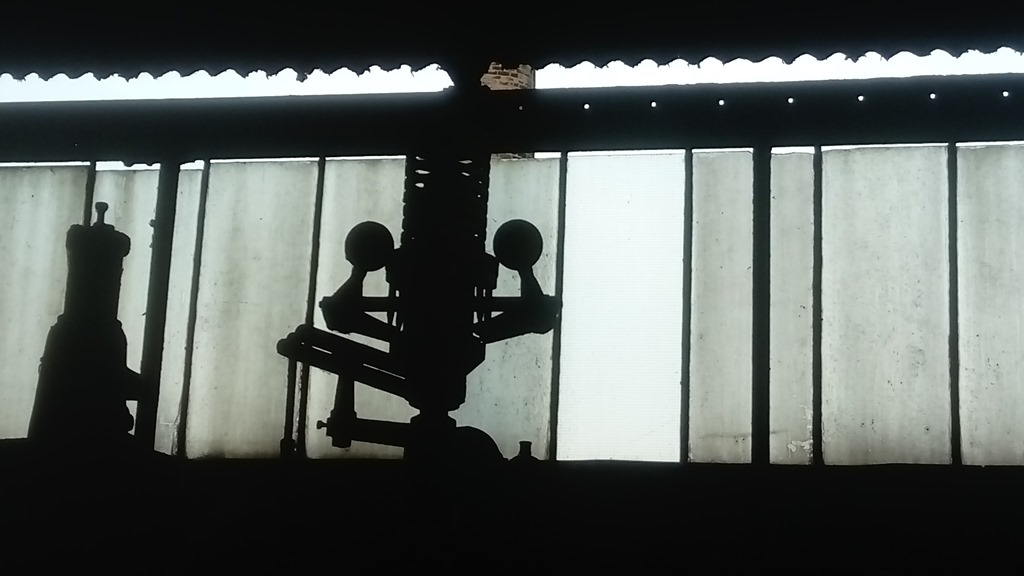
Having seen the event – and it is an event, not a mere gig, not even simply a night of music, but something that, as the evening progresses, I realise is something that will stay with me as an experience, something different and really rather special – was in the museum, I assumed it would simply be in the museum. To arrive at the PA required walking the full length of the labyrinthine factory space, packed with weird machinery and other abstruse-looking contraptions. Some were operating, clanging and banging away. Following the arrows, we arrived at the sewing room, where NikNak is spinning discs and adding some wild flavour to the established tradition of scratching. I assume the bar is just around the corner and that we’ll be assembling in or near here, so move on with a view to returning. Follow the arrows. Follow the arrows. I try not to panic that getting out again is going to add quarter of an hour to my walk back to the station, and instead marvel at the displays. I’m not really digesting: the museum is looking like a full day’s exploration, and I make a note to return before too long.

DSC_0560DSC_0558

Eventually, we stumble into what appears to be some kind of old engine house. Past that, the bar and toilets. A nice array of local beers, bit in cans and kegs. No commercial piss on offer here.

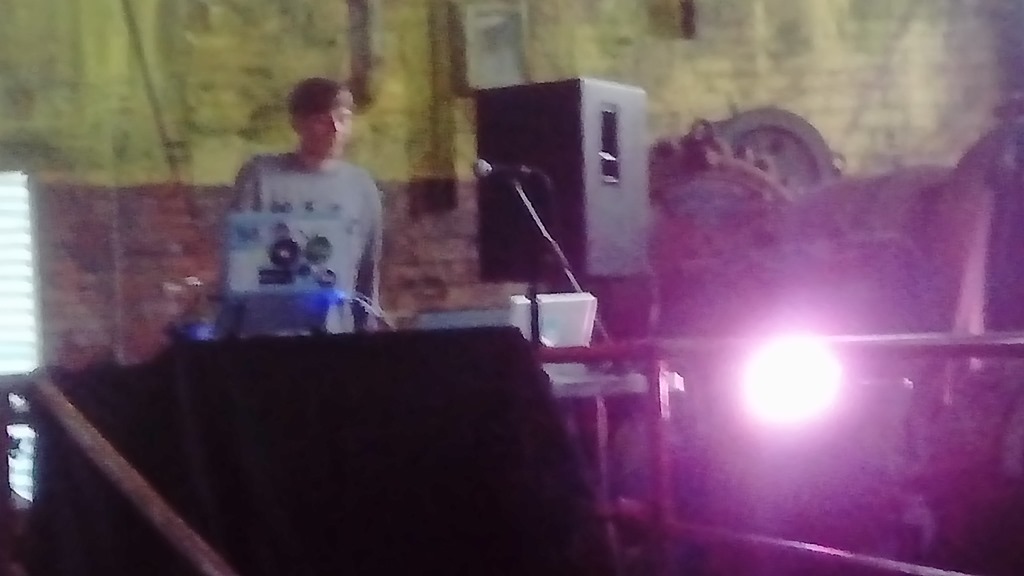
The sun is slowly sinking, but still casting a fair bit of light as Bambooman delivers his ‘site-specific’ set, which is built predominantly around field recordings captured around the museum in the weeks ahead of tonight’s show. He throws some solid beats, and bass loops and samples in abundance. Light, skipping motifs that hint of the orient and extraneous industrial sounds – repetitious mechanical clankings which forge heavy marches dominate, and are overlaid with oddly folky vocals. The incongruity actually works in its favour.

DSC_0556

Bambooman

And it’s here that I begin to really experience – and to appreciate – the synergy of sound and space. It isn’t because the music isn’t engaging that I find myself casting my eyes around the space I’m standing in: it’s because the music compels me to do so. I cast my eyes upwards, and wonder what caused the various punctures and tears in the corrugated roof, through which the fading light seeps, purplish. People begin to pack in with greater density, legs and pelvises moving in time with the rhythms. A woman comes and stands too close to me, and keeps knocking my shoulder as she moves to the music. I let it pass.

My notes thin in density: a trip to the bar results in my missing the front end of Object Blue’s set, but time is already beginning to warp before her altogether more abrasive set assails my senses. Abrasion may be relative, but in any context, Object Blue packs some attack. The bass frequencies register around the pelvis, while the treble hits around the upper reaches of the cranium: the cymbal work is almost sharp enough to slice off the top like cutting open a boiled egg. The sounds are pushing the limits, fraying at the edges, and tug ant the nerve endings, but the PA is supremely crisp and clear and despite the respectable volume, I’m not feeling any need to get the ear plugs out. Object Blue’s approach to ‘industrial’ may be less literal than that of Bambooman, and more conventional in terms of genre, but with contrast comes impact. As a performer, she’s understated and demur, but sonically, her set is combative, aggressive, every frequency tweaked for optimal discomfort. I absolutely love it, and instead of raising the blood pressure, the sheer quality of the compositions and the attention to detail is uplifting. And with any uplifting uplifting experience comes a sense of quiet joy.

DSC_0562

Object Blue

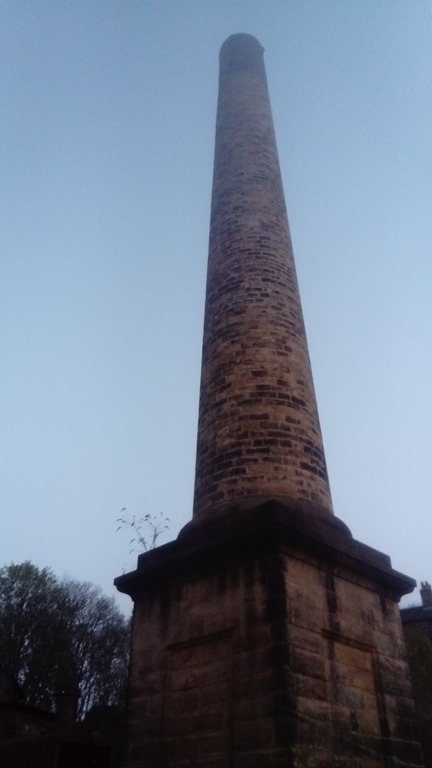
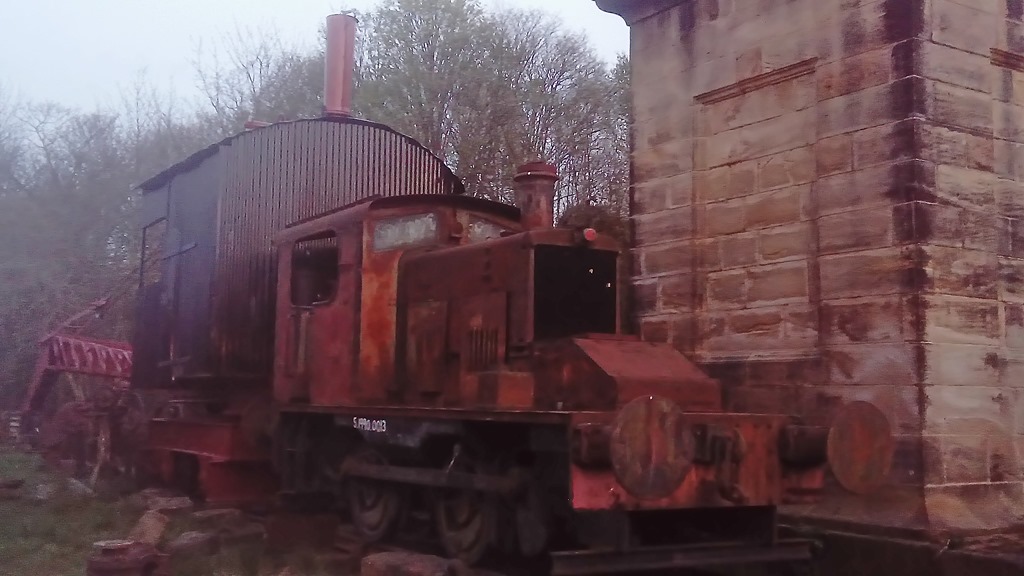
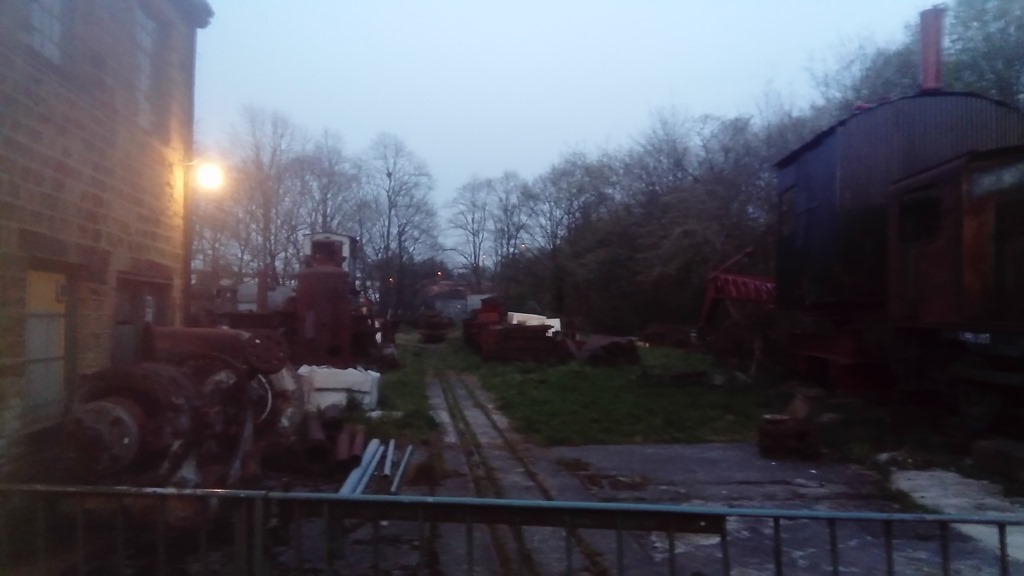
Time really begins to slip now, and it’s not about the alcohol consumed. I’ve actually been pacing myself, for a change against recent outings more immersed in the experience than the quest for obliteration. During the space between acts, and as the beats knocked out by the DJs echo out into the night, I talk to my friend about mental health. It seems oddly comfortable and in come ways appropriate: I’ve spent the last few months operating at a frenetic tempo, which has resulted in wild fluctuations in mood. Tonight, at one with my surroundings, immersed by the music, stepping out of my life and engaged by everything that’s going on and the sense of something different something new, I find I’m reattenuating, becoming once more aware of the details of my environment – the sky, the details of chimney tower, the rusted engine, the imposing hulk of the mill on the hill, the skeletal frame of an engine tunnel or something, rusty and covered in ivy, the inexplicable machinery at every turn. I’m breathing at a slower pace. I’m back in life.

DSC_0557DSC_0561

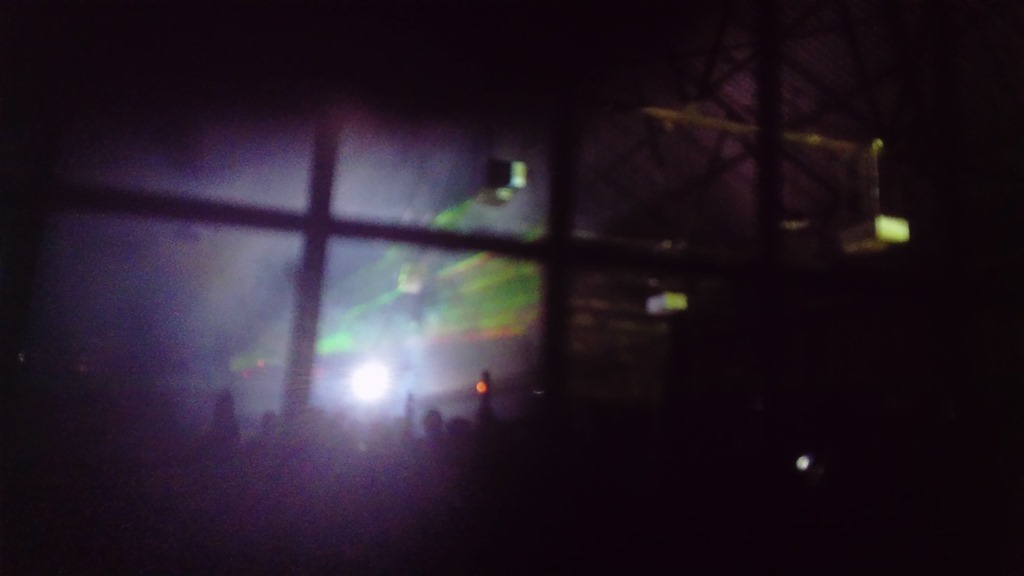
Pye Corner Audio delivers something special. The downtempo focus of the set is key to its hypnotic effect. One moment, I’m engaged, observing the laser lighting and the drift of illuminated smoke across the space where he performer is situated, attuned to every last nuance of the surroundings, from the wire fence to the way the other members of the audience engage. The next, I find I’m swaying on my feet, eyes barely ajar, in something approaching a hypnotic trance. It’s the best I’ve felt in months – zoned out, but not completely out of it – the music becomes a throbbing wash that envelopes my body and every last one of my senses. THIS is what immersion feels like. The moment is all, and nothing else matters.

DSC_0567

Pye Corner Audio

I remember, jerking alert between lengthy spells of complete immersion, that this is a life experience. For the first time ever, it’s one I feel comfortable being only semi-present for.