Posts Tagged ‘hum’

Room40 – 3rd January 2025

Christopher Nosnibor

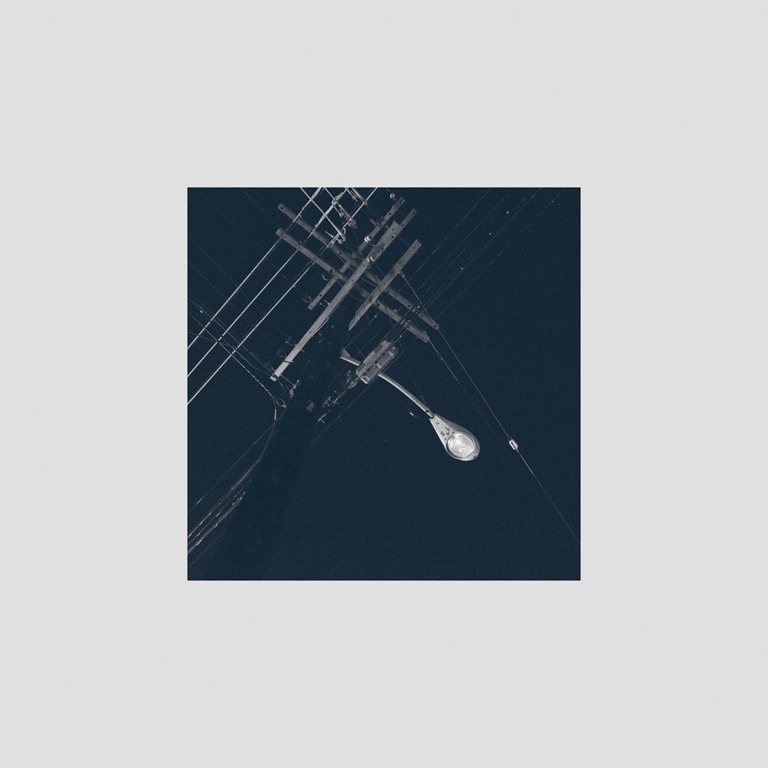
Ian Wellman’s works are usually responses to environmental issues, be they derived from articles covering global matters or more immediate or personal situations. His latest, Can You Hear The Street Lights Glow, sits very much in the latter category, as he details in the accompanying notes, which I shall quote in full:

I moved to Pasadena during the fall last year. One of the first new sounds I noticed were the mercury-vapor street lights that filled the air as the sun went down every evening. Under the sidewalks, exhaust vents hummed along to the song of crickets and the rumble of traffic. Being away from the inner city, more individual details in the soundscape emerged.

As a way to explore the new area, I walked around at night with my equipment. I placed geophones and contact mics on every metal surface I could. I ran electromagnetic sensors across electronics accessible by the sidewalk. I put mics out on quiet streets, behind shopping areas, and in parking lots. I felt very compelled and inspired to listen and learn about my new home. Can You Hear The Streetlights Glow? is the result of these listenings.

Certainly, the first part of this is something I find quite specifically relatable – not due to relocation, but to finding myself suddenly discovering a heightened awareness of my immediate surroundings. Like many people, I used to walk around with earphones in, listening to music to cut out the noise around me. This was essential on my daily commute, as listening to music as I walked through town created a separation between home and work, and while on the bus from town to the office, it shut out the babble of other people, and created a barrier between myself and anyone from work on the bus who may have been inclined to strike up a conversation. And on the way home, the same was also true but listening to music also helped me decompress – or mirror my angst – after a day in a noisy open-plan office. Lockdown changed that. I suddenly felt the need to be alert in case of approaching runners or cyclists or people kicking off in queues for the supermarket because someone wasn’t observing the two-metre rule or otherwise losing the plot over COVID restrictions. In short, I was scared – terrified, even. Not so much of the virus, but other people. I felt I needed to be on high alert at all times, because people are simply so unpredictable. One byproduct of this was that when I left the house form my allotted hour of exercise, I became acutely aware of the quietness – the absence of the thrum of traffic, the absence of chatter, and in their absence, I could instead hear the wind, birdsong, my own footsteps. In fact, I could hear everything. In the quiet, the small sounds were suddenly so much louder. The quiet wasn’t nearly as quiet as it first seemed. It was the aural equivalent of one’s eyes growing adjusted to the dark.

The auditory voyage of discovery Wellman charts on Can You Hear The Streetlights Glow bears clear parallels to my experience, but takes things a step or three further with his use of an array of equipment in order to capture sonic happenings in these spaces and his interrogation of the sounds in order to reach a deeper, more intimate understanding of his environs.

The results are quite fascinating, and range from a cluster of brief snippets, of under a minute and a half to just over two minutes, to more expansive segments – 5G Antenna Power Box is almost five and a half minutes, and ‘Mercury-vapor Lights’ is a full twelve and a half minutes in length. The titles of the pieces are location-specific, and some are quite evocative in themselves – notably ‘Time Depleting on Bird Scooter’ and ‘Gas Pipes Behind Smoothie Shop’. On the one hand, they’re utilitarian in their descriptions; on the other, they create an image of a filmic world in which sound events happen in particular places.

Most of those sound events are different levels of hum and drone, but these varying levels of low-level throbbing serve as reminders of how mankind has interfered with the naturally-occurring sounds which are the true sounds of the outdoors. While I am likely to note the hum of the power lines as I pass a pylon, and so on, I am still attuned to the wind in the trees, the scurry of squirrels. The sounds on Can You Hear The Street Lights Glow are all entirely man-made, mechanical, and despite Wellman’s relocation to a more rural setting facilitating the opening of his ears, the locations are all noteworthy for their constructed, non-natural nature. People may interpret this differently, and Wellman’s intentions may have been different again, but the leading thing I take away from this is just how hard it is to truly escape the mechanised world we’ve made. But equally, Can You Hear The Street Lights Glow is a document which highlights the extent to which even in silence, there is sound – lots of it.

AA
a1805176232_10

Unsounds/Echonance Festival – 2nd February 2024

Christopher Nosnibor

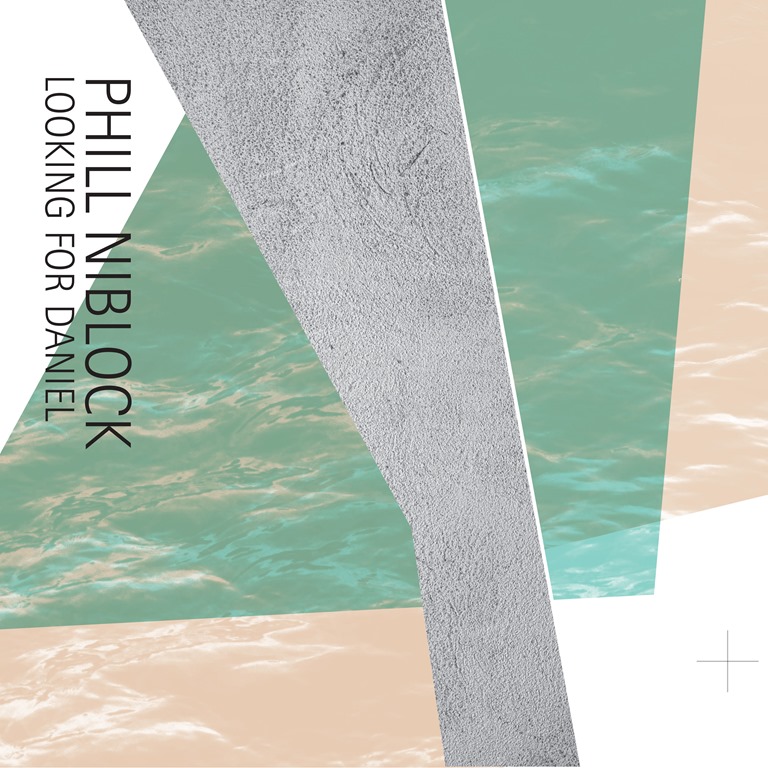
It’s never a comfortable experience to learn of someone’s passing, even if it’s someone you’re only really aware of rather than familiar with. My knowledge of Phill Niblock and his work was relatively scant, although I had written about a few of his releases over the years. I wasn’t particularly enthused by Touch Five back in 2013 – an album I would probably appreciate considerably more now. This likely says as much about me as it does Phill Niblock, but does perhaps indicate just how artists who fully espouse avant-gardism are always ahead, and tend to only be truly appreciated later. And so, to learn of Niblock’s passing only this month, from the press release which accompanies this release was a… moment, a cause to pause.

And so as I read how this release serves to ‘commemorate the late Phill Niblock with this release made in close collaboration with the composer,’ and features recordings of some of his very last compositions just before his passing in January 2024. ‘The two works on this album, ‘Biliana’ (2023) and ‘Exploratory, Rhine Version, Looking for Daniel’ (2019) represent the hallmarks of his unique approach to composition where multiple, closely-tuned instruments and voices are used to create rich and complex sonic tapestries…

The fact that he was still composing up to the age of ninety is remarkable. The fact these two pieces don’t feel radically different from much of his previous work is impressive. And yet, in context, the fact that these final works are such long, expansive, and unsettling compositions feels fitting.

To understand and contextualise the pieces, it’s worth quoting directly: ‘In Biliana, written for performer Biliana Voutchkova, her violin phrases and vocalizations carve out a deep sonorous space full of fluctuating overtones. By emphasizing on the physicality and materiality of her sound, the piece gives us the sensation of stepping back to reveal a singular portrait of the musician. ‘Exploratory, Rhine Version, Looking for Daniel’ was recorded by two Netherlands based ensembles, Modelo62, and Scordatura ensemble from a live recording made at the Orgelpark, Amsterdam during the Echonance Festival in February 2023. It is a complex work comprising of 20 parts, where lines seem to emerge and disappear out of a landscape of harmonies and sonic spectra. There is also a voice hidden in this mass of instruments, just like in Biliana, giving both works an added human element – something that always emerges out of Phill Niblock’s seemingly dense musical constructions.’

Each piece takes a long form, extending beyond the twenty-minute mark.

A decade ago, I bemoaned just how ‘droney’ Touch Five was, how it was impossible to perceive any tonal shifts. Listening to ‘Biliana’, I’d have likely posited the same complaint, bit with hindsight and personal progression, it’s the eternal hum, the intense focus on the most minute and incredibly gradual of shifts, which are precisely the point and the purpose – and the things to appreciate. On the one hand, it is testing. It’s minimal to the point of a near-absence, an emptiness, but present enough to creep around your cranium in the most disquieting of fashions.

It’s not uncommon to lie awake and night or have deep pangs of regret which knot the stomach when you replay that awkward exchange, that time you said the wrong thing, the occasion when you plain made a twat of yourself one way or another. The same anguish hangs heavy over reviews where I’ve simply been wrong. There’s no way of undoing them – and to repost or revise down the line would be disingenuous, an act of historical revision. You can only correct the future in the present, and not in the past. We all know how rewinding history to make a minor alteration goes. Before you know it, your hands are fading and you’re about to become your own father or something.

You almost feel yourself fading over the duration of ‘Biliana’ as the eternal glide of string sounds hangs thick and thickening in the air and somehow at the same time remains static. Where is it going? Where are you going? Everything feels frozen in time, slowed to complete stasis in a slow-motion drift. Wondering, waiting… for what? A change. But why would change come? Breathe, let it glide slowly over you, however much you feel a sense of suffocation.

‘Exploratory, Rhine Version, Looking for Daniel’ begins sparser, darker, danker. Ominous, string-line drones swell and linger, here with scraping dissonance and long-looming hums. Nothing specific happens… but it crawls down your spine and you feel your skin tingle and creep. Nothing is quite right, nothing is as it should be.

Over the course of his long, long career as a defining figure of the contemporary avant-garde, Niblock was outstanding in his singularity, and the unswerving nature of his compositions, a vision which, as this release evidences, remained unaltered to the end.

77U_front

Midira Records – 5th May 2023

Christopher Nosnibor

Aidan Baker is one of those artists whose output is almost impossible to keep pace with – but the more remarkable thing is that for all of this hyperproductivity, the standard of work is of an unstinting quality. Recorded between 2020 and 2022, Engenderine – a double CD – lands almost simultaneously with Trio Not Trio, the first in a series of five albums on Gizeh Records, and just as Baker is gearing up for a tour with Nadja, the ‘ambient doom / dreamsludge, / metalgaze’ duo he is one half of.

To pause for breath for a moment, it’s worth stepping back and running through the context of this, which is worth quoting:

‘The neologism ‘engenderine’ comes from Lydia Yuknavitch’s The Book of Joan, a futuristic/dystopian/cli-fi retelling of the Joan of Arc story, and describes beings partially composed of pure energy capable of manipulating matter who, amongst a largely devolved human population, might be considered post-gender and a new evolutionary step.

‘Other song titles come from phrases and images from Tricia Sullivan’s duology Double Vision and Sound Mind, surrealistic fantasies about the nature of reality and perception and, like The Book of Joan, the possibilities of manipulating those.

‘Musically, the songs on Engenderine began as a series of slowly evolving ambient guitar loops – a bed layer of reality, so to speak – over which were layered bass, drums, and organ parts. These instrumental additions – the trappings of perception, signifiers, metaphorically speaking, our attempts to codify perception – incorporate traditional rock structures and progressions but are stripped down to a sort of somnambulant minimalism that might encourage introspection, a meditative background, uneasy listening, as much as they demand attention.’

It really is extremely uneasy listening. It’s perhaps as well it is, for the larger part, ‘background’, because the two CDs, while only containing eight tracks in all, span almost ninety minutes. We’re not quite in Sunn O))) or latter-day Swans territory, but still…

The first track, ‘Baby Dragon Slaughter’ pitches a long, unchanging organ drone note against a growling doom guitar and stop-start percussion which crashes hard. It’s hypnotic, paralysing, and I can imagine some might toss in a Doors comparison, but that’s only on account of the organ and the slightly trippy vibe, because it’s not only nothing like The Doors, but infinitely better.

If you want comparisons – because pretty much everyone seems to work on the premise that everything sounds like something else and recommendations – mostly algorithmic and based on purchases or streams, depending on the platform, Engenderine sits in the low, slow, doom-drone bracket of Sunn O))) and Earth 2. And this is indeed some ultra-low frequency shit. The first track on Disc 2, ‘Resurrection of the Child Army’ features some melodic, trilling pipe sounds around seven minutes into its nine-and-three-quarter-minutes gloomy, thick humming drone, is something you feel as much as you hear, and it resonates through the intestines and vibrates eternally.

The bass on ‘Calabi Yau Manifestations’ is pure dub, floor-shakingly dense, dark, minimal but quiveringly heavy, and it dominates the erratic drum clatters and rumbling roar of a drone that sounds like a jet engine warming up several miles away. Having experienced jet engines nearby, trust me., this is a good thing, but the rumble is unsettling. And then there’s ‘Dorvay’, which seems to take its cues from The Cure circa Pornography, with its hefty percussion dominating the sound.

Engenderine isn’t an album for a track-by-track, blow-by-blow critique: the tracks melt into one another and it’s an album that needs to be experienced as an album – and in context, that’s a continuous droning hum of murky noise without any clear sense of shape or form.

The second disc feels lower, slower, darker and more difficult: the erratic jazz drum-work on ‘Fear Sculptures’ is difficult to digest and assimilate – but then again, so is Engenderine as a whole. It’s just so much dark and difficult droning to chew on that it leaves you feeling low on energy, sapped, physically and mentally. But this isn’t about entertainment, and artistically, Engenderine is an outstanding exploratory / concept work.

AA

MD136_front

Cruel Nature – 18th September 2020

Christopher Nosnibor

Meyer Huthwelker is Helge Meyer and René Huthwelker: these are new names to me, but they seemingly have pedigree as emerging from ‘the hydra-headed experimental noise and ambient scene of Hamburg’. Meyer is also part of the band Ex-Kopf together with Scheich In China, and Huthwelker lately released a great solo tape on Phil Struck’s Stoffe imprint.

As Meyer Huthwelker, the liner notes inform us that ‘they play slow moving electronic music, using various modular and semi-modular synthesizers as weapons of choice.’ These words are chosen as carefully as their weapons, and reflect the way the duo’s sound has a strong attacking element to it, which is showcased perfectly here.

Purdue Generator contains two tracks, corresponding with the two sides of an audiotape, and Cruel Nature are releasing this one in a limited edition of 65 copies – which is an indication of the duo’s appeal given that their tape runs are often considerably smaller. It’s nice, it’s cult, but it’s without doubt respectable.

Purdue Generator contains a lot of heavy drone. Heavy drone. And a lot. Purdue Generator is one of those albums where you find there really isn’t much to say. It’s ambiguous, vague, somewhat formless. It drones on and on… and on. It oscillates and undulates. Slowly, gradually, like so much burrowing and tunnelling and meandering from hither to thither… but nothing happens. Wait, here’s the good bit… Actually, that is the good bit: the lack of change or specific ‘bits’ is entirely the point – it’s an elongated, continuous piece, unpunctuated, defined by protracted sameness that has a cumulative effect. The dronier, the less eventful, the more resonant, the deeper the impact, a little like exposure to radiation, I suppose: the more frequent and prolonged, the more effect on the system.

And so, with the first side, ‘Oxy’, where the elongated pulsations last for aeons, eternities, trickling into the second, ‘Hundo’, there’s a continuity and constant buildup. This being 2020, that buildup is one of tension and resembles less a buildup of excitement than a buildup of plaque. It’s something more to pick at than to actually learn major lessons from.

The low, slow, oscillations hum and thrum at a pace and frequency that settles around the lower thorax, and the reaction is as much physical as mental: Purdue Generator blossoms and blooms with questions over answers as it inspires the listener to step back from the tumult of everything external to meditate in one’s own internal rhythms. The higher, trilling notes that sometimes enter the mix bring levels of discomfort, as do the shifts into lower, grinding throbs. Fading out over a long, deliberate gradation, it doesn’t leave us with very much other than an empty space and room for contemplation.

AA

a3041477711_10