Dret Skivor – 7th February 2025
Christopher Nosnibor
I do like an album with a story. With Korset i Röjden by D L F, we get half a story, but one which builds a sense of mystique, enigma, a sort of allusion to local folklore, set out in the notes which accompany the release:
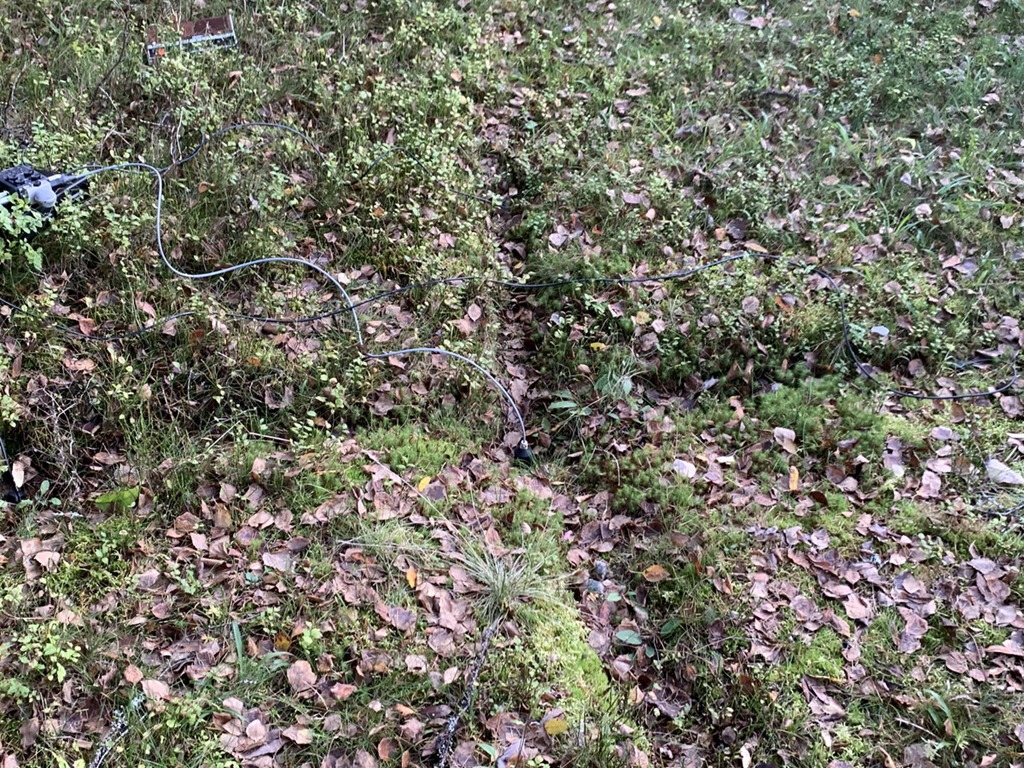
‘There’s a place in the forest, in the shape of a cross, where nothing grows. No one knows how it got there, or why.
60°33’48.6"N 12°39’15.6"E
The two recordings on Korset i Röjden capture sounds and vibrations in and around the cross. A geophone, a few contact mics, an H6, a smartphone, and a broken cassette recorder. Track two, ‘Den onda ska pressas ur’, features samples from a 1963 television documentary, an old Finnish lullaby, and taped interviews with locals from the 1990s.’
This has got it all: mythology, mystery, co-ordinates – a map, in other words – and the kit, the foundations for a sonic retake of The Blair Witch Project, perhaps. There is a strong sense of there being something hat isn’t right. Granted, I get that from simply breathing the air, from turning on the news – but this is quietly unsettling. Very quietly, in places: the first two minutes or so of ‘Korset’ are almost the sound of silence. Turn it up, and there is the sound of air, a soft breeze, perhaps, some kind of background noise. Insects? Footsteps? The rustle of leaves? Perhaps, but just as nothing grows in that unexplained cross marked in the forest, so it seems there is little sound. No birdsong, no… nothing. Has anyone ever run a metal detector over the sight? Considered digging?
I mention digging with caution. There is a wood close to where I live, a portion of which has been decimated in the last three years or so by dirt bikers who have turned the space into a track with jumps and ditches. It’s clearly not just the work of a couple of kids with spades: these are proper earthworks, excavations, the likes of which have involved adults turning up with mini-diggers. I once witnessed a woman challenging a family who had turned up with motorbikes who were revving around and scaring pedestrians and dog-walkers being met with aggressive verbal abuse. My email reporting the matter was of no consequence. Rather like this narrative detour.
‘Det onda ska pressas ur’ offers another ten minutes of haunting dark ambience – unsettling, disorientating. It rumbles and echoes around infinite subterranean corridors, leading to who knows where? There are sounds – possibly the pushing through undergrowth, possibly almost anything else. Wraiths whisper through the clicks and crackles, hums and pops… is that breathing or simply the breeze?
Korset i Röjden tells us nothing, other than that the world is a dark and unpredictable place. It’s a dark and unpredictable album. But it hints that we should fear, and fear the worst. There are dark forces all around, and while the insanity of the world right now is more than reason to take cover, it’s worth remembering that there are other things a play.
AA

 Aural Aggravation