Posts Tagged ‘Felix Kubin’

Futura Resistenza –16th June 2025

Christopher Nosnibor

Much of Felix Kubin’s work since the turn of the millennium has involved radio, although film and theatre and other soundtrack works have also been a feature. Der Tanz Aller is one such soundtrack work, which was ‘created for the performance of the same title by the experimental arts collective LIGNA. The group specialized in site-specific, participatory works. Der Tanz Aller is based on Rudolf von Laban’s radical 1920s concept of ‘Bewegungschöre’ (movement choirs), collective dances in public space that aimed to reimagine social order through shared movement.’

The context and objective behind the composition are particularly useful to be aware of when listening to this album in isolation, as Kubin sets out: ‘When the performance group LIGNA approached me in 2012 to compose music for a play based on Rudolf von Laban’s revolutionary kinetic theories and so-called ‘Bewegungschöre’ (movement choirs), I thought of a soundtrack that would be both rhythmically engaging, abstract and mechanical. I knew there would be pre-recorded voices talking about his philosophy and guiding the audience via headphones. So, I had to leave some “air” in the arrangements, allowing the visitors to concentrate on the spoken words, while simultaneously becoming dancers. In LIGNA’s conceptual works – just like Laban’s idea of the movement choirs – the audience members become the performers.’

I shan’t dwell too long on the conceptual aspects here, beyond noting that this predates John Cage’s 4’33” by more than two decades, and while Cage’s silent work was on many levels a quite different proposition, the way in which any sound made by the audience – be it a cough or the shuffling of feet or the creaking of a chair – immediately becomes part of the performance indicates clear common ground. Likewise, William Burroughs’ cut-ups, which invited ‘creative reading’ whereby the engagement of the reader and their experience and perception was integral to their success, arrived some thirty years later. As such, ‘Bewegungschöre’ represent the cutting edge of avant-gardism, belonging to the era which brought us Duchamps’ readymades and – perhaps more pertinently – Tristan Tzara’s directions to make a Dadaist poem.

For the most part, the ‘air’ in the arrangements is apparent: there is space, separation, and while we can only imagine the prerecorded voices talking about Laban’s philosophy through headphones, it’s possible to get a sense of how it would work. But then, occasionally, Kubin’s compositions get father more busy, as on ‘Dämonen der Zerstreuung’, with big band percussion and noodlesome orchestration that’s of a strong jazz persuasion, but has a whole lot happening, and often simultaneously. There’s drama with orchestral strikes, and creeping, urgent glockenspiels that bring a noirish, detective movie feel – not a chase scene, but a cat-and-mouse scenario.

There are some spoken-word passages, in German, as on ‘Raumstunde Vera Skoronel’, accompanied by evolving sonic backdrops, the likes of which I find hard to imagine inspire dancing, but spasmodic twitching and erratic lurching, while the title track is a slice of jerky, and quite insular and intense, Kraftwerkian synth bleepery, and ‘Rotes Lied’ is a perfect exemplar of sparse, spaced-out, glooping, blooping, reverby weirdery with occasional chimes and stuttering shot of snare. There is plenty of air here, as you sit and wonder what exactly is going on?

Who knows? And does it even matter at this point? The percussion builds from all sides, and the nagging away – until suddenly it doesn’t.

The unpredictability of Raumstunde Vera Skoronel is its strength. It is weird, unexplained in many respects, beyond simply the initial onboarding awkwardness. We should probably celebrate this weirdness, this sense of separation. Raumstunde Vera Skoronel is never dull, but always strange and alien – and these are reasons to appreciate it.

AA

AA
RESLP040 front

Gagarin Records – 6th December 2024

Christopher Nosnibor

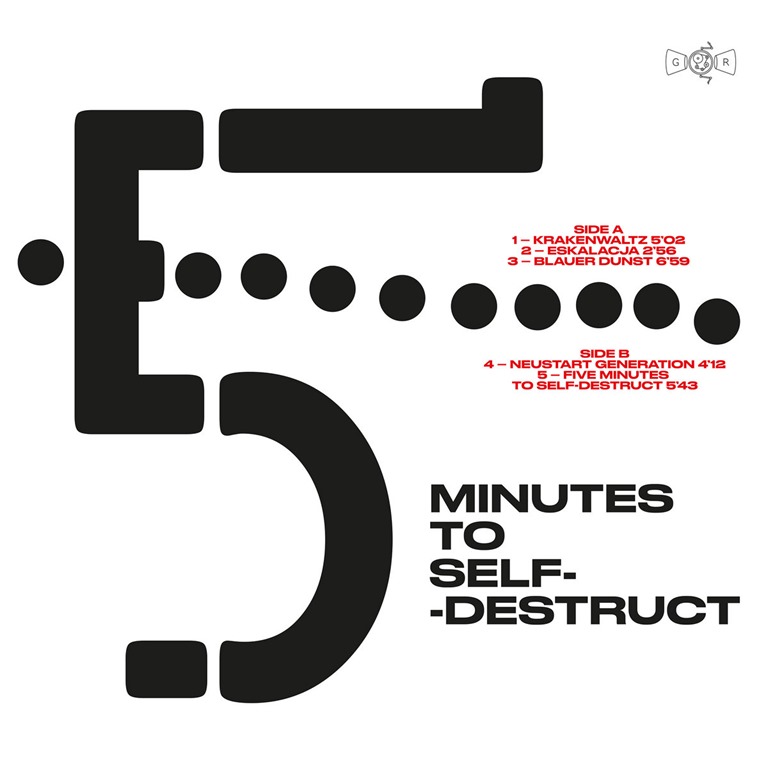
You might be hard-pressed to call CEL a supergroup, but Felix Kubin has been creating sound here, there, and everywhere for a long time now, and Five minutes to self-destruct is definitely a coming together of established creative forces, containing as it does five recordings of live tracks performed by longstanding Kubin and longstanding collaborator Hubert Zemler, remixed by Warsaw sound engineer Jan Wroński.

And the thing about creative collaborations is that they often rely on spontaneity, immediacy, the frisson between the individuals in proximity, feeding off one another in the moment. And so it is here, as the accompanying notes set out: ‘The expressiveness of these recordings is evident not only in their unbridled live energy, which can hardly be reproduced in the studio, but also in a musical nervousness that sets itself apart from the current wellness folklore of the modular community. The pieces gather in their DNA the paranoid plasma of cultural unease, chaos and upheaval.’

To make a small sidestep, we hear endless decrees that employees need to return to the office in order to foster the spirit of collaboration and all the rest. We know that this is bollocks, and is simply about working the instruments of control. Collaboration and the coalescence of energy for creative ends is not something which cannot be forced, and it happens, regardless of distance, time, and space, given the right connection and chemistry. Hearing the performances on Five minutes to self-destruct, it’s immediately apparent that this is not something that could ever be created by desire or will alone.

As the accompanying bio notes, ‘The expressiveness of these recordings is evident not only in their unbridled live energy, which can hardly be reproduced in the studio, but also in a musical nervousness that sets itself apart from the current wellness folklore of the modular community. The pieces gather in their DNA the paranoid plasma of cultural unease, chaos and upheaval.’

The title track ‘Five minutes to self-destruct’ is a quote from Michael Crichton’s sci-fi classic The Andromeda Strain, which describes a research team’s fight for survival against an accidentally triggered self-destruct mechanism, underpinned by trigger impulses and increasing panic.

My own experience of the modular community may not be on quite the same scale or the same higher circles as theirs, but it does feel primarily the domain of the middle-class, middle-aged white male these days, and there’s a certain air of ease and the satisfaction of hobbyism about it. Needless to say, not so here. There’s a tension that runs throughout the entirety of the release. ‘Krakenwaltz’ cartwheels and loops in jittery circles, head-spinning rhythmic cycles with no small degree of attack, with some sharp, aggressive snare sounds and a frenetic, frantic undercurrent which grows increasingly disorientating over its near-six-minute duration.

‘Eskalacja’ is dominated by hectic percussion and a whirl of fairground bleeps and toots running in ever-tighter concentric circles. It some respects, it calls to mind the frenzied looping and wild, vaguely manic excesses of early Foetus 12” singles, seeing just how far they can push the concept, and themselves in the creation of hyperactive sound.

The seven-minute ‘Blauer Dunst’ which sits as the album’s centrepiece marks a distinct shift in tone and texture, a rumbling dark ambient piece that invites comparisons to some of the more abstract works of Throbbing Gristle. It predates the rest of the set by almost four years, having been recorded in October 2020.

It’s back to more upbeat, stomping percussion-led synth work on the DAF-like ‘Neustart Generation’ – but don’t mistake upbeat for uplifting: it clatters and bangs with a clipped, regimented, Germanic feel, and the grooves are taut and tense, and it’s simmering tension which crackles beneath the lumping, shuffling, organic rhythms which underpin the sparse, tetchy title track. A couple of minutes in, a loping percussive cycle breaks out and the repetition of this and the dominant synth motif, amidst a swell of extraneous sounds – samples, sirens – makes this one of those tracks where you can feel your blood pressure increasing as it progresses and the pace quickens to a blur. It ends before reaching the point of inducing an aneurysm, and the assurance to the applauding audience, “We’re still alive, it’s ok,” at the fae injects some unexpected humour to proceedings.

AA

a1852422406_10

ChristopherNosnibor

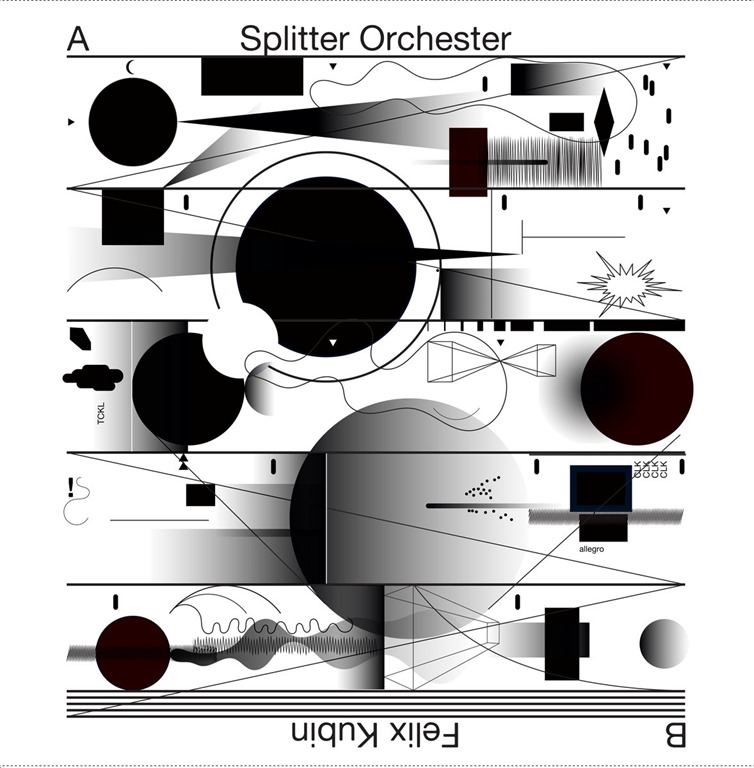
The split album seems to be in vogue again, and it’s a format which perhaps offers more scope for artists who don’t trade in punchy little tunes than the split single or EP. Shine on you Crazy Diagram may only contain four tracks and have a running time of just over thirty minutes, but it allows both contributing acts to showcase the range of their sound by presenting expanded, developed musical works.

The two tracks by Splitter Orchestra explore and examine weird digital percussion: the ever-shifting pitch creates the illusion of ever-shifting tempo (or does it? Perhaps the tempo does shift albeit subtly) beneath whistling contrails of feedback. They sputter and scrape and drone and hum. ‘Diagram 1’, at under four and a half minutes, is but a prelude to its counterpart, ‘Diagram 2’ which hums and wheezes for almost eleven minutes. There are rhythms in the mix, but they’re pinned back in the mix and bounce around against a shimmering backdrop of feedback and extraneous noise.

Kubin’s compositions are altogether less overtly structured, or at least rhythmic, as swampy swashes and thumps rumble and eddy before – from seemingly out of nowhere – faceripping blasts of distortion roar and blast. ‘Lückenschere’ is constructed around a clattering, shifting rhythm.

‘Lichtsplitter’ clatters and moans and hums and drones for an eternity, before stepping up about ten gars. By the end, one has a fair idea of what it just be like to stand within two feet of a Boeing 474 taking off.

This is, without doubt, one of those releases which lends itself perfectly to vinyl: it is, after all, an album of two halves. They compliment and contrast, and showcase two quite different sides of the experimental digital coin.

There’s a digital bonus track from the Splitter Orchester. ‘Diagram 3’ is a ten-minute extravaganza of thick, impenetrable hums and drones. It might not exactly change the complexion of the release, but it does unquestionably fill out and round off the intangible, non-physical format nicely.

Splitter Orchestra   Felix Kubin

Gagarin Records – GR2037 – 1st March 2017

Christopher Nosnibor

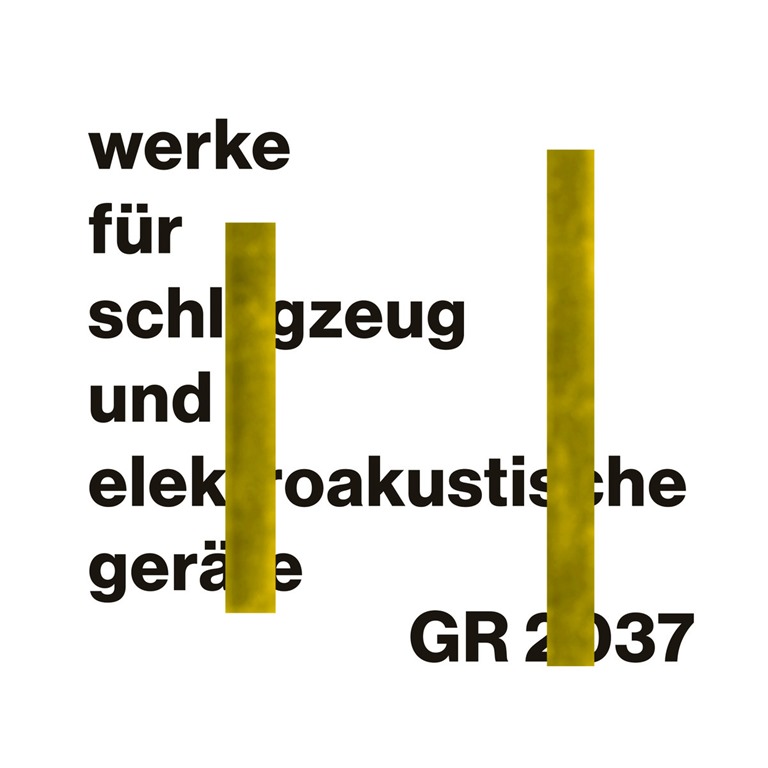
Werke für Schlagzeug und elektroakustische Geräte (that’s Works for Percussion and Electro-Acoustic Devices) is the second album by Polish duo Miłosz Pękala and Magda Kordylasińskam, and it’s a covers album. But as you might expect from an act which started out under the moniker Hob-beats Percussion Duo, this isn’t anything like a regular mainstream covers album. The selection of ‘original’ compositions more than amply evidences this, with the album starting with a brace of Felix Cubin compositions – ‘Renaissance Gameboy’ # 1 and #2.

Miłosz is a vibraphonist and percussionist, while Madga’s instrument is marimba: they use these to recontextualise and realign the explorations of Kubin’s works (while usually found working with synths and Gameboys, these pieces were originally written for violin, saxophone, cello, drums, and tape), and the results are nothing if not fascinating. It’s a slow drip, clatter, rattle and scrape with the occasional swelling rumble. It’s percussive, but not overtly so, and the unorthodox approach to generating – and recording – sound using their instruments of choice means identifying the origin of each individual sound is almost impossible.

Frank Zappa is by far the best-known artist covered on here. Famed for being difficult to play and originally written for drum kit and electronic percussion, but later emerging in various revised forms, it does seemingly lend itself to Pękala and Kordylasińska’s set-up. But of course, they’re not content to simply ‘play’ it, and instead incorporate dripping water, temple blocks, cups and use lose-mic recordings of all of these and more to forge an altogether different kind of clicky, flicky clattery racket.

Pieces by Thymme Jones and Steve Reich receive similar treatment, with the latter’s ‘Vermont Counterpoint’ performed with the flute motif and, indeed the rest of the orchestral parts, performed on vibraphone, glockenspiel, marimba and dulcimer. Building layers of rippling melody, it’s remarkably faithful to the original.

An original Pękala composition, ‘Modular #1’ closes the album. Based on a rhythmic pattern generated by a modular synthesiser, it further demonstrates the versatility of percussive instruments, as delicate waves of sound drift and flow in supple glissandos.

And yet, as beguiling as the music is – and it really is extremely pleasant, and relaxing without being too much ‘background’ – the thing I found to be most charming is the sticker on the cover of the CD, which lists the running time of 36:52 as the ‘Total Playtime’. It may not feature on the commercial release, but it does serve as a reminder that music, however serious or experimental, invariably involves an element of play, and this is nowhere more apparent in Pękala and Kordylasińska’s approach to music-making.


Pękala – Kordylasińska