Posts Tagged ‘Experimental’

Von Archives – VON 023

Christopher Nosnibor

The idea behind the Cordiox from which Ariel Guzik’s album takes its name is a machine which was conceived by the inventor of the radio, Gugliemo Marconi, in a dream just weeks before his death in 1937. He had theorised that sound never dies, but instead emanates and radiates eternally. As such, he believed that every sound ever made still existed in the ether, and that it was theoretically possible to tune into the recordings of every moment in history. The machine Marconi visualised would confirm this theory. Guzik’s Cordiox was conceived as an instrument which crosses portals of time and bridge infinite space, and this album very much encapsulates the enormity of that concept and ambition.

‘Cordiox is a machine, an instrument that communicates through time, vibrates and resonates to its surroundings, creating a response to it, communicating with it. Rather than making an unlistenable riot of noise, Guzik’s recordings here are as much concerned with the enormity of time and space, and the way everything blurs, slows and distorts, reduced to a low hum as its ends move further and further apart.

Creating a slow-motion soundscape of almost incomprehensible enormity, chimes burst like terrestrial gongs, rippling vibrations into the cosmos. The first track is an otherworldly cloud of drifting, turning sound in which time stands still.

Long, low, languorous notes are hang in space for aeons; time stalls as the notes turn imperceptibly for eternity after eternity. The second track continues in the same vein, but works from a broader sonic palette, with elongated drones rising and drifting over the interminable sonic mass. Long, low undulations ripple slowly beneath long, tapering trumpets of fluid tonality. An eerie sonic ooze which hangs in suspension between time and space, it’s the sound of all sound, singing out across infinity.

 

Ariel Guzik - Cordiox

Hidden Seer – HDSR001 – 25th November 2016

Christopher Nosnibor

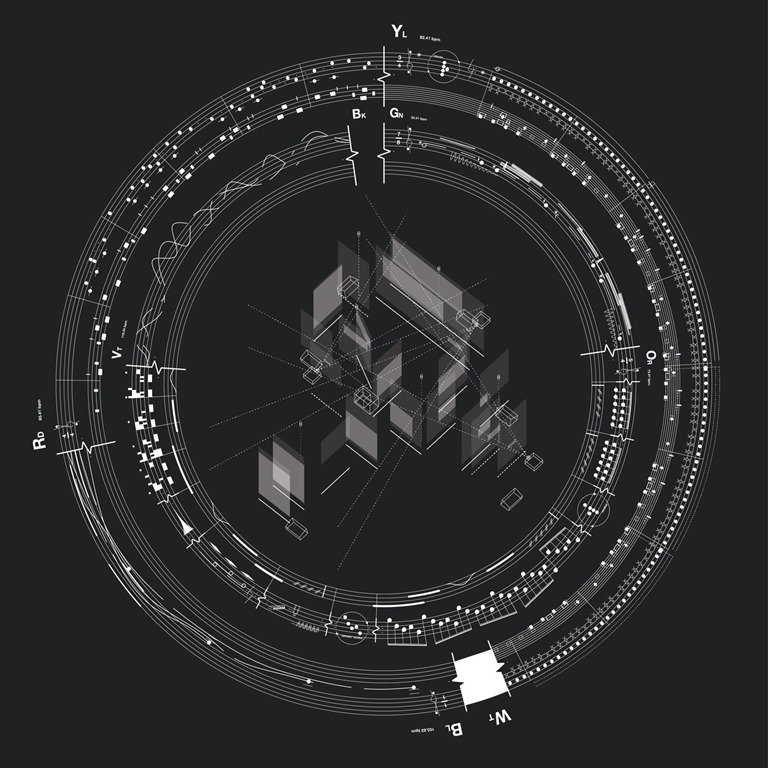
Aside from being a member of Leeds-based good-time festival-favourite indie band and all-round musical entertainers Hope and Social for some six years, Simon Goff’s list of collaborators is impressive, featuring among their number Aidan Baker and Pere Simonelli of Enablers. He’s an artist who can seemingly turn his hand, adeptly, to myriad musical forms. And on HUE – an album which couldn’t be further from the jaunty fun of H&S – he explores forms in the vaguest, most mutable, shifting, fleeting sense. Glitchy beats flicker through rippling strings. Tempos and counter-tempos criss-cross subtly, creating the impression of different currents running together but at different depths. It all happens beneath the surface.

Each of the album’s six colour-coded tracks is sculpted meticulously from layers of sound, the arrangements marrying electronic and conventional acoustic instruments to compelling effect. Percussion of a palpating heartbeat, glitchy crackles and mournful strings drift over low-end scrapes and rumbles. Eventually, the dark atmosphere gives way to light, blossoming brightness beams like the sun’s rays breaking through cloud. Yet there are shadowy currents which still flow beneath. After a rather grand opening, there’s a retreat into more minimal, drone-orientated sonic territories. Soft contrails are calligraphed in subtle, supple string arrangements. The space between the beats and notes is integral to the compositions: the echo, the decay. The overlap. A single note, plucked with varying weight.

Elsewhere, as on ‘Blue’, Goff creates a rarefied atmosphere through the exploration of the most minimal arrangements. Elongated, tapering drones which shift almost imperceptibly, with broad sweeps of sound like steely grey clouds turning, moving.

Picked notes and irregular rhythms combine to create somewhat disorientating sonic spaces; the shimmering oscillations of tr6 are trance-inducing hypnotic, but the erratically-cut and irregularly lopped sample snippets rupture the gentle surface with dislocation. The tracks drift into one another, creating a natural-feeling flow that, while not narrative, does possess a certain subtle linearity.


simon-goff-hue

Bearsuit Records – 9th December 2016

Christopher Nosnibor

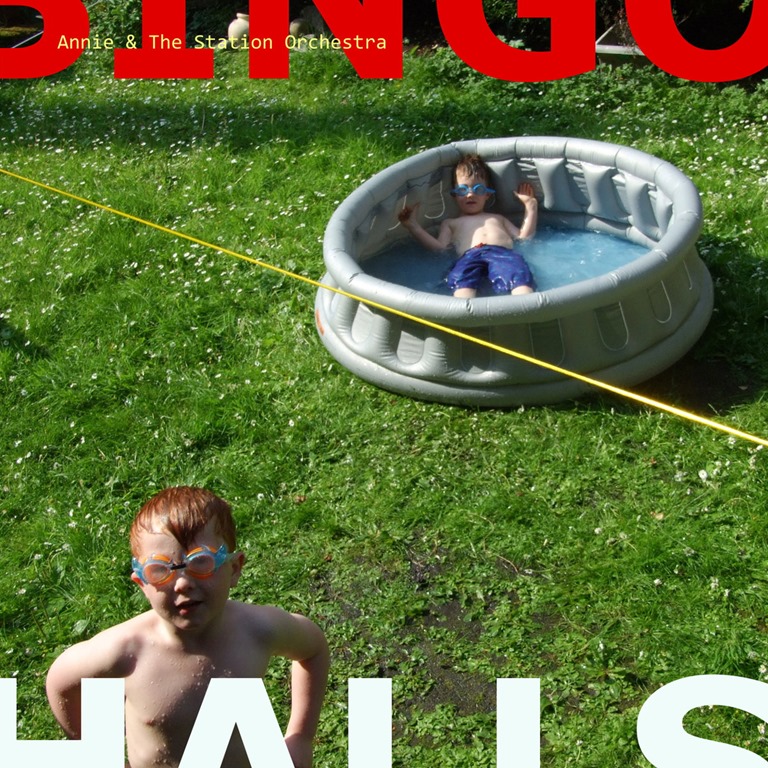
It begins with an immense drumbeat and a warped guitar that calls to mind early Swans as it warps and distorts… but then, behind a piston-pumping mechanoid beat, it all goes a bit Stereolab. Within a minute, I’m feeling confused, disoriented, as chimes hang gracefully in the air above a demonic, guttural snarl and discordant synth chimes and eerily chirpy whistles. What the actual fuck is this? And how does the music relate to the title, or vice versa? Nothing about the album is remotely evocative of plump older women with their eyes down, smashing away with their dabbers in the bustling pursuit of the next line, and nor does it conjure any images of the 70s heyday of the bingo hall, the smoke-hazed babbling equivalent of the WMC. Annie & the Station Orchestra’s Bingo Halls is an entity unto itself.

Pitched by the label as ‘a little experimental and challenging in places’, it’s also sold as being ‘very melodic, playful and pretty accessible in its predominantly instrumental context.’ These things are all relative, of course and this is a Bearsuit Records release: these guys are all about the far-out, the whacky, the weird – something I salute them for. There is, most certainly, a degree of melody and accessibility about this release but don’t think it’s some kind of Justin Beiber / Lady Gaga / Little Mix bollocks.

‘King of the Idiots’ is a brilliantly-engineered electro-pop instrumental with a dark edge, minor chords played on analogue synths wend their way over a thumping programmed beat that says ‘1984’. It builds and swerves and builds some more until it’s ascended to the position of towering space-age electro-rock. The lilting melody of ‘The Return of Banjo Williamson’, which amalgamates elements of oriental chimes with a thrumming bass and juddering electronic beats, quite unexpectedly evokes the spirit of latter-day Cure before going all weirdy Muzak electro.

Doodling, noodling guitars and synths, drenched in echo, place the album somewhere between electronica, Tangerine Dream style ambient Krautrock and post-rock. Is there a term yet for electronic post-rock? If not, there bloody ought to be, and someone needs to let me know what it is, like, yesterday. It’s not as if worriedaboutsatan haven’t been straddling these very genre divides for around a decade. Still, Annie & the Station Orchestra offer something that’s distinctive and unique, and while elements of the various tracks lean towards a range of identifiable genre trappings, the overall effect is one of abstraction, of immediate distraction, and of stubborn non-conformity. This makes for an album that’s idiosyncratically innovative, and stands proudly in a field of its own.


Annie & the Station Orchestra – Bingo Halls

Fabrique Records – FAB060CD – 14th October 2016

Christopher Nosnibor

Whatever is present, there is always an absence of something, even if the absence is of nothing. What absence ends on Jana Irmert’s debut album, which comprises six pieces created with a combination of field recordings, experimental electronic sounds, and voice, is unclear. But then, clarity is not Irmert’s objective: End of Absence is subtle, nuanced and atmospheric, a project designed to stir the imagination.

The title track opens the album with a thick bussing hum of feedback, which mutates into an eternal, mid-tone drone. The sparse beats and monotone spoken word of ‘Bagful’ sits somewhere between Young Marble Giants and Throbbing Gristle, the thunking percussion whips through the stark minimal grind. Elsewhere, on, ‘Obstacles’ a barrelling wind of white noise, burred with scraping metal-edged electronic distortion, blows into silence. Long, rumbling tones hang and swirl like mist around hisses and hums.

Irmert’s interests are the vague, irrational, less tangible aspects of existence, and these manifest in the compositions which make up End of Absence. Immense washes of sound, like tidal waves of static, crash against virtual shores on an imaginary world. drawing from a broad sonic palette, Irmert inspires an almost paradoxical sense of engaged detachment, in which the listener cannot help but bring something of themselves to complete the listening experience. In such an exercise in inclusivity, both artist and listener are fully present, and so we arrive at the end of absence.

Jana Irmert - End of Absence

Hubro – HUBROCD2582 – 25th November 2016

Christopher Nosnibor

Gathering pieces composed over the span of some thirteen years, Sound of Horse provides an insight into the compositional methodology of Laurence Crane, with each of the pieces performed by the shifting lineups of the Norwegian Asamimasa ensemble.

It begins with ‘John White in Berlin’ (2003), a long, low, ominous rumbling drone-based composition for electric guitar, cello, percussion and piano. The piano is sparse and way off in the distance. The strains of guitar feedback scrape at the senses in contrast to the low, almost subsonic rippling bass hum: it builds tension, but eventually this plateaus. There’s a daring fragility to the composition, but there’s little by way of movement or progression and little to really get a grip on. ‘Riis’ (1996), for clarinet, cello and electric organ manifests first as a cloud of ambience, from which elongated organ notes pipe a slow, majestic sound, a sort of semi-ambient church muzak. It’s an imposing work, as much by virtue of the instrumentation as the composition, although Crane does cast an immersive atmosphere.

The three ‘Events’ pieces for voice, three clarinets and a vibraphone move further into the realms of the spiritual, the wordless vocals are hushed, reverent, brushed with a celestial hue radiating upwards as they entwine with the sparse, soft-edged instrumentation. It’s the sound of a dark corner, illuminated by flickering candlelight. These pieces may be short, but they’re quietly powerful, moving.

The title track consists of seven parts spanning a full twenty minutes. It sounds nothing like any horse. With clarinet, bass clarinet, acoustic and electric guitar, as well as percussion and cello, the pieces offer a greater range of texture and tone than the other pieces, and at times offer more conventional melodic passages. Chords are strummed in slow repetition while the wind instruments make minor chord progressions underscoring an atmosphere of brooding melancholy and, in places, trepidatious uncertainty. Choppy electric guitars and thumping drums on the fourth section mark the biggest divergence from the overall form of not just the suite, but the album as a whole, and hint almost toward an assimilation of the elements of rock music, albeit in its most deconstructed and experimental form.

Precisely how to summarise what this album ‘does’ is immensely challenging, and equally, it’s not particularly clear what its purpose is to convey. It isn’t that the compositions lack finesse, but they do, all too often, lack focus. While Sound of Horse is a collection, there seems to be little connection, stylistically, between the pieces, giving it something of a scrapbook feel. But what to make of it? I dunno. Maybe it needs time. Maybe it need different ears. Maybe I need a different headspace. But at the time of writing, I’ve got little more than a shrug.

Laurnce Crane - Sound of Horse

Bocian Records – BC-AAJ

Christopher Nosnibor

As the title suggests, this is a three-way collaboration between Swiss composer Antoine Chessex, French purveyor of electronica Jerome Noetinger, and UK experimental ensemble Apartment House. The two long-form instrumental tracks were recorded live in 2014 and 2015 at Café OTO in London.

The sheer density of the sound of ‘Plastic Concrete’ from the very outset is astounding, a force as much physical as sonic. String skitters and strikes cascade amidst explosive detonations of sound. Playful horns tiptoe through bouncing double bass lines. The Apartment House musicians demonstrate just how versatile ‘conventional’ instruments can be, conjuring an array of textures and tones to forge shifting atmospheres, while Noetinger’s electronics and reel to reel tape work bring new dimensions and depths to the soundscape. Impressively, neither aspect of the instrumentation dominates: instead, electronic and acoustic exist in synergy.

A long, booming parp, resembling a ship’s horn echoes out to signal the beginning of ‘Accumulation’ Skittering, fear chord electronics and grinding, almost subsonic bass creep around before a clamour of woozy, shimmering discord takes hold. Playful passages, bordering on neoclassical in nature, offer a contrasting atmosphere to the darker, brooding passages which congeal into a heavy, amorphous sonic mass.

This is immense music. Physical music. Music that makes the skin crawl, the nerves tingle.


Apartment House

Crónica – 10th January 2017

Christopher Nosnibor

In the sphere of experimental and what one may reasonably term ‘fringe’ music, there is something of a propensity for descriptive titles. I’m quite a fan of these kinds of titles. Picking up Exercises in Modular Synthesis and Field Recording, I have a reasonable idea of what to expect. Granted, there’s no detail as to how these elements manifest sonically, I know I’m not going to get black metal or orchestral pop.

Smolders likens his process to that of the calligrapher, working with speed and precision. Operating with minimal interference or reworking once the process is under way, he is, he says, guided by the flow and the ‘here’ and ‘now’.

‘Incident at Ras Oumlil’ is constructed primarily from long, low rumbling drones interspersed with clicks and fizzy bursts of static. Voices rise; the words inaudible, but the tones of the clamourous crowd conveys a sense of agitation. Introducing an element of wordplay which reminds us that even nowhere is somewhere and is located temporally in time and space even if not geographically, ‘NowHere’ approximates the sounds of engines; trains and planes and whistling lasers. It’s evocative of something, but something so vague as to be an empty vessel from which echoes notions of travel, departure, passing through. We’re here, now, but where is here and when is now? Counterpart and companion piece, ‘NoWhere’ is barely there for the most part, with delicate chimes and rings hovering on the fringes of audibility, gradually building in its tonal range and density. The seventeen-minute ‘Up, Up and Back to 1982’ deals in sonic abstractions, shimmery analogue bleeps and twitters flit through a composition which transitions through a succession of seemingly independent segments.

These are sparsely arranged pieces, with emphasis on tone, texture and above all, space. Wibbly oscillations funnel between screeding noise, feedback and distortion. Slow, atmospheric swirls drift blankly against a backdrop off hums and crackles. At times manifesting as a sound which approximates little more than the rumble of a vinyl groove, at others bursting with sound on sound, Nowhere is attentively executed with a rare precision, navigating a route through a succession of temporo-spatial zones which linger long in the mind.


Jos Smolders - Nowhere

Hallow Ground – HG1606 – 28th October 2016

Christopher Nosnibor

Reiner Van Houdt presents an interesting proposition: a classically-trained pianist who’s worked with John Cage and Luc Ferrari, he also plays in Current 93 and has worked in collaboration with Nick Cave, John Zorn and Antony Hegarty. The fact this release is on the Hallow Ground label should perhaps give an indication that this is no soft neoclassical effort – although I’m in no way criticising neoclassical music here: I’m simply saying that this dos not sit within the field, and is harder, harsher, heavier, at least in places. There are no neat melodic structures to be found on Paths of the Errant Gaze, and no instrumentation which sits within the classical bracket: this is very much an electronic album.

On the face of it, there isn’t much to this. Paths of the Errant Gaze is an album which is extremely quiet, sparse, minimal, and the detail – and the quantity of source material involved in its creation – are not immediately apparent. Just as Burroughs and Gysin theorised on the power of ‘The Third Mind’ through the act of collaboration, so Van Houdt believes the act of recording creates a ‘third ear’. And so it is that Van Houdt built Paths of the Errant Gaze from myriad recordings gathered from a near-infinite array of locations.

‘The Fabric of Loss’ creeps ominously, scraping strings like creaking doors echo in the still air as dust motes descend silently, ‘Orphic Asylum’ introduces the first semblance of rhythms, murky, clanking, developing to extended bursts of bass-end noise and a thumping, trudging beat which plots treacherously through an unnervingly dark sonic labyrinth. Even when near-silence encroaches, there remains a dark, oppressive atmosphere in the air. Sparse piano notes and a Scott Walker-esque vocal emerge briefly from the dense sonic fog on TR 5, but neither does much to orientate or ground the listener.

There is no indication of the sounds captured by Van Houdt being your common or garden field recordings – in fact, the ‘everyday objects, situations and moments’ which Van Houdt records obsessively are all but lost amidst the process of forming a sonic melange. Nor does Van Houdt utilise these soundpieces in a conventional way: one does not get a sense of Paths of the Errant Gaze existing as a collage work. Paths of the Errant Gaze is not a work which is encumbered by a sense of pretence, and nor does its theoretical or conceptual framework impinge unduly on the end product.

The ten-minute ‘Transfinite Spectre’ is an all-out sonic assault worthy of Merzbow, as laser-guided blasts crackle and fizz, top-end treble drilling directly into the brain through the ear to create maximum discomfort.


Reinier Van Houdt - Paths of the Errant Gaze

Monotype Rec – MONOLP018 – 14th November 2016

Christopher Nosnibor

However broad one’s mind and tastes, there will inevitably be some artists who will baffle, bewilder and leave one somewhat dazed. Carp’s Head, a collaboration between Ghédalia Tazartès, Pawel Romanczuk, and Andrzej Zaleski is one of those releases. So much so, that my first reaction was one of borderline horror, a recoiling, an internal cry of ‘what the hell is this?’

‘Danse Inverse’ begins with a bleep. Minimal electro? Nope. A grizzled yet semi-operatic yellering starts up, almost simultaneous with a strolling bass, wonkily-played and a woozy accordion. Tazartès whoops and grunts, growls and emotes wildly like a drunken French opera singer impersonating Tom Waits, while the cacophonous musical backing veers and weaves all over. The weirdness only continues and as the album progresses, taking the listener on a bizarre journey around the globe and as observed through the eyes of three madmen. ‘You’ll Be Wise’ comes on like Scott Walker on acid, while the quietly crooning ‘Zither Song’ is sparse and eerily haunting in a mystical, dream-like way. ‘Orient Calling’ marks a continental shift in terms of the musical inspirations and influences, a droning sitar accompanies Tazartès’ yodelling ululations and low, chesty quaverings.

The album’s centrepiece is the nine-minute epic ‘Wolves and Birds’, a bleak and disorientating expanse of dark ambience. The wordless vocalisations convey a sense of lack, of absence, as they float, wailing and disembodied through the sonic wastelands. There’s plenty of weirdness on the other side of the bridge, too, with tweeting, trilling pipe notes and scratchy layers of sound by turns tickling and teasing the listener’s senses.

Jazz percussion breaks out unexpectedly at various points, bringing an odd and somewhat incongruous swing to proceedings. With its ‘Trout Mask’ connotations and overt otherness, Carp’s Head is many things: it is, in fact, remarkably focused and feels extremely cohesive in its order, less experimental and more built on musical intuition between the players. I’m not sure I recommend it, or if so, to whom, but there’s no question that it’s interesting or different.


Carps Head

clang records – clang47 – 9th December 2016

Christopher Nosnibor

With Band Ane, Ane Østergaard has created her own musical world: armed with a singular magpie mindset and a laptop, she has spent the last decade incorporating elements of ambient, musique concrete, pop and avant-garde, Anish Music is essentially a genre unto itself.

If 2014’s Anish Music Caravan was an other-worldy exploration into unknown sonic territories, there’s a definite sense of order and structure to this outing: the three tracks which make up the EP Anish Music V form a triptych of complimentary and successively evolutionary pieces.

Beginning with a crackle and crystalline ambient tones, ‘Borrowed’ understatedly commences an EP which transitions effortlessly and imperceptibly through a shifting soundscape formed with delicate layers. Together, these layers create a sense of density, and a growing weight. Around the mid-point of the Spooneristic ‘Vultimerse’, a rumble of thunder peaks in a dark crescendo. It’s powerful, forceful, yet still texturally detailed and multi-faceted. It’s here that Ane transcends genre boundaries, stepping above ambience to foreground instrumental music. There’s a rare boldness about it.

‘The Pool’ is an expansive work, gentle washes of sound are rent with the dense roaring jet of a rocket taking off before floating, bleeping and crackling. Ane’s vocal appears on the EP for the first time, a haunting, ethereal whisper which drifts in and out on a soft ripple of humming ambience.

In some respects, it’s difficult to really summarise the qualities of Anish Music V, and even more difficult to present an objective critique. This is music which gently goads the listener’s senses and operates on something of a subliminal level. It’s a rather pleasant experience.


Band Ane - V