Posts Tagged ‘experimentaal’

Northern Spy – 24th February 2023

Christopher Nosnibor

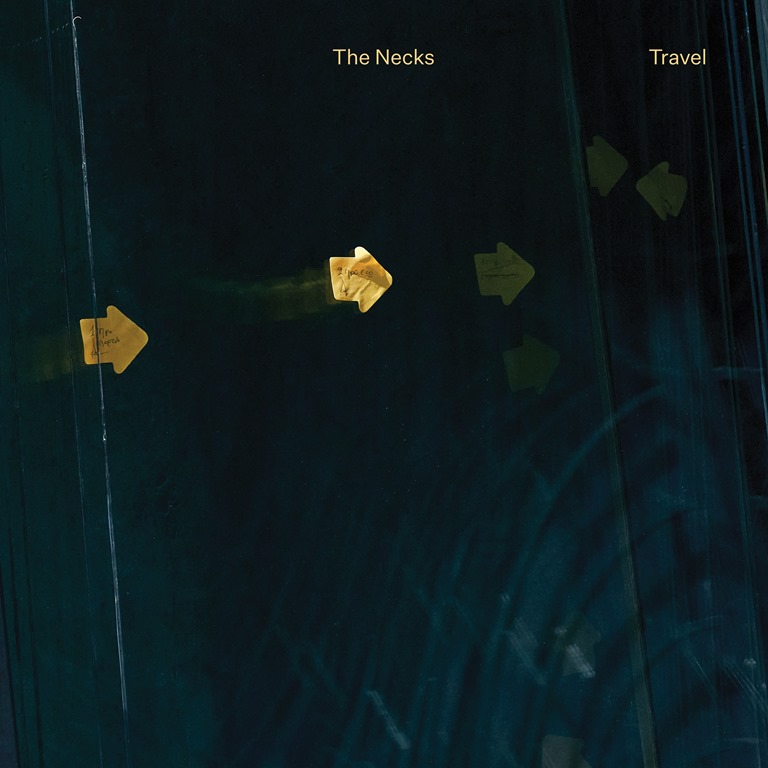
The Necks are never dull: an act that can be depended upon to deliver something different, which is no small feat for a band who’ve been going for more than thirty years. Travel sees them revisit the fundamental methodologies of Unfold, released in 2017 on Stephen O’Malley’s Ideologic Organ label. Admittedly, it’s not an album I’ve revisited all that many times since I wrote about it, but then, that’s true of many records I’ve appreciated. Some of it’s a time thing, but some of it’s an instrumental / jazz thing. I prefer to engage in the moment – and then the moment passes, and I too move on.

Where this album different from the majority of their others is that the format was integral to the form of the content, as the accompanying blurb points out, proving ‘four sub-20-minute pieces – instead of the typical 60+ minute arc for which the band is known – along with an obfuscated track list which leaves play order to the listener’s hand.’

Travel isn’t quite a straight live improv set, but does, they feel, come closest to recreating the live experience, and was recorded – save for some light overdubs and post- production – primarily live. And it’s very much oriented towards slow grooves and rhythmic repetitions. It’s hazy, mellow, almost sultry.

Side one is occupied by the twenty-one-minute ‘Signal’, built around a repetitive bass cycle and some rolling piano that brings with it a classical element, and, propelled by some busy hand drumming which transports the composition some way from what one would ordinarily expect off jazz-orientated works and into the realms of ‘world’ music (a term I try to avoid, with its connotations of western superiority and self-centredness, but sometimes short-cuts are necessary).

On side two, ‘Forming’, which again stretches languorously past the twenty-minute mark, is led by ripping piano, underpinned by some crunching bass stutters and rumbling groans. It’s jazzy in a psychedelic, Doorsy sort of a way. In this sense, it feels more like an extended mid-song workout than a piece in its own right, but it’s both pleasant and tense at the same time as it builds to a crescendo that never fully materialises.

‘Imprinting’, the album’s shortest cut at just over seventeen minutes, brings the multi-layered percussion to a more prominent position, and clanks and trembles along with almost hesitant-sounding keys and twanging strings drift in and out. It’s also perhaps the most overtly ‘jazz’ piece on the album, although it feels stretched out, the pieces pulled apart and as three instruments drift along together on a steady way, the sensation is quite hypnotic.

Organs always create a sense of grand scale and space, and the heavy drone and trill of ‘Bloodstream’ is utterly mesmerising. The piano is soft and ripples along atop the sustained mid-range drone as ethereal notes drift in and out. Part,

The album feels like a moment in time, somehow transient, and yet also something more. Travel may not really go anywhere, but it very much captures a mood – which is, for the most part, whatever mood you project onto it.

AA
Print

17th August 2020 – Submarine Broadcasting Co

Christopher Nosnibor

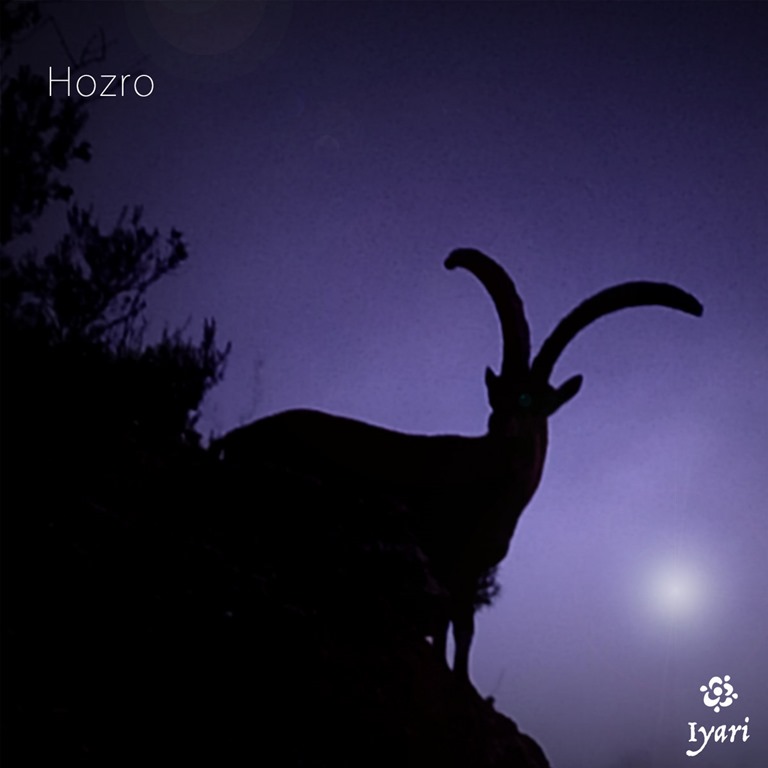
According to the blurbage (I can’t claim to spend all that much time on research when my primary objective is to report a critical and sometimes emotional response to a release, and band and PR invest a lot of time in their explications, so why not?) ‘Hozro’, is a native American Dineh word that means living being conscious about the beauty, the magic and the mystery of the universe to which we belong.

I’ve been struggling to find much hozro myself in recent months, confined to a diminished space, rarely seeing or speaking to anyone outside my immediate household and inundated with reports of the shitshow that is western governments, so ,maybe I need this album right now.

Iyari describes it as post-rock, but threatens elements of folk and traditional music, avant garde and electronica, as performed by him and a while slew of guest musician, who all contribute

‘Eloher’, the first composition, is but an introduction, a path that leads the listener toward the body of sound that lies ahead, and it’s a wide-ranging and eclectic set, of which the title rack is representative. There’s a certain restraint in the echo-soaked lead guitar line that rings out over a low-key but insistent sting-damped strum.

Is it just me that instantly connects reverb and atmosphere? Is it the musical equivalent of an autosuggestive word association? Maybe, but Hozro brings all the atmosphere with its sparse arrangements.

There’s a magnificently moving vocal on ‘The Great Spirit’, and while it soars and quavers most movingly, there are undercurrents that intimate ancient folk traditions, and one suspects its this that taps into a deeper level of the psyche than the surface of the singing or the tune itself. ‘Islay’ may or may not be a musical homage to the Scottish island which is home to distillers of the finest single malts going, because Hozro is a pancultural melting-pot, and moreover, one which actually infuses the elements effortlessly. ‘Land of the Silver Shadows’ stands out, not by virtue of its difference, but the fact it encapsulates every magnificently understated aspect of the album within a softly-ripping six minutes.

Iyari clearly grasps the idea that less is more, and in bringing the volume and the detail and the level of demand on the listener down, Hozro brings more – much more, making it one to explore.

AA

a3729313554_10

December 2019

Christopher Nosnibor

Ukranian industrial duo Kadaitcha, consisting of Andrii Kozhukhar and Yurii Samson, have stepped up a gear for their fourth album, Tar, which follows Southern Phlegm, which landed at the front end of the summer. It’s an expansion in every sense: sonically, it displays a broad palette, from barely-there ripples and clicks to all-out abrasion, with all shades in between, and with seven compositions, ranging from six-and-a-half to thirteen-and-a-half minutes in duration, there’s a lot of room in which to venture on an exploratory journey.

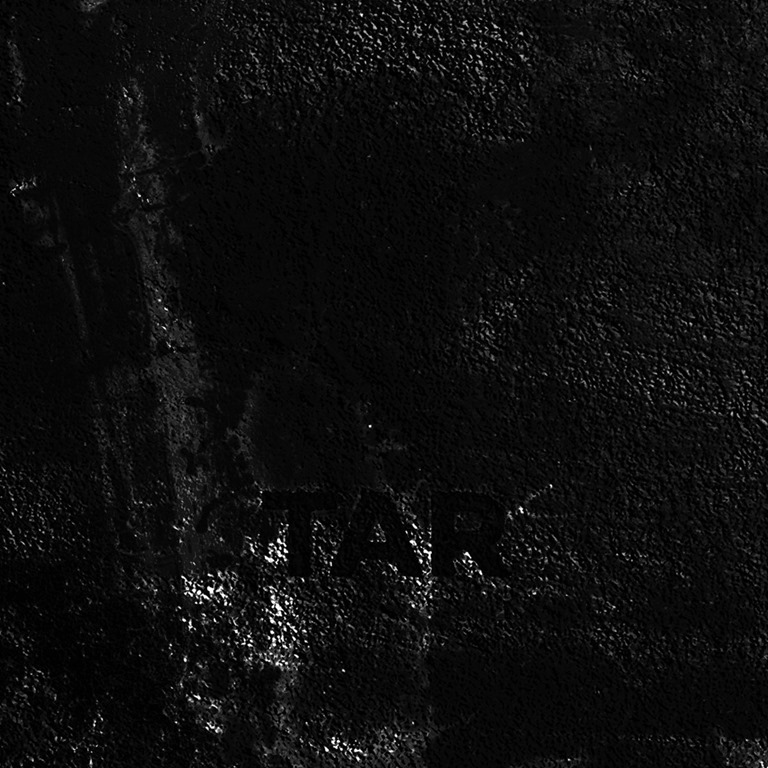
They describe Tar as their ‘most powerful and elaborate release so far’, and there’s a story of sort behind it, as Andrii explains: ‘[The] album cover is based on the images from the series APEIRON by Ukrainian photographer Maxim Dondiuk. It’s a series of scanned photo negatives found in the Chernobyl exclusion zone, which were remaining there lost and forgotten for over 30 years, being subject to radiation and forces of nature.’

The images, available on Dondiuk’s site are disturbing and otherly, and convey more about the horror of the Chernobyl catastrophe, an event on an environmental, ecological and human scale that still has yet to be fully assimilated and that has, globally, faded into the annals of time for many, than any narrative possibly could. Tar effectively provides a soundtrack to these images. The album has a discernible arc, which transitions and deteriorates into ever-deepening distortion and degradation.

Spacious, atmospheric electronic layers hover and cascade around sparse desert guitar twangs at the start of the first piece, ‘Idle Hands’, before mangled chords, overdriven and distorted, crash in. ‘2219 F’ also collides soft, semi-ambient soundscaping with crushing wall-of-noise guitar screes that come on like an avalanche and devastate everything in their wake. And yet things are only just beginning to take shape: this only foreshadows the aural challenges yet to come. ‘Ran’ brings pulverizing rhythms and a deluge of noise in an altogether more overtly ‘rock’ format, and it’s got tension and attack, and marks the first stage in the transition toward a harrowing mess of ugly noise.

There aren’t many vocals on Tar, but when they do enter the mix, they’re gnarled, dehumanied, and monotone: ‘Eclipse’ is Throbbing Gristle on a doom-infused downer: a persistent electronic throb provides the backdrop to a detached, dehumanised vocal wheeze, and ‘Serpent Hill’s slithers into a murky morass of discomfiture. By the end – the overloading analogue explosion of the 13-minute ‘Yatagarasu’, which calls to mind Halogen-era Whitehouse – it’s a barrage of noise, a clunking beat and something semi-musical plinking away beneath a squall of white noise.

It hurts, but in a good way, a way that conveys damage, devastation, and environmental devastation.

AA

AA

AA

K - Tar