Posts Tagged ‘download’

Möller Records – 23rd March 2023

Christopher Nosnibor

It’s clear that while the pandemic is officially over, collectively, we’re still very much coming to terms with it, and its aftermath. Lockdown, in particular, has had a deep psychological impact, on so many. Everyone’s experience was, and is, different, of course. I have friends who almost deny to themselves that it happened, that it was a dream or something, and for some of us, in some respects, it’s as though it never ended. This is how people deal with shock and trauma.

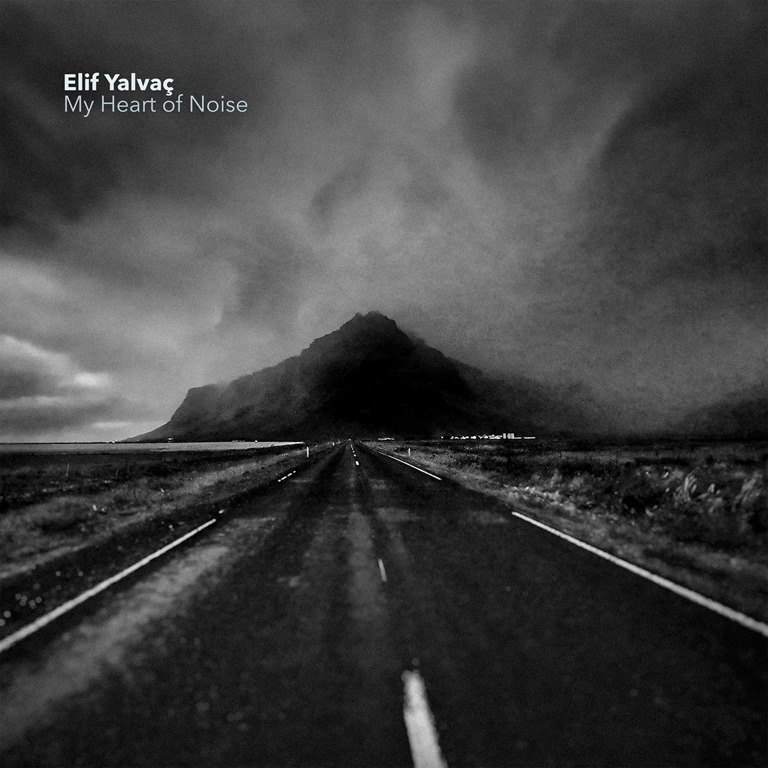
My Heart of Noise is not a pandemic album, a lockdown album, a post-trauma album, but as Elif explains, the album “began with a collection of studio and concert recordings from my travels north before the pandemic. It became like a puzzle: I could hear something special, but also that the pieces didn’t fit together well or feel complete. The breakthrough came in realising that this project was meant to be more about creation than preservation, and that it didn’t need to be a literal document any more. It could still be faithful, but instead to the spirit that inspired this music and my travels in the first place, instead of a particular recording. I created new musical starting points, and invited artists I met on my travels plus others, asking them to choose one to begin to work with together. Some artists incorporated our previous recordings, others set off in a new direction, while I shaped the pieces and found a way to connect them together.”

Recent history, then, is marked not as BC and AD, but BP and AP – before pandemic and after pandemic, and My Heart Of Noise reflects Yalvaç’s attempts to ‘make sense of a noisy world’. And the world is indeed, noisy, and difficult to articulate. There is simply too much noise too much happening all at once. It’s a perpetual sensory overload.

For this, her debut album, Elif Yalvaç involved a number of the people she encountered along the way of her journey, and the title also references this, the way she became the hub in a collective process.

The collaborative aspect means that each track does have a slightly different feel, despite all being centred around eerie ambient soundscapes.

‘Orchestra of Light’, the album’s first track, is a layered composition of dronies and hums and whispers which drift and swirl around some of the mind’s darker recesses. The textures and tones rub against one another and the edges aren’t all smooth, with buzzes and barbed, drilling sounds grating against the grain, meaning there’s a certain friction, a tension, creating a sense of discomfort.

‘Gate Check’, which follows, is softer, but the notes bend and twist and the supple, mellow tones are spun with a sense of the awkward and the uncanny, but nothing so warped as ‘Mielmaisema’, with its collage of human vocalisations and clunking clumps of thuds and thumps Amid whirls and crackles and hums, from which grinding groans of decaying Krautrock creak. It may be less than five minutes in duration but it packs a lot of shiversome strangeness into its short space, in which even chirruping birdsong feels somehow unsettling.

My Heart of Noise is not an overtly collage-based album, but it does assemble many sources and sounds, and often overlaps and overlays them to disquieting effect, and I’m at times reminded of vintage sci-fi and the BBC Radiophonic Workshop.

‘Cloud Score’ sits somewhere between post-rock and classic drifting ambience, while seven-minute closer ‘Taiga II’ very much feels like the lifting of the clouds and the breaking into light, but at the same time feels like a storm building on the horizon, and ‘Dronasaurus’ indicates that it’s not 100% serious 100% of the time.

My Heart of Noise is a restless work, one which ventures and explores, and never for a moment settles into comfort or conformity. It is not an easy album: whenever things feel like they’re settling into something nice, a cloud of disruption and difficulty will drift over and raise a shiver. You can never really settle or feel at ease with My Heart of Noise – but as a representation off life in the world as is, this is a fair summary. Keep your eyes and ears open: there is always something around the corner.

AA
a3629223309_10

SN Variations – 7th May 2021

Christopher Nosnibor

Did downloading really kill physical formats and the music industry? If you believe the media and the major labels, yes, and again, when it comes to non-major artists, it’s clear that the current industry model is not one that benefits them kindly. Then again, streaming services probably did more damage than downloading – or home taping – ever did. But there is also a very definite flipside, in that the cost of producing physical releases on a small scale is phenomenally expensive on a per-unit basis, to the point that it’s often prohibitive, and that’s before one factors in issues of distribution and postage.

There’s also a matter of purpose: conventionally, singles were released to promote albums, and in order to achieve that aim, tended to be the most commercially viable song(s) from said album that radio stations (and, later, blogs and the like) may play and draw potential buyers in. But artists like Adrian Coker don’t make music that has that kind of marketability. You won’t find his music being played on commercial radio, and a single is probably likely to sell a bunch of albums.

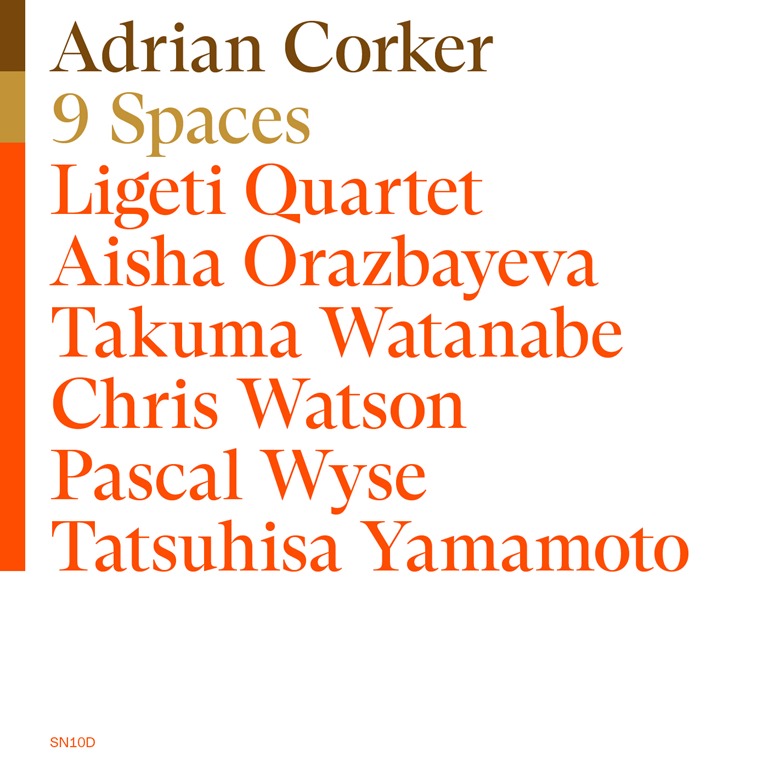
No artist makes music for it not to be heard. And so it is that SN Variations release Adrian Corker’s ‘9 Spaces’ single as a download only, and it makes sense, particularly in context, as a musical work that was only possible via digital means, as Corker explains: ‘This piece started quite a while ago in a room with me, Chris Watson and an electro magnetic receiver made in Russia. It ended with the processing of these parts by Takuma Watanabe and a percussive improvisation by Tatsuhisa Yamamoto that left my original demo in his recording worldising my track in Japan. In between over the last year musicians such as Aisha Orazbayeva, the Ligeti Quartet and Pascal Wyse sent me parts remotely from London and various places around Europe. A track that was made in 9 spaces of which I was in 3’.

It’s in this context that the title makes sense also. And the roll-call of contributors is quite something:

Tatsuhisa Yamamoto – percussion

Takuma Watanabe – max

Chris Watson – field recordings

Aisha Orazbayeva – violin

Pascal Wyse – trombone

Ligeti Quartet:

Mandhira de Saram – violin

Patrick Dawkins – violin

Richard Jones – viola

Val Welbanks – cello

The first version, a quite punishing nine-and-a-half-minutes in duration, begins with grating drones and serrated buzzes, somewhere between an electric hair clipper and a palm-sander, before transitioning into trepidatious territory, with skittering fleeting buzzes and swarming sounds creating an unsettling tension atop a sparse, hesitant bass that stops and starts, single notes echoing and halting, And ultimately, it’s quite challenging – but to be clear, that’s no criticism. Art that isn’t challenging isn’t really art, but entertainment.

‘V2’ is subtler, quieter, stealthier, the drones trimmed, more mid-range, cleaner, manifesting as more like organ notes that quiver and quaver into space, disturbed only by the occasional extraneous disruption. As such, it’s more ambient and less upfront. It’s also everything a single should be: a snapshot of the artist, showcasing different aspects of their sound in contrasting and complimentary fashion.

AA

SN10D_art

16th April 2020

Christopher Nosnibor

It was live that I was first sold on The Twilight Sad. Having been recommended their debut album, I felt a certain indifference, but a few weeks later, witnessing the intensity and blistering volume of a live show, they affected a genuine shift in my life in music.

Timing matters, and it’s a fact the band themselves acknowledge in the blurb accompanying this digital release: ‘We have been talking about recording a live album for a long time. We think this is the best we’ve been playing as a live band and wanted to document that. With five albums of material we felt now was the time.’

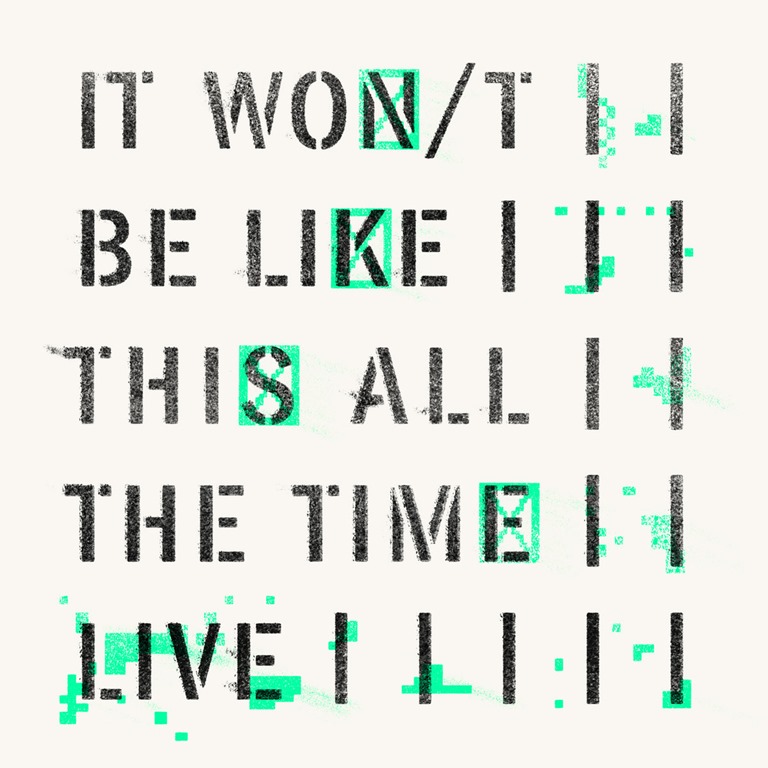
Ordinarily, I wouldn’t quote at such length, but the band’s statement speaks multiple volumes about the nature of the band, and precisely why they mean so much to their fans: ‘Over the past few months we were figuring out how to release the album and then covid-19/lockdown/gig cancellations happened. We quickly decided that we would release the album digitally on a pay what you want basis. The reason behind this is that we know that financially it is a worrying time for a lot of people and for ourselves included. We wanted to make sure we could give everyone who likes our band one of our gigs live in their living room as we can’t be out in the world playing gigs right now. We wanted to make sure that anyone who wants the album can afford it as well. I hope everyone is doing okay. I hope this helps… The title of our last album It Won/t Be Like This All the Time has been living with me for the past three/four years and right now that sentiment feels stronger than ever. We’ll get through this together.’

This release will definitely help. This is a largely personal thing, I’m sure, but I’ve struggled to stir much enthusiasm for the myriad live streams from living rooms. Kudos to the artists plugging the gig gaps and engaging directly with their fans. But seeing one or two members of a band strumming away in their living room doesn’t capture or recreate the experience of attending a live show, which is about the immediacy and the intimacy and while I’m not one for hug or physical contact, the sense of oneness that comes from standing packed in close with people in a shared moment of appreciation and often catharsis is unique. And if I want full-on, tear-jerking, breath-shortening catharsis, I go and watch The Twilight Sad.

The fact The Twilight Sad have such a massive hoard of recent live recordings from the last tour is good news: having caught them just before and also just after the release of the album, it’s fair to say that they really have hit a new pinnacle lately. And as a document which captures their recent form, listening to this is transportative. Rather than lamenting the lack of the full band as I watch an acoustic home show – and with absolutely no criticism of the bands doing this – I’m back there, reliving the experience. For this reason, it’s very much a plus that they’ve replicated the full concert experience rather than simply selected recordings of the tracks from the latest album and presented them in sequence. Strong as the album is, this is more, with 18 songs that really do show the band in spectacular form.

It’s a powerful opening: the massive incremental swell that builds on the album version of ‘[10 Reasons for Modern Drugs]’ is replicated perfectly here: a bubbling synth and simmering tension culminates in a maelstrom of guitars. Meanwhile, ‘Shooting Dennis Hopper Shooting’ is one of the definitive Sad tunes and one the most killer tracks of 2019, and they deliver it with full force here. But then, that’s every performance of every song at every show, and is precisely why they shows are so very fucking special.

‘VTR’ brings all the emotion, and dipping further into the back catalogue, they attack ‘Don’t Move’ at a blistering pace, and while the synths still dominate the melody, Andy MacFarlane’s guitar squalls bring all the noise and all the texture. And this is an important point of note: however tight they get, however close to fidelity the sound, there’s always an edge that’s unmistakeably live about The Twilight Sad, and the emotions are never less than painfully raw.

‘That Summer, At Home, I had Become The Invisible Boy’ lands just short of the middle of the set, and is everything that sold me in the first place: the volume and intensity are captured perfectly as James Graham howls ‘The kids are on fire in the bedroom / the cunt sits at his desk / and he’s plotting away.’

‘The Arbor’ is denser and even bleaker than the studio version, and calls to mind Pornography era Cure, and ‘I/m Not Here [Missing Face]’, one of the starkest, darkest tracks on the album, is harrowing as hell live as James croons darkly, ‘I don’t want to be around you anymore / I can’t stand to be around me anymore’ against a guitar that positively wails in anguish.

Every single song is a highlight, but the inclusion of ‘Seven Years of Letters’ and ‘Wrong Car’ are rather welcome surprises which almost compensate the absence of ‘I Became A Prostitute’, while listening to the cover of Frightened Rabbit’s ‘Keep Yourself Warm’, which has become a set staple and here spans a massive eleven minutes, provides another reminder of the way band and fans connect to share their pain and anguish.

The album closes, as every set rightly does, with an eight-minute rendition of ‘And She Would Darken the Memory’. It never fails to hit home, landing a punch to the gut and bringing a lump to the throat. On paper, the words ‘the rabbit might die’ may only yield a shrug, but howled in a thick Scottish accent amidst a tempest of guitars, it acquires all the emotional resonance that words alone can’t articulate.

Make no mistake: this is an outstanding live album by any standards, capturing the essence of the live experience of the band perfectly. But it’s also something that will mean absolutely everything to the fans. And of course I mean me.

AA

a3904098291_10