Posts Tagged ‘dark’

Guide to Saints – SNT016

Christopher Nosnibor

The opposite of contrast. Absolute sameness. White on White, as a concept in visual terms, suggests invisibility. A white object in a white room, or a white brushstroke on a white background is ultimately camouflaged. However Dulux may sell it, white is an absolute. How does this translate to a sonic palette? An Infinity Room (AIR) is the vehicle – or durational sound project, if you will, of Australian artist and composer Julian Day. White on White collects three pieces

‘Intercessions’ takes the form of a continuous mid-range drone. It has a duration of 45 minutes. Three quarters of an hour. Listen to the tone… marvel at how it remains the same. Or does it? Just as the mind struggles to process images passed by the eyes when starring at a vast expanse of nothing – of white on white, or the imperceptible changes in colour as paint dries – so the messages from the ear become subject to the introduction of aural mirages when presented with a single, unchanging sound, or a sound which changes so gradually as to effect unchangingness. The pitch does, indeed, change, and additional layers are gradually phased in to bring new depths and dimensions, as skipping back and forth along the track at random renders clearly apparent. But being so, so gradual and so, so slight and subtle, the changes are imperceptible in real-time. The album’s shortest track at a mere seven minutes, ‘Rhetoric’ is also the most overtly rhythmic, the intertwining piped notes interweaving to render a dainty melody. But it’s more about the interplay between the notes and the way they interact in the air and in the ear than about making musical entertainment.

‘Void’, here in an edited form and with a running time cut down to twenty-seven minutes pulses gently for is duration a single note, throbbing for an eternity eventually graduates to a widescreen wavering drone, the texture and tone of which slowly changes, but again, slowly, so slowly.

White on White is an album which is likely to test the patience, and equally, the mental equilibrium. Focus on it too closely, it becomes tedious and frustrating. Focus on it too little, and it’s hard to appreciate its infinitely subtle progressions. Find that interzone and you’re in a place where its presentation of nuance upon nuance makes sense. Don’t force it, embrace it.

https://player.vimeo.com/video/102786092
 

Infiniy Room - White on White

Gizeh Records – GZH68 – 2nd September 2016

Christopher Nosnibor

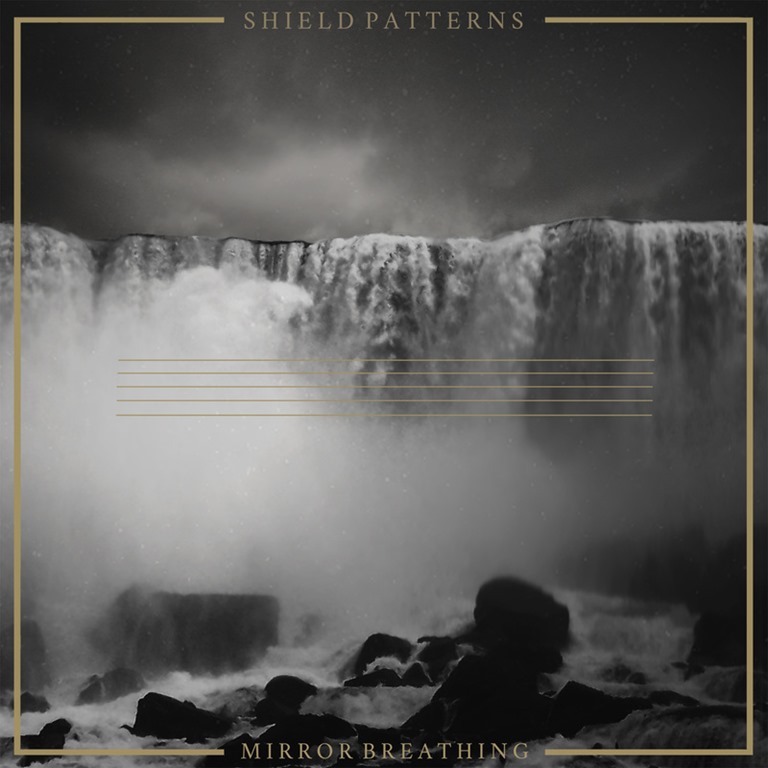
Richard Knox’s musical career is marked by works which are ponderous and atmospheric. Howeevr, his latest venture in colaboration with Claire Brentnall, is distinguished by a leaning toward material which feels more focused, compositionally, and more direct. It’s all relative, of course, and Mirror Breathing is, as the title implies, a work which is hazy, misty, the songs grasping, just for a second, at the ephemeral and reflecting the moments back, refracted and rarefied. Following on from debut album Contour Lines (2014) and 2015’s Violet EP, Mirror Breathing marks a step further into dark pop territory, although dark is indeed the operative word here, and it’s clear that in Brentnall he’s found the perfect collaborator: a person with not only an amazing voice, but an equal understanding of what it takes to forge ponderous, nuanced, atmospheric music. It’s not a matter of drawing out which each brings to each composition: Shield Patterns are built on collaboration and intuition, more of a case of a creative space emerging from a collective ‘third mind’ than the simple coming together to two musicians. 

The musical backing the pair create is atmospheric, and captures elements of light and shade which contrast magnificently; dark, rumbling low-end and industrial scrapes are tempered by ethereal ambient sounds of indeterminate origin. Claire Brentnall’s breathy vocal hangs, spine-shiveringly, over the drifting soundscape. The whole production is draped in a soft-focus feel, a mist which partially obscures the shapes and forms and renders them vague, unfamiliar and ambiguous. This ambiguity and unfamiliarity is an unsettling sensation, and while the graceful vocals superficially soothe, the emotional tension and overall sonic disquiet ultimately leave the listener pulled in different directions, peering into the shadows and wondering what lies just out of view. Arrhythmic percussion echoes in the dark, detonations which send shuddering vibrations through the ground. There’s a stark beauty to ‘This Temporary Place’ that calls to mind Zola Jesus, and elsewhere, dark industrial grumbling tremors contrast with the dreamy, otherworldly atmosphere of ‘Cerulean’.

Julia Kent is an artist who has a tendency to crop up in all sorts of places and with remarkable frequency: a respected solo artist in her own right, she is also a one-time member of Black Tape for a Blue Girl, as well as performing as a member of Rasputina and Anthony and the Johnson, he cello work on three of the tracks here adds further texture to the arrangements. Ultimately, though, it’s the balance of the instrumentation which really makes the album work: there’s a lot going on, with many incidental sounds blended in, but it’s seamless and no one aspect or sound dominates at any point.

Again returning to the connotations of the title, if the image of a steamed mirror can be read as a twist on the ‘smoke and mirrors’ metaphor, then there is an element of deception in the way the compositions seem sparse, but are in fact constructed from manifold layers which form strata of remarkable sonic depth and density. The drums may be distant-sounding and low in the mix, but they roll like thunder. In Claire’s vocals, you don’t hear every word, but you feel them. Sometimes she soars so high as to be barely audible to the human ear. Sometimes, it’s less about the actual lyrical content than the delivery, and her voice as of and in itself conveys more than mere words ever could. There’s a quality in Claire Brentnall’s voice which communicates on a subconscious, subliminal level. Her voice echoes in the recesses between the beats, drifts along, enveloped in the gauze-like textures, and occupies invisible spaces between the notes. Hers is a voice which is delicate, but by no means weak; yet the strength of her delivery lies in her ability to convey vulnerability.

From the alluring ‘Dusk’ to the dolorous chimes of ‘Blue Shutters’ and the sinister depths of ‘Balance & Scatter’ with its dark jazz intimations, via the tranquil and sedate(d)‘Sleepdrunk’, the songs conjure scenes of both anguish and ecstasy and often explore the pull of existing in both states simultaneously. Haunting, hypnotic and disquieting, Mirror Breathing is an impressive work that warrants time for thought and reflection.

Shield Patterns - Mirror Breathing

Entertaining Violence

Christopher Nosnibor

I am often drawn to duality of interpretation or meaning, particularly when that interpretation hinges merely on emphasis. As such, I think ‘Entertaining Violence’ is a great name for a publisher / label, and looking over their small but select catalogue to date suggests it’s highly appropriate. Essentially, Entertaining Violence is concerned with art, and the principle functions of art should be both to entertain and to educate, or, perhaps more accurately, to provoke thought. Art and entertainment are by no means mutually exclusive, and nor should it be considered untenable for art to both entertain and provoke. Their latest release achieves this, although it does very much depend on one’s perspective as to just how much entertainment it provides.

To provide some context from the press info: in the summer of 2015, Sergio Calderón – founding member of London-based avant-garde band 無 (MU) – was invited to participate in the exhibition Not a State, But an Artists’ Colony at Intelligentsia Gallery 智先画廊, Beijing. Sergio conceived STEREO as a transcendental and meditative experience compromising a Two Channel-Video and Sound Installation. As such, STEREO is a soundtrack piece, which was recorded as a live improvisational work of guitar sound and texture recorded at Entertaining Violence Gallery, London the 15th August 2015.

It is not a work which builds at any point: there are no crescendos or bursts of sound, but there are infinite textures. STEREO is a work which explores tonality, in the subtlest of ways. The track drifts on, concentrating on the ebb and flow, the wash and drift as notes struck rise and fall, decay and reverberate in the space in which they’re created. It doesn’t ‘go’ anywhere: that is not its purpose or aim.

What this 47-minute piece really conveys is the tonal range of the electric guitar, when played minimally and given room to breathe. Some may call this drone, ambient; and certainly, the notes and chords stuck are left to hang in the air for an eternity. The tones, the sounds are in themselves muddy, hazy, murky; this is no crisp digital replication of a guitar’s sound, but a fading analogue sound, fuzzed and degraded by environment, by space, by recording technology. It reminds that the listener is never truly ‘in the moment’ when listening to a recording, they are not ‘present’ and the recording is just that; a captured version of events; a recording is not the event itself. A recording may accurately convey the sound, or at least he sonic experience, but it can never fully convey the environment in which the recording was made, it can never capture and convey the experience of being present in the moment the audio was captured. It will never incorporate the experience of whatever may be going on around simultaneously, it can never capture the emotion or the mental processes contemporaneous to and triggered by, the moment.

For all of this, however great the listener’s separation from the moment, a work like STEREO, or, indeed, specifically STEREO affords almost infinite space for the listener to lose, and find, themselves.

https://player.vimeo.com/video/165013545?color=ffffff&title=0&byline=0&portrait=0

STEREO — 無 (Excerpt) from Sergio Calderon on Vimeo.


mu01_stereo1

MU at Entertaining Violence Online