Posts Tagged ‘Dark-Ambient’

My Proud Mountain – 22nd July 2016

Christopher Nosnibor

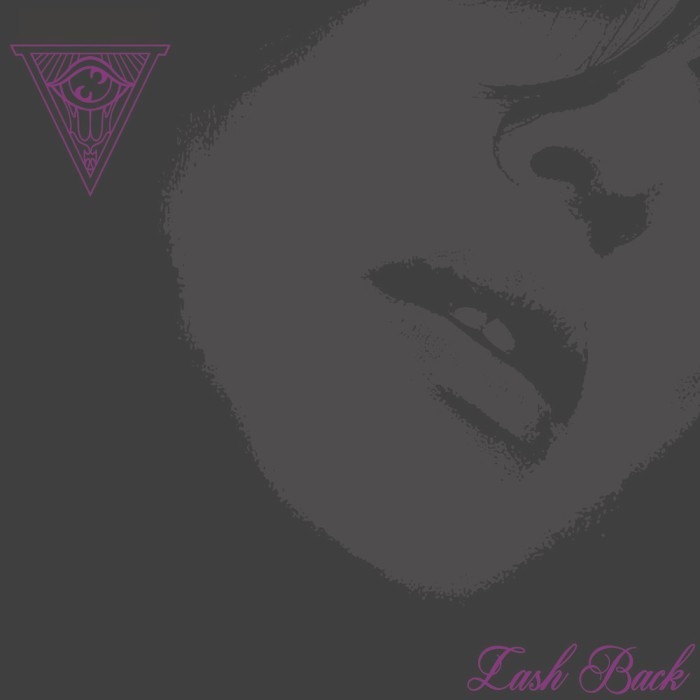
It takes a while to get going: the first minute and a half is simply drifting sound, like the distant sea. But Lash Back is an album that takes it time to build atmosphere. Parker may be the lauded producer and electronics wrangler behind some of metal’s more intriguing contemporary acts, but Lash Back is certainly not a metal album. But it is dark and as innovative an album as you’re likely to hear this year.

Stammering snare drums add an element of unpredictability to the sedate and solid bass-led rhythm on opener ‘Psychic Driving’. As the layers of sound overlay one another, forming a towering sonic cathedral, one is increasingly moved to awe. The stark industrial electronica of ‘Knuckle Crossing’ hangs over a slow, deliberate beat, shifting shapes and textures shading shadows and conjuring an air of coldness and dislocation, while ‘Slow Children’ broods ominously. Parker’s compositions, and their execution, show extreme restraint, the emphasis very much on building tension rather than looking to grant its release. Just as the invisible monster is always scarier than the one which reveals itself, the undefined threat and menace that lurks on, and beneath, the surface of the tracks, is more powerful than their realisation.

There are sustained sonic attacks, and plenty of them for those who relish the blistering noise assault: the aforementioned ‘Slow Children’ does eventually burst into a steely crescendo, and the slow surge of all-engulfing noise that is ‘Low Gaps’ is breathtakingly dense, with heavy hints of Prurient in its tone and the juxtaposition of synth sounds more commonly found on commercial dance albums, with mangled industrial noise, and the sonorous mechanical grating of ‘Sheep Slaughter’ is every bit as abrasive as the title suggests; it’s a soundtrack of pain, of death, of mass-scale killing.

Lash Back is by no means an accessible or easy album, but then, it isn’t meant to be, and Parker has produced something that is unusual and unsettling, and which conforms to precisely nothing.


sanford-parker-lash-back-1

Gizeh Records – GZH65DP – 18th March 2016

Christopher Nosnibor

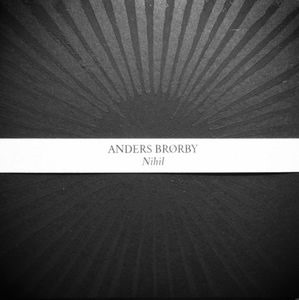
Gizeh is a label which grasps the importance of the complete music experience, and never stint on their packaging. Anyone purchasing their product can feel a tangible sense of both art and artefact, and Anders Brørby’s brooding instrumental album Nihil, the second release in their ‘Dark Peaks’ series, is no exception, housed as it is in a textured gatefold sleeve, the radiating sunburst design raised from the surface, in heavy black ink on a matt black background. How much more black could it be? The answer is none. None more black (the white paper band printed with the artist’s name and album title which much be carefully slid from around the sleeve in order to access the contents notwithstanding).

The presentation provides a suitable indication as to the sonic experience it prefaces. Nihil meaning nothing: while it has, since the 19th Century come to connote a negativity, manifesting as antagonism or rejection through the widespread use of ‘nihilism’, as of and in itself, ‘nihil’, or ‘nothing’ implies an absence. Neither positive or negative, it is simply a lack. Absolute nothing is beyond the human ken, and so, in artistic terms, there is a need to portray nothing, absence, with something. This is something Norwegian composer sound artist Brørby achieves on the 10 pieces which comprise Nihil.

Primarily, the music is dark. There is a lack, an absence, of light, at least in terms of the overall sensation it conveys. Melding elements of drone and dark ambient with more abrasive sounds, the compositions infer an experimental bent which places atmosphere at the fore. The structures are almost subliminal, the shapes of the pieces largely evolve and emerge briefly through a succession of transitions as layers of sound overlap and drift across one another almost imperceptibly. Musical forms are therefore explicitly absent, expounding the concept of ‘nihil’. As such, Nihil is a work of subtlety, and a work which bears theoretical scrutiny, and sits alongside works by the likes of Christian Fennesz, Lawrence English and Tim Hecker.

But subtlety should not be read as a synonym for sedate or tranquil. ‘As Dead as the Stars We Watched at Night’ builds layers of dark noise and swelling drones scrape and torment the nerves, and while the gentle, chimes which ripple in cadence through ‘I Will Always Disappoint You’ offer a glimmer of light and warmth, ‘Put Your Ear to the Ground’ finds a harsh, thick distorted fuzz that obliterates the smooths contrails beneath and accentuates the unrest on which Nihil is constructed. Likewise, the serrated howl of ‘From the Window Above the Lake’ conveys the anguish of emptiness.

Through the medium of sound, Brørby creates a conceptual absence (not to be confused with an absence of concept). There is no message, and Brørby does not purport to convey anything through the work beyond ‘raw atmospheres’. ‘Raw’ implies unfiltered, unadulterated, without manipulation nor refinement, and while this may not be strictly true of Anders Brørby’s creative process, Nihil nevertheless presents itself as being self-contained, a work about absence of anything but the sounds it contains. It is not ‘about’ Anders Brørby, and if anything, the artist is, if not completely absent, then very much hiding in the shadows.

It’s an album that’s best appreciated in a semi-present state, to allow the sounds to slowly wash over the senses and most of all, to be heard without preconceptions or expectations. Because nothing can often leave you with so much more than something.

Anders Brorby - Nihil


https://bandcamp.com/EmbeddedPlayer/album=4022471447/size=large/bgcol=ffffff/linkcol=0687f5/tracklist=false/transparent=true/


Anders Brørby Bandcamp

Gizeh Records – 12th February 2016

Christopher Nosnibor

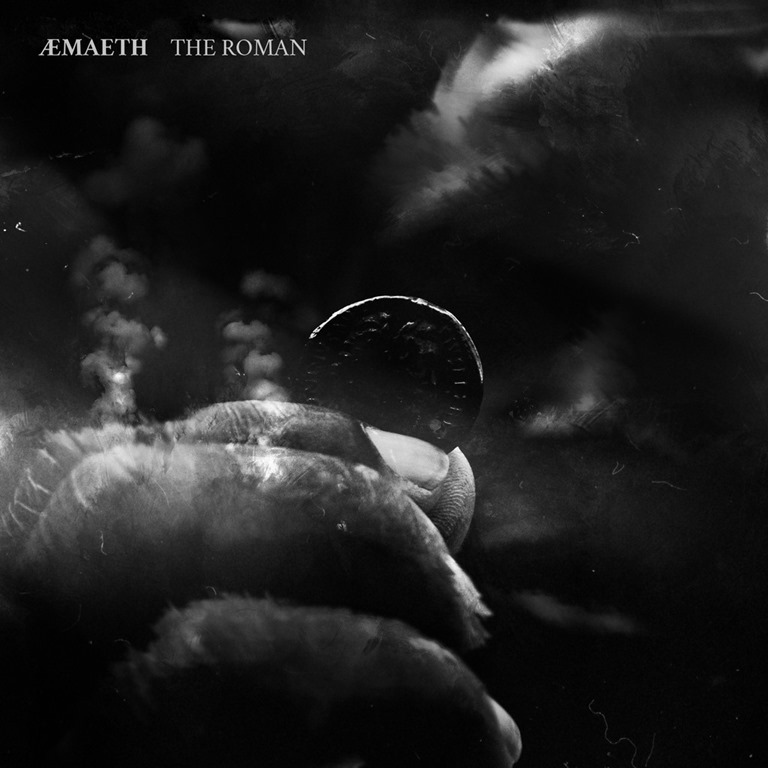
Æmaeth is the project of Owen Pegg (A-Sun Amissa / Hundred Year Old Man), and he’s already scored a number of films. Independent flick The Roman is a silent work which to which ten segments of improvisational drone-based passages played on guitar and piano were composed by way of an accompaniment.

Since the film premiered in May 2014, its soundtrack has been evolving, developing, accruing layers and details, until finally, the ten pieces came together to form a fluid, brooding sequence that stands as a whole, and as a powerful sonic journey. It’s fitting for a film which is no gung-ho Hollywood take on history based on a succession of cast off-thousand battle scenes. Simon Rawson’s movie, shot in Yorkshire, is outlined as a story of two men, lost, who are ‘challenged and tested by nature, each other and the inner most conflicting primordial affiliations with man’s body and mind’.

Pegg’s soundtrack conveys so much, its dark, tense tones resonate as they connote psychological drama. The battles fought within the mind, the conflict and the uncertainty. The barren, unforgiving landscapes, shadowy woodlands and bleak moors. These are the scenes portrayed within the compositions, which are spacious, often sparse. Delicate piano notes drift airily but ponderously, gradually eclipsed by deep, dark, thunderous rolling drones, stormy and threatening. At times, the sheer weight and density of the ominous tones are oppressive, the sounds so large as to create a sensation of a pressure being applied to the skull.

That isn’t to say the soundtrack lacks subtlety: far from it. There are passages of quiet, so hushed as to compel the listener to strain their ears listening for some faint sound – and invariably, there is something, something small, soft, indistinct. Or there are layers of sound, often in the upper frequencies, needling the senses, tugging at the peripheries of the psyche, somewhere in the background or half-hidden, off to one side. These, like the brief moments of light which occasionally present themselves, are integral to the soundtrack’s dynamics, and the power of its effect.

There is torment, there is discomfort. There is also an ever-present sense of danger, sometimes distant, sometimes heart-stoppingly close.

The final passage, the nine-minute ‘Neptune’ is vast, built on a slowly turning vortex of sound. A rumbling rhythm lingers as it pulses just beneath the surface of its soft tonality and offers a hint of redemptive relief at the conclusion of a journey which is most worthy of the term ‘epic’.

Æmaeth - Roman


Æmaeth – The Roman at Gizeh