Posts Tagged ‘Challenging’

Felte FLT-089 – 14th July 2023

Christopher Nosnibor

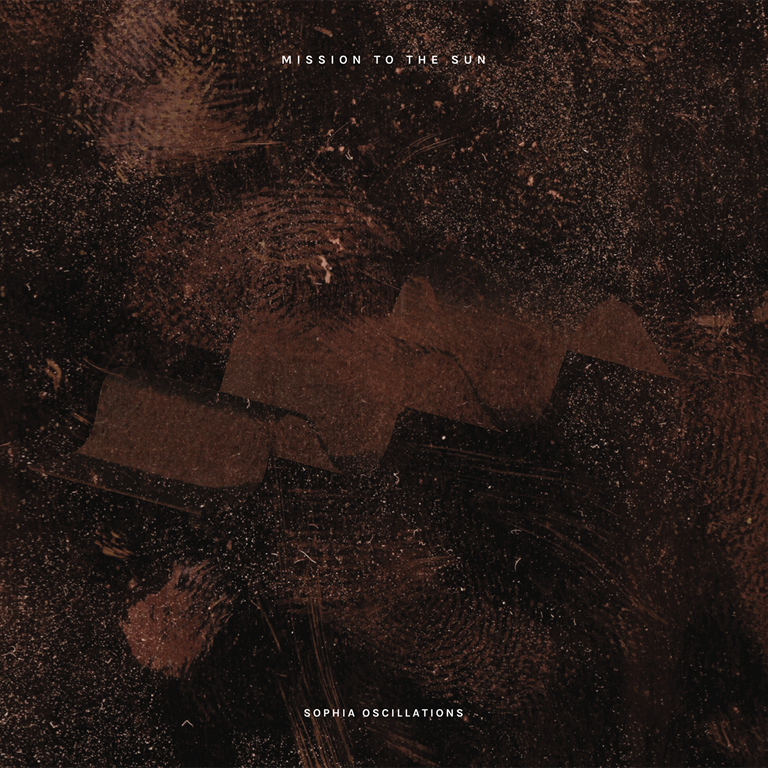
Mission to the Sun is Chris Samuels of Ritual Howls fame (synths, samples, programming) and Kirill Slavin (vocals/lyrics), and comes recommended for fans of Wolf Eyes, Moin, Throbbing Gristle, Coil, The Legendary Pink Dots, Drew McDowall, Suicide, Cabaret Voltaire, etc.

Sophia Oscillations is their second album, and it pitched as ‘an immersive journey through the dark corners of post-industrial music’, whereby ‘The Detroit based duo continues the sonic exploration started on their debut album Cleansed by Fire, while delving deeper into themes of isolation and lost communication. Christopher Samuels’ synths, samples and rhythmic programming is accented by Kirill Slavin’s haunting vocal delivery as the listener receives intersperse audio recordings from the outer reaches of inner space.’ This may seem an unusual angle of approach given their chosen moniker, but the one place hotter than the sun or the earth’s core is the core of what it is to be human. We still understand space better than we understand the deep sea, and the deep sea better than we understand the human mind. There is much scope for exploration in every sphere.

William Burroughs famously described ‘Scottish Beat’ writer Alexander Trocchi as a ‘cosmonaut of inner space’, although he also applied the label to himself, stating ‘In my writing I am acting as a map maker, an explorer of psychic areas, a cosmonaut of inner space, and I see no point in exploring areas that have already been thoroughly surveyed.’

This is an appropriate context for the eight compositions which make up Sophia Oscillations, which are essentislly beatless but strongly rhythmic in form. If they belong to the lineage of the avant-garde and the industrial music of the late 70s, it equally draws on a host of other, more contemporary threads in order to forge something quite different and ultimately new.

‘Drowning’ surges and pulses, rippling waves washing over a slow-treading bassline which wanders up and down, stepping somewhere between DAF and The Cure’s Carnage Visors while the vocals whisper and wheeze low in the mix, a stealthy monotone that’s both tense and detached. Whistles of feedback strain from the speakers and wrap themselves around the whole drifting expanse. Things take a turn for the abrasive on the title track, with machine-gun blasts of noise cutting through grainy swathes of bleak ambience, gradually fracturing and fragmenting quite uncomfortably.

There are hints of medievalism and classical on ‘Censor Sickness’, but they’re melted into a dark murk of muttered voices and unsettling atmospherics, and the combination is quite unsettling and far from comfortable: if anything, it’s queasy, and the minimal yet noisy ‘Unborn’ pushes this to another level: stark, metallic, robotic electronica, it has an 80s dystopian feel which again calls to mind DAF and Cabaret Voltaire. The late 70s and early 80s were exciting because musicians with limited means – and ability – were finding ways of using emerging, and increasingly affordable – technology to make music which represented the world in which they found themselves. As such, the emergence of experimental electronic music and industrial music was born out of a collision of multiple factors, none of which will ever recur, and for this reason can never be recreated.

Mission to the Sun aren’t attempting to recreate history here, but instead, Sophia Oscillations finds them processing history through their own filters. ‘Attrition’ brings together post-rock and crunching industrial electronica with a dash of Gary Numan and more detached spoken-word vocals, and it’s a hybrid that isn’t easy to process, because it all feels so alienating. But then, articulating alienation always does.

The churning grind of ‘Cornerstone’ sounds like the intro to something by Big Black, but instead of Roland kicking in, alongside a relentless bass, it just grinds on and on, and it’s dark and messy. Once again, Slavin’s voice is half-buried in the mix: it’s difficult to decipher the words, and his voice hovers, blank, flat, vaguely Dalek-like, in the vein of Dr Mix, but less harsh.

Sophia Oscillations is a challenging album. Yes, it’s unsettling, bleak, stark sparse, but the hardest part is the fact it doesn’t confirm to any one genre, it doesn’t follow any obvious or specific form, and it’s not the fact that it’s unsettling and difficult to find a place for it that’s the issue, but the fact it keeps you tense and on edge for its duration. But, perhaps even more than that is the fact it feels removed from anything human. But it’s not so far removed as to be alien. The brain simply isn’t equipped to process the inhuman– or the near-human-but-not-quite, the uncanny, the unheimlich. Because we recognise it, and yet we don’t. Sophia Oscillations brings the challenge right in front of your face. Sit back, draw breath, process. This isn’t an easy ride.

AA
FLT089_front

Dret Skivor – 23rd December 2022

Christopher Nosnibor

Swedish microlabel Dret Skivor may be many things, primarily a champion of the obscure and staunchly uncommercial (hell, they even put out a split release with one of my spoken work / noisewerks this time last year), but exuberant is not one of the adjectives that comes to mind. But look at those exclamation marks in the title!

But following the customary roughly annual Procter / Poulsen collaboration, they’re putting out a bonus release – release twenty-three, no less – to celebrate the label’s second anniversary. It’s a just cause for celebration and a display of public exuberance, not least of all because the catalogue they’ve swiftly amassed is a treasure trove of wonderfully weird and dark experimental noise, and this three-tracker featuring Fern and Fåntratt is no exception.

Fåntratt’s fifteen-minute excursion into harsh noise wall sits between ‘frolics from Fern! It’s an F-macka!!’ the blurb tells us (which I assume is a good thing, since my ears tell me it is). And the contrast works well: the two Fern tracks are brief, at least in comparative terms, with the five minutes of ‘Field Trip’ pulling together dark, damp, ominous ambience and achingly spiritual choral singing which drifts and glides in and out of the nightmarish soundscape. It creaks and rumbles and thunders with deep, murky tones, the vocals rendering the experience even more unsettling. ‘Heaven in my Hands’ couldn’t be more different – a snarling blast of industrial/grindcore crossover, where everything is so mangled and distorted it’s impossible to make anything out other than the broken-sounding beats. It’s as heavy as hell.

Yet, perversely, it feels like light relief after the release’s centrepiece. Fåntratt’s ‘Morot’ is fifteen minutes of high-end hell. It’s harsh even by harsh noise all standards. And whereas many of the Dret releases have been HNW exemplars, the majority have featured subtle variations in tone or frequency: not this cut. This is pure HNW. We’re in Vomir territory, but pitch-shifted up a few notches to a pitch that drills through the brain penetrates to the core.

I did, for a moment, think I had detected some slight sonic shift, but then realised, after further exploration, that this was simply an effect created by moving my head to one side or the other in relation to the stereo speakers. Swallow, move, it sounds different for a fleeting second, but the fact is that this is solid noise, a sheer and unmoving wall of noise of the kind that will induce migraine, tinnitus, and seizures. Possibly. While some noise can be quite soothing – admittedly, I speak for myself here, but can’t be alone in finding this – Fåntratt’s ‘Morot’ is torturous, tension-building, painful-inducing. It’s powerful stuff, and the perfect party tune for Dret’s second birthday. Here’s to the next two years.

a1095810778_16

Treading that line between elevated art and unnecessarily loftiness and pretension… It’s a challenge. It’s not always easy to differentiate parody and sincerity, not least of all because we exist in a world in which real-life news resembles Brasseye and The Day Today. Irony is dead, and belief is the enemy in a post-truth society.

So when a press release reads half like a sample from a William Burroughs cut-up whereby Lemegeton Party is described as ‘the narcotic and occluded industrial-ambient debut for the Junkie Flamingos,’ it’s difficult to rate its level of seriousness. And, according to the accompanying text, the album is inspired by Friedrich Hölderlin’s Hyperion, [and] is gilded with a neoclassical sheen that alludes to both the divine and the diabolical. Kundalini’s whispered invocations which have so creepily effective in addressing psychosexually abject conditions in She Spread Sorrow are immediately recognizable here. Yet, she shifts the content towards messages of power and strength, even if cast in the shadows of desolation and solitude’.

The chances are – no criticism – that this will go over the heads of many, and returns us to the question of the extent to which understanding the theory behind any work of art should have a bearing on one’s capacity to appreciate it. I don’t believe that it should even one iota. But then again, my own background draws me to note that in their naming, Junkie Flamingos allude to surrealist juxtapositions built on incongruity, something which defined Dada and indicates a strong Surrealist bent.

The detail is that Junkie Flamingos is ‘a project conceived in 2017 by Luca Sigurtà, Alice Kundalini, and Daniele Delogu’, and that ‘Each of these musicians has their distinctive sounds: Sigurtà with his vertiginous electronica, Kundalini best known as the author behind the death industrial project She Spread Sorrow, and Delogu in the bombastic folk of the Barbarian Pipe and. Their collective amalgamation shifts but does not denude each of these aesthetics in the construction of this oblique, sidereal album.’

It’s clear Junkie Flamingos have high artistic ambitions, and ‘Evening of Our Days’, the first of the albums five expansive tracks sounds pretty serious: even a line like ‘you are a small man’ sounds menacing, threatening, dangerous when whispered, serpentine, from the mouth of Alice Kundalini against a rising tide of electronic manging. The backdrop is sparse, but ugly. ‘Shape of Men’, the album’s eight-and-a-half minute centrepiece is dolorous, sparse, and funereal as a single bell chime rings out over a low, thudding bass beat.

‘Restless Youth’ rumbles, grinds and glitches amidst flickering beats, ominous rumbles, hushes, barely audible vocals, and a general radiance of discomfort and disquiet. The lower, slower, and quieter they take it, the more you feel your skin crawl and your nerves jangle. Sitting between ambient and sparse electronica, it’s darkly atmospheric not in the ambient sense, but in the most chilling, semi-human, psychotic sense. ‘The Language of Slaves’ continues on the same path, the semi-robotic, processed vocals creating a distance between event and emotion. There’s no obvious entry point, and this is music of detachment and cognitive dissonance. These are the album’s positives. It isn’t easy to get into, but why should it be? But where Lemegeton Party stands out is in its subtlety, something chronically underrated right now. With Lemegeton Party, Junkie Flamingos steel in by stealth… and then fuck with your psyche. And that’s why I love it.

AA

Junkie Flamingos – Lemegeton Party