Posts Tagged ‘Avant-Rock’

The Whimbrels is an outer-borough masterpiece. The sound is dense, polyrhythmic, hard, and sweet, hooks and riffs to save your soul pop out at unexpected moments. The players’ credits — The Glenn Branca Ensemble (dating to the 1980s), The Swans, J. Mascis — predict the guitar-driven, sonic onslaught of The Whimbrels, captured on their startling debut – and as a taster, they’ve unveiled a video for the song ‘She is the Leader’.

A Whimbrels show involves racks of guitars, tuned in different and unconventional ways with the players constantly switching between them. ‘The Whimbrels’ album showcases this. There are counterpoint choirs, dueling e-bows phase against each other, chunking, poly- and cross-rhythmic interludes, soaring arias of distortion from Westberg and Evans’ strangely melodic and inventive guitar. Evans’ and Hunter’s vocals front a three-guitar line up tuned every way but normal. The ax men are veterans with contrasting styles that come together in a potent whole. The beats are smart and unrelenting. The album concludes with the instrumental Four Moons of Galileo, four short sections with the inner two framed by shimmering walls of descending, slowly evolving harmonies. The title recalls the four moons discovered by Galileo, suggesting the many more then lurking unknown in space.

ARAD EVANS (guitar, vox, primary songwriter) was a member, recorded and toured with Glenn Branca’s ensemble from the 1980’s until Branca’s death a few years ago. He is founder and still performs with Heroes of Toolik. In addition to Branca, he has played with Quiet City, Rhys Chatham, Ben Neill, John Myers’ Blastula, The SEM Ensemble, The New Music Consort, Virgil Moorefield’s Ensemble and many other groups. “A truly inventive and surprising guitar player.” (Rick Moody, The Rumpus Aug. 25, 2016).

NORMAN WESTBERG altered the course of rock as the main guitarist of the Swans over 35 years, contributing "overwhelming waves of volume with a mix of the rhythmically slashing and the harmonically sensual." He has a busy career as a solo artist and with other projects, such as Heroin Sheiks, NeVah and Five Dollar Priest.

LUKE SCHWARTZ is a New York guitarist and composer to watch; he also toured and recorded with Branca, and he performs in a wide range of groups, including Rick Cox, Joh Hassell, Lotti Golden, Wharton Tiers and with several of his own projects, The Review and the improvisational Hive and Quiet City and is in demand for film scoring work.

MATT HUNTER (bass, vox, songwriter) is a co-founder of New Radiant Storm King and plays or has played with a galaxy of cool projects, including J. Mascis & the Fog, King Missile, Silver Jews, SAVAK, and his own Matt Hunter and the Dusty Fates.

Drummer STEVE DiBENEDETTO, is a widely shown and collected fine art painter but also in in high demand for his music. ("The Spinless Yesmen" 1984—89, "Wonderama",aka "The Shapir-o-Rama" 1990—95, Airport Seven from 2010 to 14). He frequently collaborates with Dave Rick (Bongwater, King Missile, Yo La Tengo, Phantom Tollbooth) and Kim Rancourt (When People Were Shorter and Lived by the Water).

LIBBY FAB (drummer on That’s How It Was) is a founding member of the noise duo Paranoid Critical Revolution. She was technical director of Glenn Branca’s Symphony 13: Hallucination City from 2006-09 and toured as drummer for his ensemble on the Ascension: The Sequel tours. Her own electro acoustic and video works have been featured in festivals in Europe, North America and the Caribbean.

JIM SANTO (producer) partnered for many years with Wharton Tiers in the fabled The Kennel studio. At his own Tiny Olive, Santo has worked with a wide range of clients and projects. As a guitar player, his credits include The Sharp Things, George Usher and Harley Fine.

The New York Times once placed Arad Evans on “an index of creative or experimental electric-guitar-based music in America — young lords of the wild in the post-rock tradition.” That description fits The Whimbrels perfectly. You may need earplugs.

AA

Whimbrels_platforms

Gringo Records – 15th December 2023

Christopher Nosnibor

By way of a name, Reciprocate doesn’t give much away. With its connotations of collectivism and collaboration, it could be anything from limp indie to a jazz ensemble, although to my ears, it suggests ska-punk or some other corny right-on festival friendly guff. But no: they’re an avant-rock trio, and something of a supergroup when it comes to representatives of the UK DIY scene, consisting of Stef Kett (Shield Your Eyes), with drummer Henri Grimes (Shield Your Eyes, Big Lad), and Marion Andrau (The Wharves, Underground Railroad) on bass, and the name, it transpires, is a reflection of the synergy between the three, promising ‘intoxicating, super catchy good-time, big heart music – a human album delivering a human message of love and love lost.’

The blurbage goes on to outline how Soul To Burn proceeds at a cadence all of its own, halting and blasting, ducking and weaving, zooming away from its distant cousins: Taste era Rory Gallagher or Mr Zoot Horn Rollo of Beefheart’s Magic Band, leathering it at full throttle, fuelled by virtuosic back beats that remind of somewhere between the rolling rock of Mitch Mitchell and the fractured noisebeat of Lightning Bolt’s Brian Chippendale: immediate, innovative, virtuosic, exhilarating.

The album’s ten songs are concise and precise, with ninety percent keeping below the four minute mark, and it’s perhaps this focus which really makes Soul to Burn pop. ‘Sleevetugger’ is pretty minimal, and has soulful, bluesy vibe with even a dash of county twanged into the mix – but it’s played with a wonkiness worthy of Pavement, and that absolutely changes everything. They amp it up on the groovesome ‘Rhodia’, where a riff that comes on like a Led Zep lift is delivered with a rough and ready noise-rock approach.

For context, my first exposure to live music was electric blues acts playing in pubs in my home town of Lincoln, at the tail end of the 80s and very dawn of the 90s. While I was just starting to discover alternative music – via the top 40 and also Melody Maker – I was still that bit too young to go to ‘proper’ gigs, and besides, there weren’t (m)any in Lincoln back then. But what struck me was the musicianship of so many of the acts, many of which would play a mix of originals and covers, and I also came to appreciate how everything blues-based springs from an extremely limited root stock. ‘Derivative’ isn’t really a criticism that holds any water. But, to make blues rock work, it has to either the executed extremely well, or otherwise fuck with the formula in some way, and bring something different to the party. Either is really, really hard to do in such an immense field. The last decade or so has seen countless acts achieve success with some pretty mediocre blues rock played loud: I began to think I was bored of blues. But then an album like Soul To Burn turns up unexpectedly, doing it with a real punk attitude, and turns everything around.

Whereas many power trios – not to mention duos, who are the power trio of the post-millennium years – go all-out to fill every inch of space with sound, Reciprocate create space and separation. Everything isn’t blasting to the max, and instead, what we get is a rare level of detail. The bending strings, the fret buzz, the rattle of the snare, the ragged imperfections – they’re all there, and are integral to the fabric of the recordings.

They do melody and groove, and it’s enjoyable, but when they wander off track, as they do most spectacularly towards the end of ‘Pissed Hymn’ there’s something truly glorious about it. The title track is ahead-on collision between Shellac-like mathiness and raucous, rabble-rousing folk. Everything gets twisted and knotted up, the template gets tangled and torn, and it’s unpredictable and exciting.

And it’s got a cat on the cover. 10/10

AA

Reciprocate - Soul to Burn cover 3000px

Constellation

Christopher Nosnibor

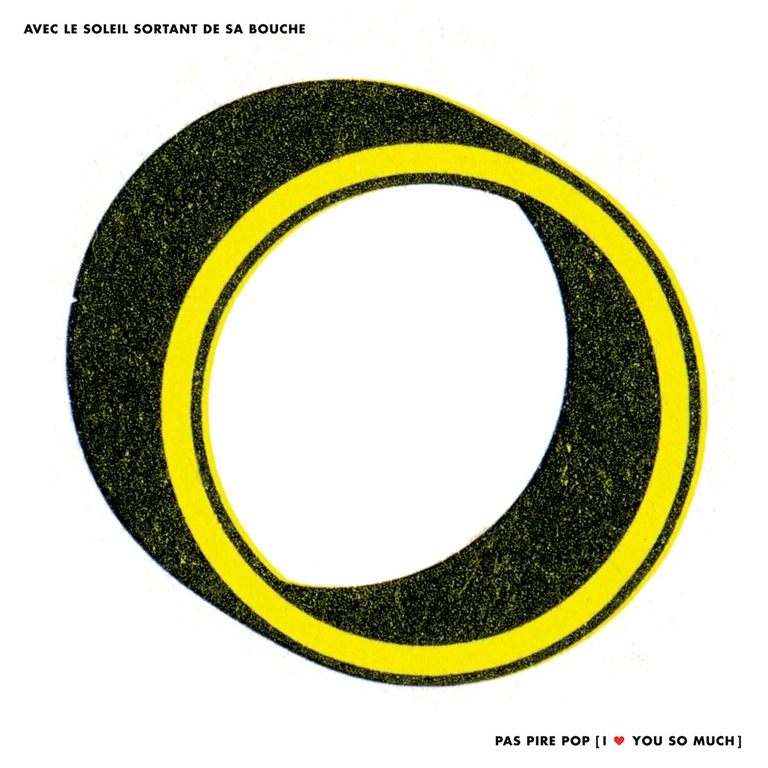
It’s been 29˚C in the shade today. I’ve been awake since 4am for the second day in a row, and at work in the day-job since 7:30am. I’m a flustered, strung-out sticky mess, dying of hayfever, trying to hold it together and keep myself cool and hydrated with a constant flow of Scrumpy Jack. It’s not working. But I am: instead of kicking back or chilling out, I’m desperately trying to chisel out words in my cramped home office space where it’s so humid I can barely breathe. And instead of taking the easy option of one of the million mellifluous ambient works in my never-ending to-review pile, or taking a soft hit with some straight ahead metal or whatever, I’m battling with this dizzyingly diverse effort by Avec le soleil sortant de sa bouche.

Sold as a kraut-rock ensemble, Montreal collective Avec le soleil sortant de sa bouche (which translates, I believe as ‘with the sun coming out of his mouth’) pack myriad influences into their second album. Although containing ten tracks, it’s ostensibly an album built around three primary movements.

Psychedelic rock, krautrock, desert rock, punk rock, noise rock, afrobeat, experimental pop, post-rock, electronic; all are touchstones for Avec le soleil sortant de sa bouche.

The album’s first track, ‘Trans-pop Express I’ manages to combine hypnotic psychedelic desert rock with wibbly analogue retro-futuristic spacey electronica and some kind of warped gospel/country infusion. It bleeds invisibly into the hypnotic pulsating riff-trippery of ‘Trans-pop Express II’

The opening minutes of the second movement ‘Alizé et Margaret D. Midi moins le quart. Sur la plage, un palmier ensanglanté’ (of which there are three parts) marries a martial beat to some skittering world music vibe and tops it with a desperate, yodelling vocal holler that’s far wide of carrying a corresponding melody, or even a tune. Over the course of the piece as a whole, the band push into new territories by unconventional roads. This is essentially the key to the pleasure to be found in Pas pire pop. Avec le soleil sortant de sa bouche are clearly a band who please themselves first and foremost, and enjoy themselves in doing so. And yet they largely swerve indulgence by virtue of their sense of movement: the tracks build and bed, trip and transition: the explosive crescendo at the end of the aforementioned first part of ‘Alizé et Margaret D’ is killer, and immediately loops back to the opening proggy motif on the second part. It’s like skipping back in time, like a glitch in the time continuum. It’s a minor detail in many ways, but it’s also a minor work of genius.

The final movement – in a colossal five parts – begins with a sweeping orchestral cascade which gushes every whichway over a thumping dance groove. It’s merely the beginning of a crazy journey through jazzy math-rock and noodlesome post-rock via some hefty noise and some Talking Heads-y post-punk oddness that works its way to a nifty finale by route of a tightly-woven funk groove meted to some clattering drums while whizzing electronic details fly like comes into the distance.

I’m oozing perspiration from every pore, especially the backs of my various joints: the knees, the elbows, the groin, and I find myself contemplating the complex musical conjunctions within the framework of the shifting tubular geometry of my limbs in context of the insane, overwhelming heat and its effect on my capacity for focused, linear thought, as if existing in some stylized Ballardian landscape of the mind.


Avec le Soliel