Posts Tagged ‘Album Revieew’

Human Worth – 18th October 2024

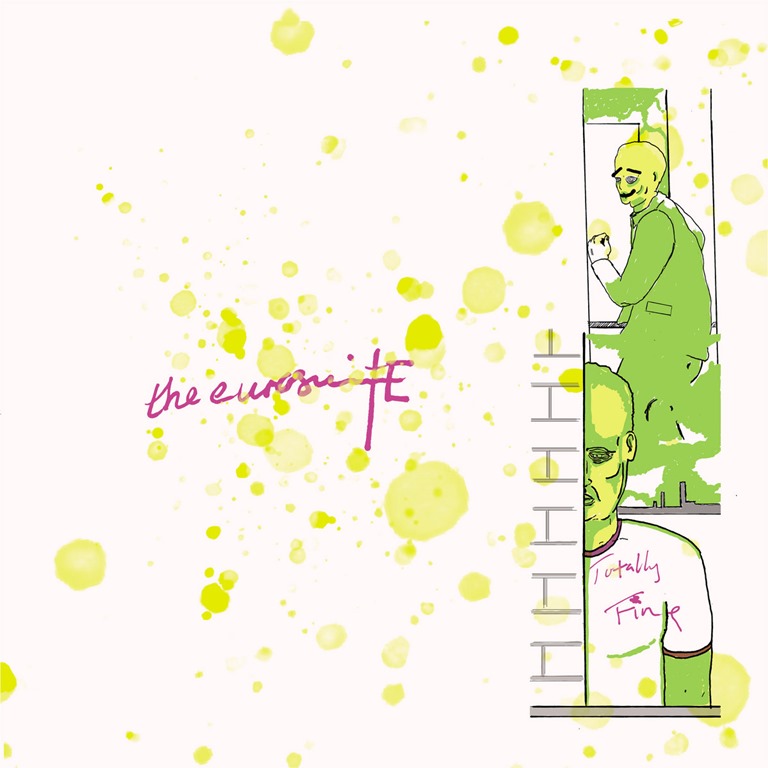
Sorry, not sorry, as they say. In the spring of 2023, off-the-wall supergeroup collaboration featuring members of USA Nails, Nitkowski and Screen Wives, The Eurosuite, released their third album, through Human Worth. They were so sorry, they’ve done another. Only this time, they promise, it’s different.

As the accompanying notes explain, ‘Produced by Wayne Adams (Petbrick / Big Lad) at Bear Bites Horse Studios, the band have taken a different approach from their maximalist output on their second LP Sorry – do less. Where the songs on Sorry were built from a variety of jams, band member ideas, traded demos and looped phone recordings, the 10 songs within Totally Fine were all built and mercilessly edited from a full band improvisations, with individualism, indulgence and egos set aside to better serve the songs… That spirit of minimalism is threaded through each track, which veer from sinewy post punk (‘Crustacean Blue’), throbbing death disco (‘Antimatter’) and something between driving krautrock, surf rock freakouts and an evil version of the B52s (‘12 Diphthongs’, ‘Houseplants’)’.

Sorry was a cracking album: that’s essentially a fact. It still is. But it was seeing them live that they really clicked for me: something about that manic energy in the room, the way each member of the band bounced off one another, if felt as if there was something happening in real-time that went beyond the recorded work.

Here, all of the same elements are present: fizzling synths, jerky guitars, sudden thundering bass runs, changes of tempo, blasts of noise, beats that flit from disco to industrial pounding, and vocals which swing from half-spoken to shouty – and that’s only in the first couple of songs, with a combined running time of less than five minutes. But there’s a newfound focus and intensity, and well as, perhaps a greater separation of instruments which lays the components elements more evident.

There seems to be an emerging subgenre of weird, quirky, jerky noisy shit that’s a bit mathy but with some fried electronics and simply prone to exploding in any direction without a moment’s notice, and it’s noteworthy that both The Eurosuite and Thank, prime exponents of this wide-eyed demented frenzied kind of racket have both found homes at Human Worth. The label’s always had its ear to the ground and its tendrils out for noisy stuff with something different about it, and this feels like an emergent form.

Somewhere in the recesses of my overcrowded memory, there’s a vague recollection of an interview with a band sometime in maybe the late eighties – it may have been a grebo act like Gaye Biker on Acid on how the future of music might be weird, like ‘people playing bits of toast or whatever’ (the quote is from memory, since I’m buggered if I can find it on the Internet and don’t have a month spare to look through books and press cuttings for the sake of fact-checking a detour in a review for an album due out next week). Anyone who’s seen Territorial Gobbing will likely agree we’ve reached that point. But with the likes of Thank and The Eurosuite, they may not be quite that far out, but they’re pretty damn far out in terms of the way their compositions leap and lurch all over, and are simply so far removed from more conventional song structures with verses, choruses, mid-sections, even bridges and pre-choruses or whatever that song forms are being pushed to new limits. And this is exciting and brain-bending in equal portions.

Perhaps this is the culmination of everything that’s preceded it. Perhaps it’s a reaction to the crazy, overstimulated world we live in. Perhaps it’s the soundtrack to emerging from the other side of postmodernism. After all, postmodernism was deemed a ‘schizophrenic’ culture by Deleuze and Guattari in their seminal work, Anti-Oedipus¸ suggesting that schizophrenia is the only sane response to a deranged world. And perhaps this is the proof.

Totally Fine as a title intimates a breeziness, but the kind of airy offhand response which often masks a darker truth. Not that Totally Fine is a showcase of frenetic flailing and pedalling in all directions, and as such has a groundlessness to it. It’s the sound of searching, of grappling with reality, and the very concept of reality.

Some of the songs are barely a minute long: ‘Crustacean Blue’ brings a stuttering blast of a riff that lasts for a mere fifty-five seconds, electronic squeals adding that all-essential eye-popping dimension, and only ‘Reflection Monster’ runs past three minutes. ‘Bellyache’ is one of the most ‘conventional’ songs on the album, and comes on a bit like Suicide and early Cabaret Voltaire with a hint of Throbbing Gristle.

Somehow, by stripping things back, they’ve cranked up the claustrophobia and amped the intensity. There are some dark, low, grinding grooves and some manic hollering vocals on display here, and they do define the album – but that defines it more is the audacious racket, the wild anti-structures, the sheer imagination.

Clawing my way through ‘Bagman’ ‘Earworm’ I can feel my blood pressure increasing as the manic noise amps up… and up. But I’m totally fine. Really, I am. Totally Fine.

AA
a0485217786_10

Cruel Nature Records – 3rd December 2021

Christopher Nosnibor

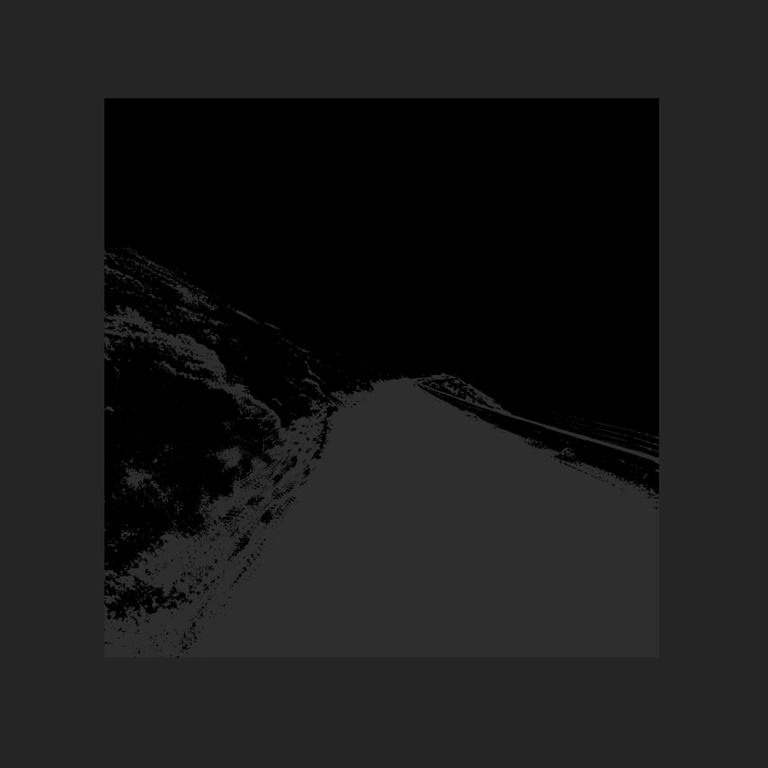
It may have been the year of the Ox in the Chinese zodiac, but 2021 seems to have been more the year of the snake, especially in politics. This snake, however, is one you can trust, if only to be treacherous, particularly in winter: as the accompanying notes explain, ‘The Snake was loosely conceived as a soundtrack to driving along the mysterious, historic route through the Pennines which connects his hometown of Liverpool with his childhood city of Sheffield, and as such forms a bridge between family and friends.’ It’s perhaps not entirely coincidental that it shares its title with the track by Sheffield legends The Human League, also in reference to Snake Pass which carries the A57 to an elevation of some 1,680 feet.

Mitternacht – the solo vehicle for one of the members of Liverpool band Rongorongo – captures the mood in nine compositions, and it’s not just a linear journey, but a journey through time, with nods to aspects of the road’s history as well as it’s geography and geology.

‘The Turnpike’ refers to the original name of the pass, the Sheffield to Glossop Turnpike, and locks into a krautrock groove and it sets the tone, with some dark beats and squelchy, muddy bass frequencies along the way. The Bleaklow Bomber is a US Boeing RB-29A Superfortress which crashed on the gritstone moorland of Bleaklow, killing all 13 crew in 1948, the remains of which remain visible, and it’s a reminder that man is always at the mercy of the environment, and can never truly conquer it whatever advances are made. ‘Nowt But Horizon’ reflects the more ambient aspects of the album, and conveys the vast expanse of untamed wilderness that is the Pennines. It’s bleak, unforgiving, as stretches of the Pennine way more than abundantly evidence. The complex beats are muffled, the air deadened and murky.

Clocking in at over eight-and-a-half minutes, ‘Snowstorm’ is a real standout, flickering, fluttering synth arpeggios rippling, skittering and drifting atop deep, booming swells of bass. Retro loops scratch and cut in and out, and as the layers build, so it becomes increasingly disorientating, a kind of aural onomatopoeia.

For any vintage vibes about The Snake, there’s also a timelessness, which is never more present than in the closing ‘Temptress of the Hills’, a subtle piece that, like much of the album, is built around looping repetitions and granular textures. It’s an evocative work, but one that you can also nod along and mellow out to, and as such, Mitternacht has delivered an accomplished and accessible album.

AA

a1638021615_10

Staubgold – Staubgold 141 –20th May 2016

Christopher Nosnibor

Vivien Goldman knows people. She’s written about so many in her capacity as a widely-published journalist, and she’s worked with a fair few, too, and as such, Resolutionary is a fascinating document of her collaborations, recorded during a particularly fertile period between 1979 and 1982. The roll-call of musicians featured on the eight tracks here is staggering: John Lydon, Keith Levene and Bruce Smith (PiL) Robert Wyatt, Steve Beresford and David Toop, and Vicky Aspinall (The Raincoats), and Neneh Cherry, amongst others, all feature here.

In many ways, Resolutionary is an odds-and-sods effort, a curio, a retrospective exhibition which focuses on the individual artist’s career more than its context, and which represents what was essentially a brief period in Goldman’s career, which has since been devoted to the documentation of music-making, rather than the actual making of music. But Goldman’s musical legacy is noteworthy, however scant. Her brief time with The Flying Lizards remains a career-defining spell, despite the fact that she wasn’t the one who provided the vocals on their biggest hit, ‘Money’. But in many ways, that’s a positive. No-one wants to be pegged as a one-hit wonder, their life spent in the shadow of that singular moment, and more importantly, Resolutionary serves to realign history, to an extent.

It’s an interesting aside to note that Public Image’s ‘This is Not a Love Song’ was inspired, in title at least, by The Flying Lizards track ‘Her Story’, which features here. Indeed, the two Flying Lizards tracks, ‘Her Story’ and ‘The Window’ (both of which feature Goldman on vocals, the latter of which was also composed by her) represent the detached, minimal pop they’re famed for. Big, strolling basslines are again the defining feature of these off-kilter noodles. Although readily available on The Flying Lizards’ eponymous debut, revisiting them in the context of Goldman’s output rather than that of the band offers an alternative context.

The dubtastic quirky kitchen-sink pop of solo cuts ‘Launderette’ and its attendant B-sides, released on the ‘Dirty Washing’ 12”, are worth the money alone. ‘Private Army’ is a colossal six-and-a-half spaced-out dub-based beast, the percussion and sax spiralling into a vortex of reverb. ‘P.A’ Dub’ – the dub version of ‘Private Army’ does dub out the vocals.

The Chantage tracks are the most accessible, with a lighter tone and style, with the pop reggae of ‘Same Thing twice’ proving a buoyant standout. But then, the Gallic theatricality of ‘It’s Only Money’ is equally beguiling and showcases Goldman’s range.

The interview with Vivien, recorded in 1981 and released on a cassette compilation is interesting, articulate, energetic, and insightful, although the audio quality is less than brilliant, and one does have to strain at times to decipher what’s being said. Still, as a historical document, its appearance on the disc is more than justified. The extensive liner notes, too, are pretty good, and overall, this is a quality package.

 VG_LP1.indd


Vivien Goldman Online