Posts Tagged ‘4AD’

Projekt Records – 1st December 2025

Christopher Nosnibor

Having recently written on the retro qualities of Lowsunday’s latest release, the latest hot landing in my inbox is from another act which is preoccupied with a previous time – and who can blame them? I am painfully aware that old bastards like me constantly bemoan the shitness of the now while reminiscing about the golden era of our youth, and it’s no different from boomers still banging on about The Beatles and the music of the 60s and 70s as if time stopped when they hit thirty or whatever. There is a lot – a LOT – of exciting new music coming out right now, and much of it is pushing boundaries in unexpected directions. I for one will never cease to excited by this. But there is a significant amount of music emerging that draws its primary influences from the eighties and nineties, created by artists who simply cannot be drawn by nostalgia. Falling You are a perfect example.

Metanoia is pitched as being for ‘fans of 1980s 4AD dreampop (This Mortal Coil, Dead Can Dance), ‘90s shoegaze (Slowdive, Lush), or the darkwave / ethereal / ambient-electronic releases of the Projekt label (Love Spirals Downwards, Android Lust). It’s quite a span, but the fact is that this is a release with its inspirational roots well in the past. It pains me to be reminded that 1995 is thirty years ago when it feels like maybe a decade. The cover art of previous releases very much state shoegaze / dreampop, and while this album accompanied by altogether moodier artwork, which may in part serve to reflect the album’s title, it’s nevertheless hazy and evocative at the same time. ‘Hazy and evocative’ would be a fair summary of the album itself, too, and the dreamy / shoegaze elements are countered by some really quite unsettling spells of rather murkier ambience.

It starts strong with the bold swell of steel-stung acoustic guitar and a strong vocal – I’m not talking about a Florene Welch lung-busting bellow, but a controlled and balanced performance that really carries some resonance, and it’s mastered clear and loud… and then things swerve into a more electronic, almost dancy territory. Immediately it’s clear that this is going to be less an album and more a journey, and ‘Demiurge (Momento Eorum)’ immediately affirms this with its spiritual incantations and sonorous, droning rumblings.

‘Alcyone’ is the first of the album’s ten-minute epics, and it uses the time well: that is to say, with shuffling drums, spacious synths and layers of lilting vocals, it’s very much distilled from the essence of The Cocteau Twins, and slowly unfurls with an ethereal grace. A delicately-spun pop song at heart, the extended end section tapers down to a softly droning organ.

While the atmosphere is very much downbeat, downtempo, understated, one thing which is notable is the album’s range: ‘Ari’s Song’ is built around a soft-edged cyclical bass motif, around which piano and synths swirl, mist-like, the drums way in the distance, and even as a disturbance grows toward the end, it’s so far-away sounding, and the song itself, beyond that ever-present bass, barely there, and the same is true of the dank, dark ambient echoes of ‘Inside the Whale’. If ‘Ariadne’ is another shimmering indie tune hazed with fractal electronic ripples, the second ten-minute epic, ‘They Give Me Flowers’ provides a suitable companion piece to ‘Alcyone’, swerving from a brooding country and folk-tinged song with hints of All About Eve, and the album’s final track, ‘Philomena’ effectively completes the triptych, pulsing along gently and dreamily before slowly tapering away to nothingness. It’s a fitting conclusion to an album which at times is so vaporous and vague, it’s barely there – which is precisely the design. But in between the hazy drifts and particle-like waftings, there are some beautifully atmospheric and utterly captivating songs with strong leanings towards the dreamy pop side of indie. In terms of achieving an artistic objective, Falling You have absolutely nailed it with Metanoia.

AA
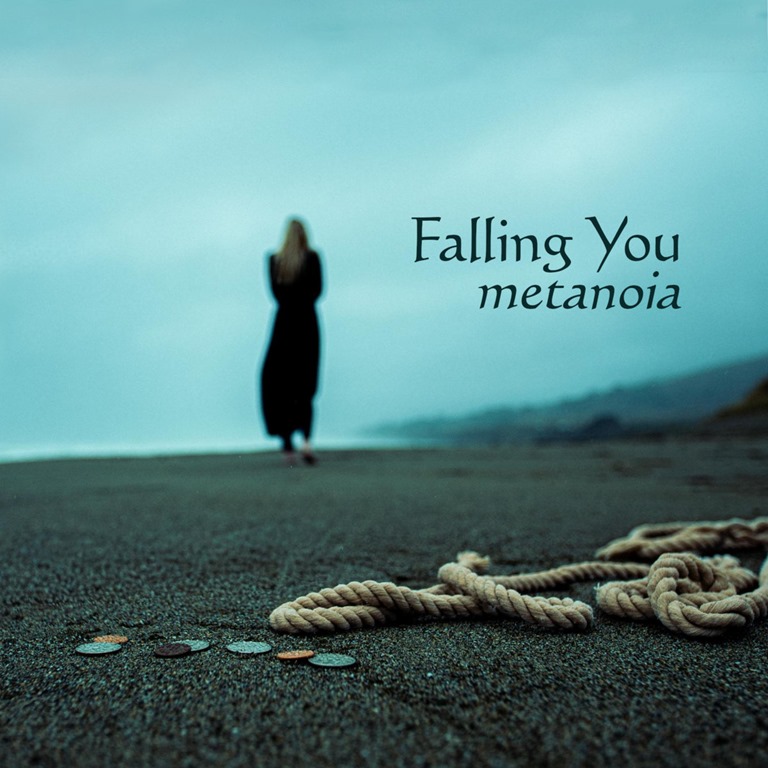
Falling You - Metanoia - cover

22nd September 2017

Christopher Nosnibor

Ummagma really do have some impressive friends and fans. The Canadian dreampop duo’s lush, textured shoegaze has garnered them not only and admirable fanbase and favourable critical reception, but has placed them into direct contact and collaboration with a number of their heroes.

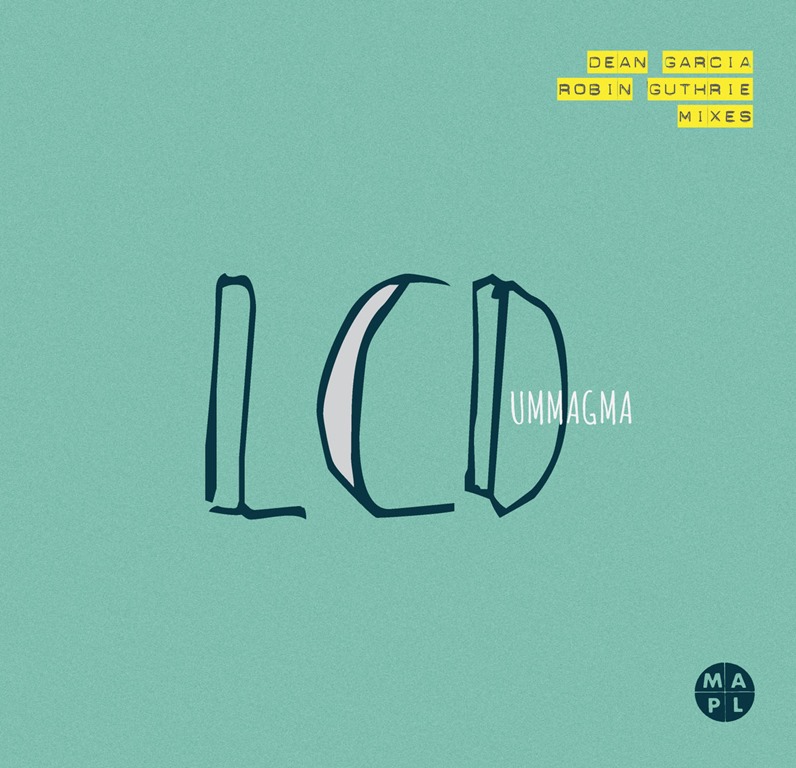
The ‘LCD’ EP, which follows up their ‘Winter Tale’ maxi-single with 4AD dream pop pioneer A.R.Kane earlier this year, features four tracks, including the new original title track ‘LCD’, and reworkings of Ummagma songs two legendary British musical figures in the form of Cocteau Twin Robin Guthrie, and Dean Garcia of Curve and, latterly, SPC ECO.

The lead track is a classic slice of 90s-tinged dreampop with tangents ago-go: a slippery funk-infused groove envelops what sounds like two independent drum tracks which interlace and intertwine, while synths bubble and grind. It all comes together to create something strangely nebulous and at the same time compellingly propulsive despite its lack of obvious form.

Dean Garcia’s SPC ECO mix really accentuates the spaciness of the track, stripping it back to a sparse frame around which echoed notes and voices drift. Gloopy beats reverberate around dripping synths and elongated drones to conjure a rich atmosphere. Garcia takes a similar approach to the minimal drift of ‘Back to You’, which takes a turn for the darker as its resonant bass tones hang in a rarefied air, cloud-like and barely tangible yet present.

What Robin Guthrie brings to ‘Lama’, which originally featured on their debut album, is a real sense of appreciation of the original, and an accentuation of the nuance. He also provides not only a new arrangement and mix, but additional guitar work, which renders it more of a collaborative piece than a straight remix. There’s something magically organic about it, and as Shauna McLarnon’s soaring vocal tops off the sonic soufflé perfectly.

AA

Ummagma – LCD EP


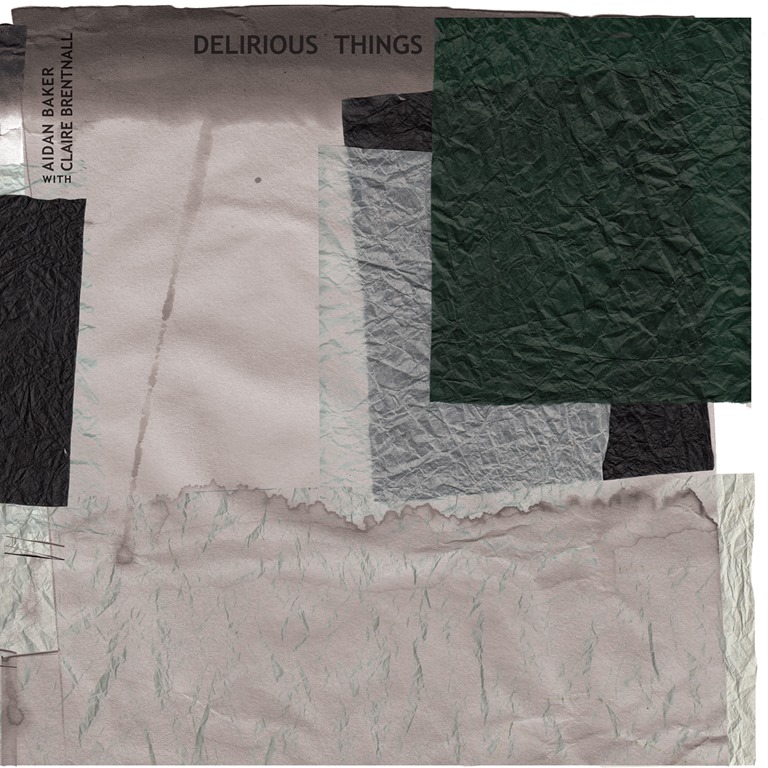
The premise of this collaboration between Aidan Baker and Claire Brentnall of Manchester-based purveyors of ethereal dark pop, Shield Patterns, is neatly summed up in the press release. It’s not an indication of lethargy to quote directly and at length but a recognition of the fact that a label or PR has the best handle on what it’s doing, and is every bit as capable of articulation as a journo. So much so, that there are those who also have a handle on the possessive apostrophe, for which respect is due. So, ‘Delirious Things is an exploration of Aidan Baker’s interest in 80s-influenced cold-wave, shoegaze, and synth-pop from such recording artists as Factory Records’ Durutti Column, Joy Division, and Section 25 and 4AD’s Cocteau Twins and This Mortal Coil’.

‘Combining song-oriented tracks with abstract interludes, the primary instrument on Delirious Things is a 1980s Casio synthesizer, rather than Baker’s usual guitar, though the synth is processed through his usual guitar effect pedals, creating heavy, layered washes of droning synth sounds overlaying electronic rhythms and pulsing bass lines. Baker is joined by guest vocalist Claire Brentnall, whose voice is reminiscent of Liz Fraser and Kate Bush but still distinctly her own.’

It’s a curiously hushed, tempered work and it’s the overall sense of quietness which is its most striking feature. We live in a loud world. As I noted when reviewing Jeffrey Roden’s Threads of a Prayer – Volume 1, I find it increasingly difficult to find the time and space to listen to quieter, more contemplative music: the ‘noise’ of the fast-paced society in which we now live is no longer a metaphor, and it’s evermore difficult to find a moment’s peace, metaphorically or literally. I’m not in a position to offer empirical evidence to substantiate the correlation between the pace and volume of life with the increasing prevalence of mental health issues because I’m a) a lazy journalist b) too busy to invest time on such detours while researching album c) struggling with my own anxieties (aren’t we all in our various ways, whether we admit it or not?). All that said, it’s perhaps also worth noting that despite the bewildering quantity of releases I receive to review, either physically or digitally, the number of works which dare to explore such low volume registers are few and far between. This means that while often being barely audible in some settings, such releases stand out alone by virtue of their difference. But, significantly, Delirious Things also stands out on merit.

Delirious Things is an album which is rich in atmosphere, but there’s something about it which feels uncomfortable and radiates a subtle but inescapable sense of discomfort. It takes a while to ascertain precisely what it is that’s awkward and vaguely discombobulating about it. Superficially, the songs are spacious, atmospheric dreamworks, th tructures loosely defined, the sounds partially abstract, the emotions they convey as fleeting and ephemeral as the recollection of the sensations and images of a dream on waking.

There’s an icy fragility about the songs, and Brentnall’s breathy vocals – as much reminiscent of Cranes’ Alison Shaw and Toni Halliday of Curve as the common touchstones of PJ Harvey and Kate Bush – are captivating yet, at the same time, also subliminal in their power. Laid down in layer upon harmonising layer, her voice is everywhere, and drifts from every corner of the music and even the silence between the sounds. This is nowhere more true than on the album’s vaporous final track, ‘Shivering’, which delicately glides beneath the skin and brushes at the bones and the soft matter beneath. The funereal ‘Dead Languages’ has echoes of late Joy Division or Movement era New Order, and distils its sonic elements to a stark minimalism that’s spine-tinglingly powerful.


Aidan & Claire


Beneath the surface, ripples of tension radiate and currents of darkness surge, silently but powerfully. Baker utilises stereo panning to optimal effect and subtle details like a fractional lag between beats across the left and right channels are incredibly effective, particularly when listening through headphones (which is strongly advised, because it facilitates optimal appreciation of the detail, while also reducing the bled of noise from the outside world, be it the babble of work colleagues, the hum of the boiler or the whirr of the laptop fan: reducing extraneous interference is essential in order to absorb the meticulous detail of this album). There are fractional delays between some of the beats between the channels. The effect is barely perceptible, but nevertheless a tiny bit disorientating. Of course, once you’ve noticed this, you can’t unnoticed. It’s impossible to tune out. But tuning in and embracing the It’s when one begins to look closer into the album’s detail that its true magic discloses itself.

On the surface, it’s a collection of quiet, calm, opiate-slow songs with a misty, hazy quality. How does this, and the referencing of the Cocteau Twins reconcile with 80s-influenced cold-wave, shoegaze, and synth-pop? Again, it’s in the detail: Delirious Things incorporates stylistic elements of all of the above, but reconfigures them, so, so carefully. The album’s success lies in the way it draws together recognisable genre trappings and familiar stylistic tropes and renders them in a fashion which is similar enough to be still familiar and yet different enough so as to be unfamiliar. What is different about this? you will likely ask yourself. In the mixing – the pitching of the beats way down in the mix, the way in which the sound is scaled down and paired back and stripped out of made for radio / iPod compression and exists with a very different set of production values. This gives Delirious Things a feeling of freshness, and ultimately renders it a triumph of artistic vision over commercial conformity.


PL055-LPjacket

12th January 2017

Christopher Nosnibor

Ummagma have been making quite a name for themselves, and have done a great deal in revitalising the shoegaze / dreampop crossover style characterised by early 4AD releases. This release finds the Ukranian/Canadian act join forces with dreampop pioneers A.R. Kane (who also released music as half of M/A/R/R/S) and who have been silent since the 90s.

To try to get to the root of what it is about dreampop’s capacity to touch the listener is, indeed, akin to trying to locate the source, and subsequent emotional resonance of a dream. Waking up at 5am – as I often do – I was groggy with the images of dreams melting from my mind as I made the uneasy transition from unconscious to conscious. Some of the scenes clung, but their significance, which had been immense whist in sleep, swiftly evaporated as I rose to the surface. There was a logic to some of the more anxiety-inspired elements of the dream – desperately trying to send a text message while trapped in an eternal office meeting held in a room with no windows, for example – required little unravelling, but others subscribed to a dream-logic which only sustains any sense of coherence while in a dream-state.

Dreampop, at its best, suspends the listener’s connection with the concrete world and transports them into a mental zone somewhere in between realities. For the three to five minutes the song plays, the sound occupies the mind completely, and conjures a rarefied emotional state, a distillation of a deeper inner self that’s only partly accessible at any given time. This is why, in order to fully appreciate the cream of dreampop, it’s necessary to fully surrender oneself to the music. Anything else is likely to leave the listener feeling very much on the outside, looking in, and completely untouched.

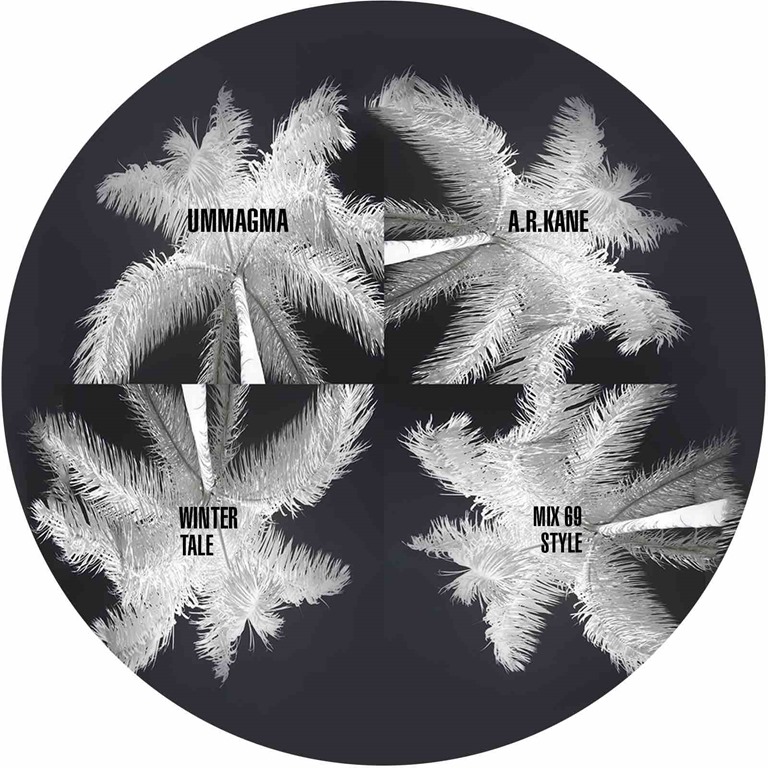
‘Winter Tale’ is a song by Ummagma, featured here in its original form and subject to a substantial reworking by A.R.Kane, and accompanied by an abridged radio version of the A.R. Kane interpretation.

The original is a dainty, delicate ditty, wistful, softly blurred, a lightly skipping vocal melody careening its way over a sparse backing of simple percussion and cloud-like synths, and it’s full of wintry imagery and a pervading sense of suspense. Shauna McLarnon’s vocal is delicate, airy, and floats mellifluously on the breeze.

The alternative version is quite different. A.R.Kane’s primary addition, however, is an overloading guitar. It’s kept at a respectful distance and doesn’t submerge the entire frame of the underlying original, but crashes like waves and breaks into howls of feedback, bringing textural layers and additional depths to the song, accentuating the darker aspects. The absence of percussion somehow abstracts the song in some way, and the gently rising bubbles of synth bring a sense of colour.

But when it ends, it’s hard to recall exactly what it was about it, like a cloud that’s changed shape and the rabbit is now just a streak in the sky.


Ummagma   A.R.Kane - Winter Tale (cover artwork)