Archive for August, 2020

Weeping Prophet Records – 31st July 2020

Christopher Nosnibor

The facts and the pitch are that Fuse Box City is a new London based band. They combine indie and electronic with noise and melody; the intricate layering of which produces a rich sound that provides a platform for Rachel Kenedy’s fragile yet mellifluous vocals to sit on top. Talking about the stuff that matters all in the same breath.

I like hybridity and eclecticism, and have developed an increasing appreciation of some of the 80s samplist / looping acts that broke through in the late 80s. It wasn’t immediately apparent at the time, but this wasn’t about simply making dance music and turntable scratching and drum machines: this was utilising emerging technology to create a soundtrack to our ever-faster, ever more fragmented experience of life.

Revisiting the spirit of then makes sense to an extent: we’re witnessing even less comprehensible times, even faster, more fragmentary lives, and even niftier tech while in a position to cast an eye back over recent history.

But sometimes blending lo-fi indie and experimental electronica and throwing in bits of prog and 80s hip-hop means the elements don’t always gel especially well, and ‘Shine On’ makes for a shaky, somewhat chaotic and disjointed start.

Maybe it’s a matter of adjustment, or maybe the band really do find their groove better as the album progresses, and it’s when they slow things down a bit as they do first on ‘Pub Licker’ and then on ‘Crossing Swords’ that things begin to feel rather more cohesive, and find FBC explore a territory that sounds like a trip-hop reimagining of Young Marble Giants.

The album’s closer marks another departure: the thirteen-minute ‘Bendy One’ starts out a low, slow semi-ambient work with a murky beat stuttering away like a fibrillating heart, and low in the mix before slowly taking form: the beat becomes ore solid, regular, insistent, and comes to dominate a vague wash of a droning backdrop which stretches and yawns and swells behind Kenedy’s soaring choral vocal. Somewhere along the way it emerges as a new ag stomper with a thumping tribal beat and some squirming electronics that bubble away in the background of some approximation of a celebratory sunset incantation.

The end product seems to be that of a band who are ideas-rich and unafraid to experiment, while still finding their feet and sense of direction. Despite its messier moments, which often boil down to execution as much as concept, it’s a bold debut, and never uninteresting or uninspired.

AA

FBC001_2020WPR_front

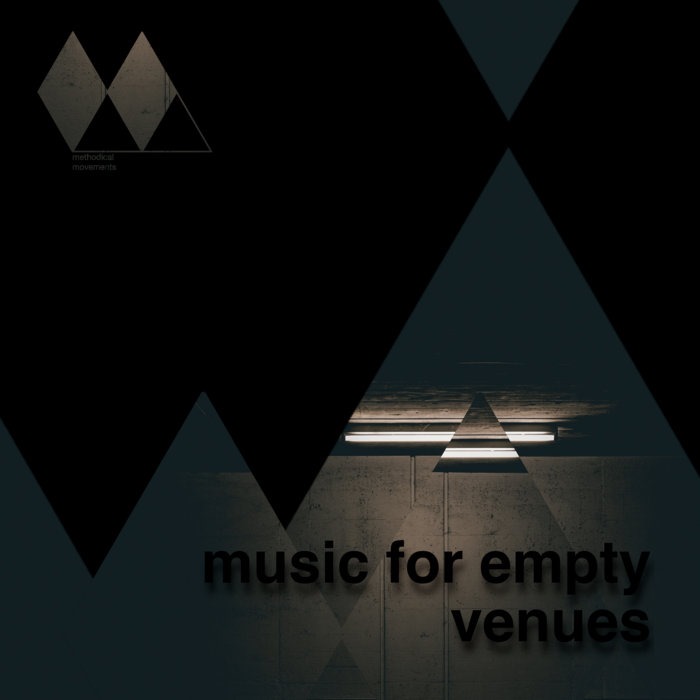
Methodical Movements – 29th May 2020

Christopher Nosnibor

While I’m so desperately missing live music, it seems only reasonable that the least I can do is cover as many fundraiser releases as possible, and there are loads. Hardly surprising, really: there are loads of little venues, and they’re all struggling. And it’s the sub-100 capacity venues and the 100-200 capacity spaces that are the worst affected, and which are the venues that are the most vital for cultivating those communities of underground and unusual artists. That’s certainly not to say that rock, pop, and indie music isn’t suffering, but the market for more obscure stuff means those gig are always going to be held in basement venues in front of 20-30 people – and you might argue they’ve been practising social distancing for years, but while carrying an element of truth, fails to acknowledge the fact that the more niche the music, the more hardcore the following, and moreover, the more the need for its sustenance: often, these are small communities populated by introverts and quietly vulnerable types.

I shall quote from the press release at length, as it feels appropriate here: ‘Music for empty venues is a charitable music compilation in response to the Covid-19 crisis. Independent music venues across the country are struggling more than ever due to the imposed lockdown, with many listings cancelled and the uncertainty over any future bookings. This compilation aims to support some of the affected venues within the city of London through the means of a fund-raising, with all profits of the release going to three chosen independent London venues selected by the featured artists. These venues are: Iklectik, Hundred Years Gallery and Jazzlive at the Crypt.

The compilation features a wide range of forward thinking, electronic based musicians who have graced many of London’s (UK) independent music venues over the years. We’ve all come together in this one moment to support the venues that normally support us.’

I’m reminded of the EMOM nights I’ve attended in York and Leeds: a broad church, and so, so accommodating: they’ve effectively created their own circuit for artists, and a safe space for aficionados of the eclectic electronic music they create. As such, this project isn’t simply one to back in principle, but one that resonates on a personal level. It also helps that the standard of the contributions is outstanding, and the track list is a remarkable showcase for the range of underground electronic music emerging right now.

Blame’s ‘Flummoxed’ is an eight-minute blast of stammering electronic trilling, tweaks and jerks, bleeps and stuttering overload that hovers just below speaker distortion and fried circuitry.

Docor Stevio mines a more conventional, if dark, seam. On the face of I, ‘Another day’ is a throbbing electropop / industrial crossover with a gothy vibe, but there’s a hint of proggines in the vocal delivery and the bridge sections.

This is, incidentally, an absolutely mammoth release: nineteen tracks, many of them way over the six-minute mark, and a few truly behemoth efforts, not least of all, Laura Netz’s ‘Medial Dark Ages’ and the last track, ‘Fragments#1’ by Tony James Morton. Both are expansive and immersive and enjoyable in their own subtle ways.

Adam Paroussos’ ‘Murmurations and the Fool’ is something of a standout, by virtue of the disorientating nature of its collage pile-up of wibbly electronics and overlaid samples colliding in a riot of simultaneity, while Mathr seems intent on dissecting dance tropes to extrapolate aspects of beat, bass, and groove into a shuddering stop-start headfuck. No, you can’ t dance to it. ‘Bloom’s Taxonomy’ by Obrigada Nadamay be almost fragmentary, but with its broad, sweeping drones swishing across Japanese-influenced chimes, it’s textured, layered, and compelling.

‘Desilencing the Sea, Part 1’ by xvelastín contrasts in every way, being a minimal ambient work that’s devoid of beats and overt structure, drifting, without form, without chords… barely there, yet somehow atmospheric. Not dark, not even particularly eerie, but not light or comfortable either, ambulating a sonic no-man’s land, an aural limbo of sorts.

Ambivalence and ambiguity is a positive thing, and the material on this compilation thrives in this space without definition.

AA

a0928354960_16

Sige 071 – 31st July 2020

Christopher Nosnibor

Nordra is the vehicle by which Monika Khot, of Zen Mother, and a touring member of Daughters delivers ‘apocalyptic dirges combining modern classical explorations of electronic ambience with hardware-fueled industrial barrages’.

The press release explains the transition and difference between Pylon III and its predecessor, Pylon II: ‘Nordra’s second outing, the commissioned score for PYLON II, was a hard-edged martial exercise—fitting for the dystopian nature of the series’ second installment. But for PYLON III, Pester was looking for the light at the end of the tunnel and requested that Khot instill her work with hope and calm in order to serve the utopian aims of the performance’.

Hope and calm aren’t the initial senses I draw from listening to the ten compositions that comprise Pylon III. In fact, I find myself adrift, and also buffeted from one emotional moodspace to another. Lugubrious, haunting, and often eerie, unsettling, Pylon III is no relaxation tape by which to practise meditational breathing.

Stuttering beats, murky and muffled and rapid like machinegun fire bather hard against dense, slow-turning, ethereal drones, juxtaposing tension and tranquillity. The seven-minute ‘Monologue on the Beach’ is very much representative of the album as whole: piano notes ring out, sparse and lonely against eddying, undulating notes, particularly as it’s followed immediately by the booming drones of ‘Un-Hopeful’, the sonorous parp of a cruise liner’s horn sounding into a thick fog.

‘Reconciliation’ marches hard, a short, stabbing loop thumping insistently while dark serrated drones loom unexpectedly and seemingly at random, like sharks emerging from the depths. ‘Transcendence 1’ hints at something approximating conventional dance tropes, with its regular, pulsating beat that booms into a ocean of reverb as the bass builds. ‘Transcendence 2’ could well be off another album altogether as Nordra goes ‘rock’ – a chugging guitar plugs away at a couple of chords while drum twitches away nervously, and strong seep in with additional tension. It has hints of Swans about it in its density and its mesmeric insistence, and it makes for a compelling and hypnotic conclusion to an intriguing album.

AA

a0053420620_10