Archive for August, 2016

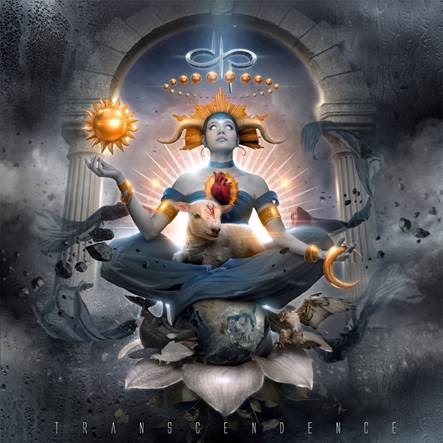
Devin Townsend Project are set to release their eagerly awaited new studio album ‘Transcendence’ on the 9th September 2016 worldwide. Ahead of this, August 5th – today – sees the unveiling of the fist single from the album in the shape of ‘Failure’. We could tell you how it’s epic, cinematic, ambitious, proggy and all the rest, or you could just listen to it here:


DTP recently announced a European tour for 2017 with main support from Between The Buried & Me (excl. UK & Belgium) & Tesseract (UK only) plus openers Leprous (all dates). Full list of dates can be found below:

European Tour 2017

28.01 – Trix, Antwerp, Belgium

30.01 – Rockhall, Esch-sur-Alzette, Luxembourg

31.01 – Le Bataclan, Paris, France

1.02 – Roclschool Barbey, Bordeaux, France

5.02 – Le Moulin, Marseille, France

7.02 – Live Club, Milan, Italy

8.02 – Z7, Pratteln, Switzerland

9.02 – LKA Longhorn, Stuttgart, Germany

10.02 – Backstage, Munich, Germany

12.02 – Tvornica Club, Zagreb, Croatia

13.02 – A38, Budapest, Hungary

14.02 – Arena, Vienna, Austria

16.02 – The Roxy, Prague, Czech Republic

17.02 – Täubchenthal, Leipzig, Germany

18.02 – Kwadrat, Krakow, Poland

19.02 – Stodola, Warsaw, Poland

21.02 – Grünspan, Hamburg, Germany

22.02 – Voxhall, Aarhus, Germany

23.02 – Pustervik, Gothenburg, Sweden

25.02 – Blastfest, Bergen, Norway

26.02 – Sentrum Scene, Oslo, Norway

28.02 – The Circus, Helsinki, Finland

1.03 – Rytmikorjaamo, Seinäjoki, Finland

3.03 – Berns, Stockholm, Sweden

4.03 – KB, Malmö, Sweden

5.03 – Amager Bio, Copenhagen, Denmark

7.03 – Columbia Theater, Berlin, Germany

8.03 – FZW, Dortmund, Germany

9.03 – 013, Tilburg, Netherlands

10.03 – De Melkweg, Amsterdam, Netherlands

12.03 – Colston Hall, Bristol, UK

13.03 – Academy, Manchester, UK

14.03 – Barrowlands, Glasgow, UK

16.03 – Institute, Birmingham, UK

17.03 – Eventim Apollo, London, UK

18.03 – Rock City, Nottingham, UK
DTP

MIE (Vinyl) / Clang (CD) – 5th August 2016

Christopher Nosnibor

Classics, standards, call them what you will. There are so many songs that have been performed and recorded and everyone, songs that have become in some sense the canon of American musical history. The majority of the tracks featured on Knock on Life’s Door will be familiar, and if not immediately so, then they will be subliminally engrained.

The songs are all woven into the heritage of American music. These are not traditional folk songs, but examples of ‘modern’ American songwriting (context is important here: modern does not mean contemporary or recent in generational terms, but in the longer view of history (even America’s comparatively short history), the twentieth century is modern. These are songs the origins of which have been largely forgotten, the songs themselves having taken on a life of their own and become a part of the collective (sub)conscious or the canon.

The press release comments that ‘Cara and Mike Gangloff don’t so much reimagine old American music as infuse it with the life it’s always had. A life always just below the surface and a life far beyond the stars.’ It’s perhaps fair to say that as a European – at least geographically and spiritually – my comprehension and cognisance of ‘America’ is somewhat simplistic. However deeply I immerse myself in American music and American literature created in the twentieth century, I remain completely distanced, unable to truly grasp the disparity between the America of TV and film, even the America of art and literature and news reportage and documentaries, and the ‘real’ America, the experience of the American everyday and the true core of American culture And so the life below the surface, the life of these songs and the significance they hold is something I have to ultimately accept is something which will forever elude me. But this does not preclude me from enjoying and appreciating not only the spirit of the album, but also the intent behind these radical reinterpretations of what might reasonably considered ‘important’ songs.

So, as I said, the songs on Knock On Life’s Door will likely all be familiar, at least through the medium of one or another previous version. That’s the nature of classics and standards: so often their origins are lost, the original creator’s input usurped by another or numerous others. The artist – or at least the writer and original artist – is eclipsed by the song. But of course, herein lies the road to immortality as the art takes on a life of its own. Nevertheless, that familiarity will probably be strained on hearing their interpretations, and I do mean this as an unequivocally positive thing. Cara & Mike Gangloff have paid a heartfelt homage to each of the songs, and by no means set out to do them damage or disservice. And yet it’s safe to say no-one will have heard any of the songs played in the way they are here.

The nine-minute rendition of ‘Moon River’ finds Cara weaving around the tune, slowed to an opiate crawl of woozy, undulating drone. The meditative Eastern-tinged blues of ‘Misty’ is a long way from both Ella Fitzgerald and Johnny Mathis, the scratchy strings scraping out a hypnotic sway that transforms the jazz standard into something completely non-standard from whichever perspective one views it. Calamitously crashing percussion and shrieks of feedback punctuate a manic freeform arrangement of ‘All of Me’, which features a vocal performance that’s little short of terrifying in its intensity, sounding more like a challenge than an invitation. The strolling stop/start bassline of ‘Cry Me a River’ hints at something approaching conventional, until the tortured strings and rattling percussion threaten to derail the dual – or should that be duelling? – vocals. ‘Sunny Side of the Street’ concludes the album in a more upbeat, melodic fashion, but the song’s jaunty folk skeleton is crooked and bent out of shape.

Knock On Life’s Door is an album which will perplex a lot of people, and many purists and fans of well-known versions of the songs presented here will likely be affronted by such unconventional interpretations, not only because of what may be construed as Cara & Mike Gangloff’s anarchic irreverence but also the alternative musicality of their arrangements. These are precisely the reasons Knock On Life’s Door is a good album: it’s bold, it’s challenging, and above all, it’s very, very different.

Cara & Mike Gangloff & the Great American Drone Orchestra cover

Really? David Tibet and Youth? With an album , Create Christ, Sailor Boy, and live show in the offing, they’ve unveiled a brace of tracks, including the album’s final track, ‘Night Shout, Bird Tongue’. So yes this is really something which is happening nd it promises to be unusul if nothing else. And given the various path-crosings the two have made ove the last three decades, it’s perhps not as bizarre as it may ppear on the surface, so much as a collaboration a long time in the making.

A transformative union of two idiosyncratic tellers, Hypnopazūzu sees Current 93 speller David Tibet joining forces with the eternal Youth, famed not only for his work as bassist with Killing Joke but for production and collaborative work with an outlandishly eclectic list of artists from Alien Sex Fiend to Paul McCartney. Together, they’ve created a singular hallucinatory vision that marries symphonic splendour to indignant gnostic intensity – Create Christ, Sailor Boy draws in, and down, masks terrestrial and celestial and summons a collection of songs unlike anything either artist has created previously. In addition to this debut album release, the duo have also announced a live show in London on Saturday 22nd October at Union Chapel with The Stargazer’s Assistant in support.

Having both first skipped together on Current’s debut album Nature Unveiled in 1983, together, these two again manifested their sticky alchemy, with Youth’s ornate and dramatic arrangements sliding into and around Tibet’s vivid hypnagogic visions to end up in a psychic picnic hinterland that is as sumptuous as it is colourful in its opulence. Tibet’s luxurious kosmoi sliding slyly onto peaks of intent and intoxication on the album, and songs such as the Galactic Sexiness of ‘The Sex Of Stars’ and the Cuneiform Cuteness of ‘The Auras Are Escaping Into The Forest’ show him, backed by the emotive and expressive power of Youth’s arrangements, as a conduit turning unspelled grammars into grimoires.

Transcendent, tumultuous, and tricky, Create Christ, Sailor Boy is the sound of two spirits skipping as one to create a sidereal glimpse into uncounted cartoons. It seems likely this partnership will be a fruitful one, both in this realm and other playgrounds. “I am happy always to work with Youth in any way, forever and for ever and always and in all ways” stresses David. “I wait for my Ouija Board Planchette to receive his Mind’s Eye Text.

93 years in the making, this elaborately-packaged 3-sided LP (it will have a laser etching on Side 4) contains ten songs and brings together spheres and planets for the Ultimate Hallucinatory PickNick. Also available in CD and digital formats, check out the House of Mythology store for pre-orders.  This album will come with two different front covers; one by David Tibet, the other by Youth, available on 26th August.

Hear ‘NIght Shout, BIrd Tongue’ here:


Monotype Records – mono086

Christopher Nosnibor

The trend for positive thinking isn’t one I’m on board with. Social Media is aclog with well-meaning but vacuous affirmations and new-age wisdom might briefly lighten the bubble some – many – people are content to float around in, but none of it actually does anything to address the underlying causes of the feelings of sadness, melancholy, anger, emptiness which afflict us all. The idea that it’s possible to think oneself healthy or successful – is one which is clearly problematic. That isn’t to say that mental training can’t improve wellbeing, but anyone who supports the belief that positive thinking can cure depression, or remedy the ills of the world is very much mistaken. But any idea looks more interesting and offers new possibilities when turned on its head, so inverting the popular notions of the power of positive thinking is almost certain to spark some flash of inspiration.

The International Nothing have built a career on inversion, as previous albums The Dark Side of Success, Less Action, Less Excitement, Less Everything, and the mega-ironically Mainstream attest, not to mention their very name, a name which connotes inversion of something to present the absolute absence of anything, on an international scale. In context, I get the impression that The Power of Negative Thinking, housed as it is in a rather surreal cover depicting drawings of mythical cross-breeds floating in the air amidst fluffy clouds, isn’t entirely serious in its titling. Nevertheless, anger, frustration, sadness, can all be channelled creatively to yield powerful artistic results. The International Nothing is ‘psycho-acoustic clarinet duo’ Michael Thieke and Kai Faganaschinki, working here in collaboration with Christian Weber (double-bass) and Eric Schaefer (drums and percussion) (collectively, the ‘something’).

The album’s seven experimentally-led (but very much not improvised) tracks are not negative in the sense that they express or articular any explicit negative emotions, there’s no nihilistic noise or an overt espousal of any ideology, philosophy or mindset. What the pieces do convey is an ominous atmosphere which is ambiguous. And that ambiguity provokes a sense of creeping doubt. Contrary to the popular consensus, doubt is not necessarily a bad thing: uncertainty requires consideration, appraisal, in order to pursue a resolution of certainty. Certainty without discourse is simply blind faith. ‘The Golden Age of Miscommunication’ could well be a term applied to our present times, and the track’s plucked double bass and skittering rhythms which stop and start is disruptive, and a reminder that to reach the truth, one must question and challenge the facts as they’re presented. To accept unquestioningly, to allow oneself to become comfortable, is to be complacent and complacence brings vulnerability. The easy comfort of the snaking groove which emerges, only to fade to nothing, can be read as a metaphor, it’s disappearance a reminder of the importance of being prepared for unexpected change. The lugubrious ‘We Can Name You With Their Names’ is built around a strolling bass and scraping clarinet drone which is soon drowned to a long-building swell of percussion and a shrieking howl of treble. ‘Long Bow Glowing’ may be brief, but it’s dark and ominous, a foreboding bass drone is disturbed by hovering, high-pitched hums.

Sonically, the tonal explorations are highly engaging in themselves: the ways the clarinets resonate against one another is fascinating, and a defining feature of the work of The International Nothing. The additional instrumentation brought by the Something bring dynamic range and a real sense of depth to the pieces. Compositionally, this is a dark and thought-provoking work, although its weight lies as much in its connotations and implications and the work it invites the listener to involve themselves in which provides its real power – the power of negative thinking.


Internation Nothing