Felte FLT-089 – 14th July 2023
Christopher Nosnibor
Mission to the Sun is Chris Samuels of Ritual Howls fame (synths, samples, programming) and Kirill Slavin (vocals/lyrics), and comes recommended for fans of Wolf Eyes, Moin, Throbbing Gristle, Coil, The Legendary Pink Dots, Drew McDowall, Suicide, Cabaret Voltaire, etc.
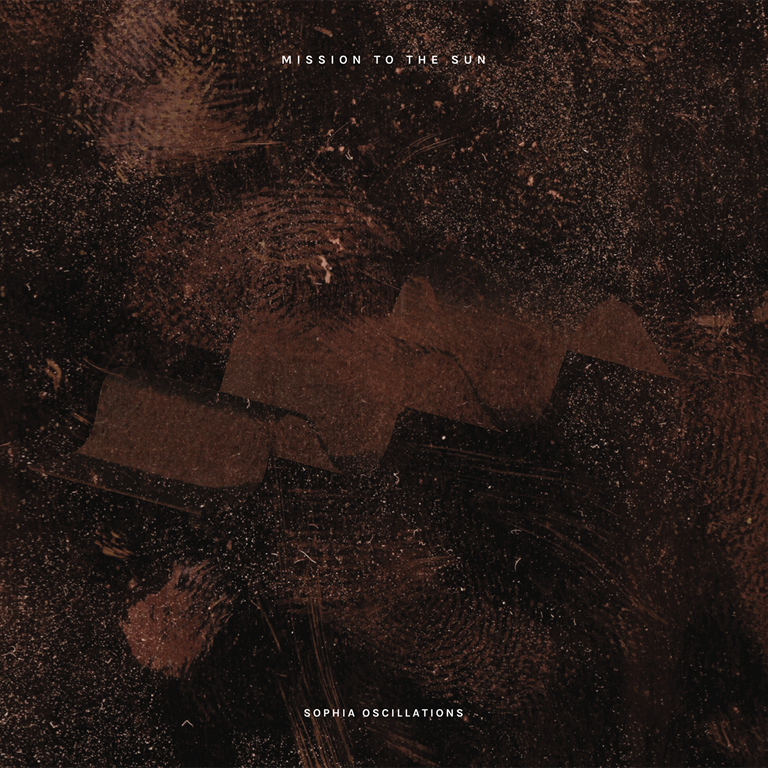
Sophia Oscillations is their second album, and it pitched as ‘an immersive journey through the dark corners of post-industrial music’, whereby ‘The Detroit based duo continues the sonic exploration started on their debut album Cleansed by Fire, while delving deeper into themes of isolation and lost communication. Christopher Samuels’ synths, samples and rhythmic programming is accented by Kirill Slavin’s haunting vocal delivery as the listener receives intersperse audio recordings from the outer reaches of inner space.’ This may seem an unusual angle of approach given their chosen moniker, but the one place hotter than the sun or the earth’s core is the core of what it is to be human. We still understand space better than we understand the deep sea, and the deep sea better than we understand the human mind. There is much scope for exploration in every sphere.
William Burroughs famously described ‘Scottish Beat’ writer Alexander Trocchi as a ‘cosmonaut of inner space’, although he also applied the label to himself, stating ‘In my writing I am acting as a map maker, an explorer of psychic areas, a cosmonaut of inner space, and I see no point in exploring areas that have already been thoroughly surveyed.’
This is an appropriate context for the eight compositions which make up Sophia Oscillations, which are essentislly beatless but strongly rhythmic in form. If they belong to the lineage of the avant-garde and the industrial music of the late 70s, it equally draws on a host of other, more contemporary threads in order to forge something quite different and ultimately new.
‘Drowning’ surges and pulses, rippling waves washing over a slow-treading bassline which wanders up and down, stepping somewhere between DAF and The Cure’s Carnage Visors while the vocals whisper and wheeze low in the mix, a stealthy monotone that’s both tense and detached. Whistles of feedback strain from the speakers and wrap themselves around the whole drifting expanse. Things take a turn for the abrasive on the title track, with machine-gun blasts of noise cutting through grainy swathes of bleak ambience, gradually fracturing and fragmenting quite uncomfortably.
There are hints of medievalism and classical on ‘Censor Sickness’, but they’re melted into a dark murk of muttered voices and unsettling atmospherics, and the combination is quite unsettling and far from comfortable: if anything, it’s queasy, and the minimal yet noisy ‘Unborn’ pushes this to another level: stark, metallic, robotic electronica, it has an 80s dystopian feel which again calls to mind DAF and Cabaret Voltaire. The late 70s and early 80s were exciting because musicians with limited means – and ability – were finding ways of using emerging, and increasingly affordable – technology to make music which represented the world in which they found themselves. As such, the emergence of experimental electronic music and industrial music was born out of a collision of multiple factors, none of which will ever recur, and for this reason can never be recreated.
Mission to the Sun aren’t attempting to recreate history here, but instead, Sophia Oscillations finds them processing history through their own filters. ‘Attrition’ brings together post-rock and crunching industrial electronica with a dash of Gary Numan and more detached spoken-word vocals, and it’s a hybrid that isn’t easy to process, because it all feels so alienating. But then, articulating alienation always does.
The churning grind of ‘Cornerstone’ sounds like the intro to something by Big Black, but instead of Roland kicking in, alongside a relentless bass, it just grinds on and on, and it’s dark and messy. Once again, Slavin’s voice is half-buried in the mix: it’s difficult to decipher the words, and his voice hovers, blank, flat, vaguely Dalek-like, in the vein of Dr Mix, but less harsh.
Sophia Oscillations is a challenging album. Yes, it’s unsettling, bleak, stark sparse, but the hardest part is the fact it doesn’t confirm to any one genre, it doesn’t follow any obvious or specific form, and it’s not the fact that it’s unsettling and difficult to find a place for it that’s the issue, but the fact it keeps you tense and on edge for its duration. But, perhaps even more than that is the fact it feels removed from anything human. But it’s not so far removed as to be alien. The brain simply isn’t equipped to process the inhuman– or the near-human-but-not-quite, the uncanny, the unheimlich. Because we recognise it, and yet we don’t. Sophia Oscillations brings the challenge right in front of your face. Sit back, draw breath, process. This isn’t an easy ride.
AA
 Aural Aggravation