Posts Tagged ‘Stars Of The Lid’

Kranky – 5 April 2024

Christopher Nosnibor

Stars of the Lid are one of those acts who seem to have spent a – now lengthy – career on the fringe, an ultimate cult act who’ve built a substantial following without ever being well-known. Here in the UK, at least, they’re strictly a 6 Music act. With Brian McBride’s passing last year, their future remains unclear, but in the meantime, Adam Wiltzie, who had already been active for some time as a solo artist, offers up a new set of drifting, dreamy, discombobulating amorphous ambient works in the form of Eleven Fugues for Sodium Pentothal.

Sodium Pentothal is (to quote, unfortunately, Wikipedia), ‘an ultra-short-acting barbiturate and has been used commonly in the induction phase of general anesthesia’ and is also perhaps better known as a ‘truth serum’.

We recently aired the opening track, ‘Buried At Westwood Memorial Park, In An Unmarked Grave, To The Left Of Walter Matthau’ here at Aural Aggravation, and it’s inevitably tempting to infer connotations from this title in context of events – something the album’s title wouldn’t seem to necessarily counter. But Eleven Fugues for Sodium Pentothal seems to be preoccupied with memory and place in a broader sense.

We’re infirmed that the album ‘took shape following a move north from Brussels into the Flemish countryside, although it was initially inspired by a recurring dream wherein “if someone listened to the music I created, then they would die.” The album uniquely evokes and evades the allure of oblivion, keening between beauty and ruin, forever unresolved.”

Dreams have a way of staying with you, and of twisting your psyche in some unsettling way, the more vivid ones lingering and replaying for hours, even days on end, the vaguer ones leaving you feeling somehow disjointed and in a slip from being in step with the world, partially detached, partially disconnected, as if looking at your own life through a window. Recurring dreams can prove particularly unsettling, and have a way of encroaching on your waking hours, assuming a reality of sorts.

The track titles, in the main, tell us very little, presenting mere abstractions, although one suspect they carry significantly greater weight of meaning for the composer. Bereavement and loss has a way of bringing layers of meaning to the slightest things, often unsuspectingly – a sight, a sound, something not even remotely directly related, has the capacity to trigger a memory, which in turn has the capacity to elicit an emotion or some not-quite-definable internal response. It’s often fleeting, or otherwise vague and indefinable, something impalpable and beyond reach, leaving a certain pang of bereftness – in much the same way as if waking from a dream.

Eleven Fugues for Sodium Pentothal is not a dark or heavy album, but one which is dense in its atmosphere and carries a certain air of melancholic reflection in its drifting waves. This melancholy may well be as much a reflection of the way places – even unfamiliar locations – have the capacity to stir memories but indirect association – again, a sound, a smell, a certain shade of lighting, the angle of a tree, a riverbank – prods a deep corner of the memory most unexpectedly, causing memories we didn’t even know we had, or still had, to trickle forth, vaguely, out of focus, out of context, and sometimes you wonder if is really is a memory or a fragment of a dream.

There are some deep, rich, grainy textures to be found here, and ‘(Don’t Go Back To) Boogerville’ brings some dark, heavy strings and sonorous scrapes to close the album – which, incidentally, contains only nine tracks. Loop’s Robert Hampson was an inspired choice for the album’s mixing, bringing the layers of organic-sounding drones to the fore.

Returning to the press notes, ‘Wiltzie cites the barbiturate of the title as both muse and sacred escape: “When you are sitting face forward on the daily emotional meat grinder of life, I always wished I could have some, so I could just fall asleep automatically and the feeling would not be there anymore.”’ With Eleven Fugues for Sodium Pentothal, he has created that perfect escape. This is an album that lends itself well to listening – or half-listening – by candlelight with a slow-sipping drink, and to simply drift and nod to.

AA
547558

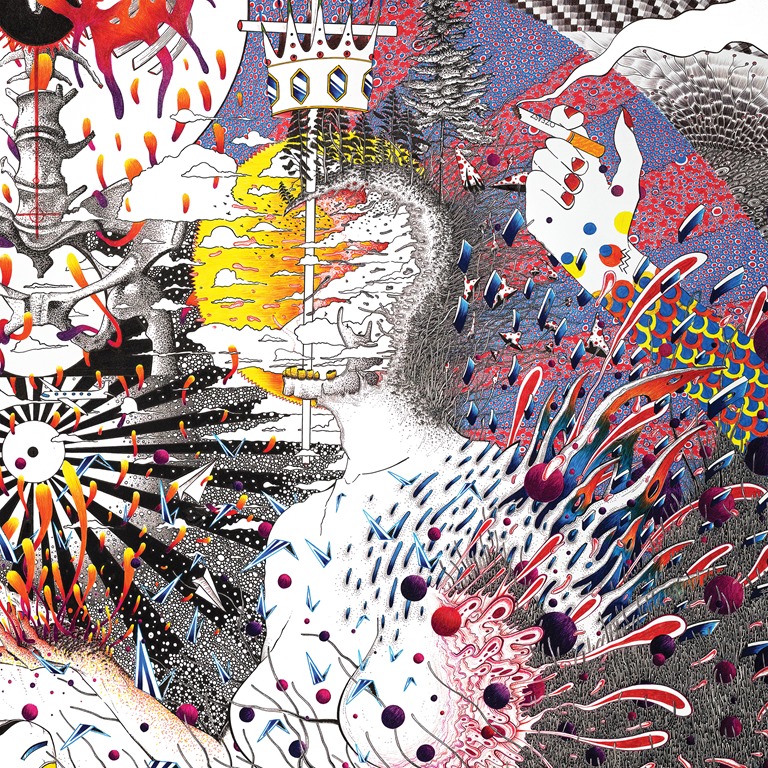
Adam Wiltzie shares the blossoming opening suite, ‘Buried At Westwood Memorial Park, In An Unmarked Grave, To The Left Of Walter Matthau’, taken from his latest musical endeavour, Eleven Fugues For Sodium Pentothal, to be released by kranky on 5th April.

The longest track on the album introduces us to a hazy world of sound washes, and eases the listener into the journey of this magnificent album.

Listen to ‘Buried At Westwood Memorial Park…’ here:

The latest suite by composer (and Stars Of The Lid co-founder) Adam Wiltzie took shape  following a move north from Brussels into the Flemish countryside, although it was initially inspired by a recurring dream wherein “if someone listened to the music I created, then they would die.” The album uniquely evokes and evades the allure of oblivion, keening between beauty and ruin, forever unresolved.  Wiltzie cites the barbiturate of the title as both muse and sacred escape: “When you are sitting face forward on the daily emotional meat grinder of life, I always wished I could have some, so I could just fall asleep automatically and the feeling would not be there anymore.”

Recorded at Wiltzie’s home studio, with strings added in Budapest at the old Hungarian National  radio facility (Magyar Radio), the tracks feel simultaneously intimate and infinite, unfolding vistas glimpsed in an inner space. Robert Hampson of English drone rock icons Loop mixed the album, further lending the music a sense of cinematic expanse and oblique hypnosis. These are fugue states as much as fugues in a literal classical music sense – smeared epiphanies of uncertain memory and spatial dislocation, coaxed from the unconscious and set aloft.

Eleven Fugues

Christopher Nosnibor

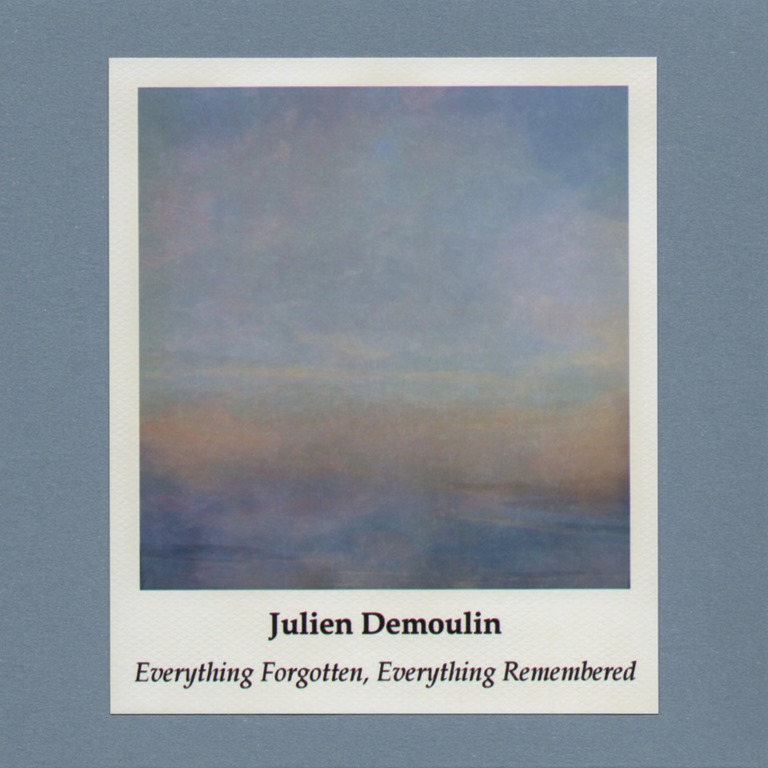
Pitched as being for ‘fans of artists such as Harold Budd, Stars Of The Lid and A Winged Victory For The Sullen’, Julien Demoulin’s Everything Forgotten, Everything Remembered is one of those releases that covers many bases, and straddles many forms. Demoulin also records as Silencio, and Everything Forgotten, Everything Remembered is his third release on Sound in Silence following Floods by Silencio in 2013, and his debut full-length, Loose Ends, in 2015.

It’s mellow, mellifluous ambience that leads us on the start of the journey with the slow-drifting spaciousness of ‘A Kingdom’. It’s a space out of time, and if you let yourself drift and wash along with the soft and subtle sounds, you can feel a sense of collapsing and self-reconstruction as the album itself grows and evolves. Everything Forgotten, Everything Remembered drifts and slows and is by no means memorable in itself. In fact, it’s no criticism that nothing much happens here; this is very much overtly an ambient work, whereby notes hover heavily and dappled turns hover in the air.

Demoulin’s collaborators – Frédéric Dufourd (one half of the lo-fi duo Donna), plus vocal drones provided by Alex Copeland (aka IA) and ethereal vocals by Maryam Sirvan (one half of the electronic duo NUM) are stealthy in their presence as the details echo in the distance of a mix dominated by broad ambient washes, interweaving drones and multi-tonal quaverings that hover and drift.

It’s a deeply relaxing experience. So relaxing, in fact that I nodded off during the first listen, and shortly before I did, I typed several lines of notes which were incomprehensible, incoherent bollocks that made no sense the following morning and some had to be cut from the review. This review. I type enough bollocks as it is. But – where I’m going with this is that Everything Forgotten, Everything Remembered will make you forget. It will induce drowsiness. And it’s in this context that the album’s title takes on a certain weight of meaning. The soft, amorphous tomes envelop the listener in a sonic bath that lifts the weights from the muscles and relaxes the muscles. You can’t help but slow your breathing, to unwind. And as the body relaxes, so does the mind.

You may well forget more than you remember while listening to this, but that’s ok. Forgetting is the gateway to a calmer life, and I would love to forget more.

Everything Forgotten, Everything Remembered is an accomplished work, and anyone who thinks creating vast, expansive works, is wrong and has never had to work with anyone or anything. It’s soft, it’s mellow, it’s grace personified. Whatever lies ahead will happen.

a2481255191_10