Posts Tagged ‘spacious’

18th April 2025

Christopher Nosnibor

Eric Quach has been making music – or perhaps more accurately sculpting sound on the fringes of music – as thisquietarmy for over twenty years, amassing a substantial body of work as a solo artist, with an expanded band lineup, and with various collaborations, the most recent being Cîme, his second with Tom Malmendier

We learn that Langue Hybride was written and arranged in less than 4 weeks during thisquietarmy’s music residency at Centre d’Expérimentation Musical (CEM) in the region of Saguenay—Lac-St-Jean, Québec.

The album consists of five longform tracks, which range from seven and a half to sixteen minutes in duration. It’s the shortest work, ‘Les Rayons Cosmiques’ which lifts the curtain the album, with droning, dolorous strings and distant, delicate percussion conjuring evocative atmospherics, coloured with both a simmering tension and an underlying sense of sadness, which, while hard to define, is palpable. Around the midpoint, that distant percussion builds to stand front and centre and a groove emergers, suddenly and unexpectedly, and the whole feel changes towards something that’s a cinematic hybrid of folk and space rock.

‘Respirer l’instabilité’ crashes into altogether darker territory, a gloomy, doomy trudge of slow, deliberate drumming and a low, grinding bass, over which discordant sonic mayhem plays out. After a lull of calm around the mid-point, a pulsating rhythm merges, and things evolve into a strolling wig-out with some strong jazz-funk leanings and already, a pattern is beginning to emerge in terms of compositional structure, in that around halfway, the trajectory shifts, and the piece ends in a completely different place from the one in which it started.

This is confirmed by the pivot which takes place around five minutes into the third track. Reminiscent of latter-day Swans, ‘Les radicaux libres’ is woozy and weird, expansive and haunting, and begins to pick up pace and volume six minutes in, building to a bursting sustained crescendo that’s both hypnotic and tense, and if ‘Organismes en aérobiose’ starts out soothing, the sound of dappled sun through leaves on a summer’s day, it transitions to a fist-waving stomper and concludes as a skyward-facing surge of sonic exultation, via the detour of a post-rock tidal wave, while fifteen-minute closer ‘Solastalgie impalpable’ rides a wave of thick riffage and strings reminiscent of the long play-out on ‘Layla’ – only this is arguably more successful, as it always felt like an epic and overlong anti-climax in the wake of that guitar-line. True to form, ‘Solastalgie impalpable’ does make a shift, tapering into some elongated swirling drones which reverberate and rattle the ribs and taunt the senses, before suddenly bursting into life with a driving rock riff by way of a climactic finale.

Langue Hybride is a wild ride, and while claims for acts producing ‘genre-defying’ works are not just tedious and predictable but usually completely spurious, there’s no neat way of categorising this schizophrenic hybrid, where each track is a work of two halves, presenting almost oppositional styles and characteristics .But this stylistic polarity makes for exciting – if challenging – listening: given that the only thing that’s predictable is that each piece will fly in a different direction at some point, there’s no way one could call this album predictable. The vision – and its execution – are superb, and with Langue Hybride, thisquietarmy offer something which is quite different, and rather special.

AA
a1481414249_10

Möller Records – 9th September 2024

Ambient Short Stories is the tenth album by Frosti Jonsson, who records as Bistro Boy. As selected monikers go, this isn’t one of the best in terms of what it connotes, at least for me. While I accept that there’s an element of personal perception involved here, there’s little escaping the fact that there’s a strong whiff of middle-class superiority in the mix here, a late-nineties / turn of the millennium snobbery with a hint of contemporaneous IKEA-tinged cool.

Cut back to 1997, my then girlfriend and I bought our first flat, a cardboardy newbuild with magnolia walls and magnolia carpets, which we stuffed with pine units and furnished the dining part of the open-plan kitchen-dining space with a trendy bistro-style circular table and chairs. On the other side of the same room, we’d sit on the IKEA sofa and watch Friends. I’ve actually got no beef with Friends, but fuck me, talk about cliché. We actually thought we were cool, and our friends did, too.

Ambient Short Stories contains eleven instrumental – and as the title suggests – ambient works, which are pleasant, mellow, easy on the ear. Fair enough. The compositions aren’t the sort of thing you’d actually hear in a bistro, or any other social setting for that matter, although the style is very much background when it comes to the level of attention the album demands. From amidst the generally gentle drifts and rippling waves pipe up some unexpected incidental bits and bobs, and these interjections – whether they’re woodwind or some dominant lead synth or something else – feel a bit out of place, a fraction loud in the mix, a bit wrong, and also a bit dated, a bit post-Tubular Bells 80s / 90s New Age.

Ambient Short Stories isn’t bad, by any stretch: in fact, as a gentle ambient work, it brings almost exactly what you’d probably want: it’s slow, supple, soothing, spacious, and quite soporific, to the point that it almost feels like AI has conjured the perfect balance of light and dark. It isn’t particularly gripping, but I don’t think it’s intended to be, instead sowing seeds of ponderousness.

AA

Ambient Short Stories - Ambient Short Stories - Bistro Boy

Thrill Jockey – 24th February 2023

Christopher Nosnibor

Some albums are so, so hard to review, because listening to them leaves you with no words. They stop you in your tracks and you sit, open-mouthed, speechless – thoughtless, incoherent. Blank. It’s not often this happens to me – unless it’s when presented with an album by BIG|BRAVE.

The Canadian trio made a huge impact with Vital, just under two years ago. They’ve been making waves since their 2014 debut, Feral Verdue, but hit a new seismic peak with this shuddering blast of minimalist rock. I’m used to knocking out a review in an evening, but that one took me an absolute age, because I simply ran out of words.

With nature morte, they’ve done it again. The title, in translation, is not dead nature, but instead refers to still life, or an image depicting inanimate objects. It seems fitting, not because it lacks movement, but instead because the spacious playing, slow and deliberate, creates moments where time stands still, frozen, suspended, and I find myself likewise frozen, my breath caught.

The formula may not be radically different from Vital, but the tone most definitely is. The dense, jarring music – and it’s music in the most minimal sense, shuddering chords crashing in, juddering and halting, simultaneous with pulverising percussion and it’s stark and harsh and heavy and suffocating, reminiscent of Greed-era Swans, and its exemplified nowhere more clearly than on the seven-minute opener ‘carvers, farrriers and knaves’. But then it builds into a truly monumental climax a mere three minutes in, and it’s clear that for all of their building tension, nature morte is an album of truly tempestuous release, and this is nowhere more apparent than in Robin Wattie’s vocal delivery. Here, her desperate, often plaintive, lost voice sounds more desperate, more trapped, more anxietised than ever. We’re accustomed to her sounding scared and but ethereal. Here, she sounds like she’s being buried alive and desperate to be heard and to escape before she suffocates under the weight of the music.

Of the six tracks, three extend well beyond nine minutes: epic is indeed the word, but none of the pieces feel overly long. In fact, the opposite is true: these are compositions not so much to get lost in, but submerged as if buried by a sonic landslide. ‘the one who bornes a weary load’ is a shuddering monolith of sound that thunders so hard it feels like the earth is shattering, and Wattie screeches and howls, ragged, anguished as if she’s clawing to dig herself out of a purgatorial hole and to cling for life with broken nails on fingers scraped to bone.

There are moments of softness, of quietness, delicate guitars ripple hauntingly on ‘my hope renders me a fool’ and ‘the fable of subjugation’, alluding to post-rock and even folk – if via latter-day Earth – and these moments are evocative, moving. But building to crescendos of monumental proportion, they’re the calms before the inevitable storms, making it impossible to settle back and drift along with these more delicate passages. Sure enough, around the four-minute mark, ‘the fable of subjugation’ erupts move violently than Vesuvius. The album may end on a light note with the short (sub-four-minute) acoustic song, ‘the ten of swords’, but one feels as though darkness lies ahead – as is fitting for a song which references the tarot card which indicates painful endings, deep wounds, loss, crisis, major disaster (or recovery and regeneration, depending on which way up it is). If you’ve seen the news in recent months, this seems unlikely, and it’s hard to imagine that nature morte offers light at the end of its long, dark, airless tunnel.

There’s still an aching beauty which permeates every second of the album, but it’s also ribcage-crushingly heavy and imparts a relentless pain and anguish that’s impossible to escape.

It’s hard to breathe listening to this. The weight lies heavy. For any expectations they may have set with Vital – and the bar was set hight to a point it was hard to imagine anything could even come close – nature morte smashes and obliterates them all.

AA

a3747569844_10

Alrealon Music – ALRN083 – 20th April 2018

James Wells

The title of Anita Loos’ 1925 novel and the 1953 film starring Marilyn Monroe may have passed into general acceptance, but if gentlemen prefer blondes, I personally prefer brunettes myself. Make of that what you will, but as such, a house of blondes has limited appeal ordinarily, although on hearing this, I’m inclined to make an exception. Time Trip is a varied and expansive electronic-led work which forges expansive spaces with nebulous synths and insistent beats.

‘Discovery #1’ builds ambient eddies of sound around a droning organ synth atop a motoric groove, and there are infinite nods to the likes of Kraftwerk and Tangerine Dream here, as undulation, oscillating synth repetitions bibble and tweet over long, undulating synth drones and insistent, repetitive beats.

There’s some droning, modular crackle and fizz to the yawning oscillations of ‘Mean Solar Time’, and the overall sensation of Time Trip is one of reaching back. It plucks flickers from shoegaze and ambience as well as the origins of electronica, positioning itself within a slow-arcing trajectory without defining its place in concrete terms.

This is music that billows, ripples, throbs and pulses, and is content to loiter on the peripheries of the focus-zone. The beats flicker and click, pitter and patter, while the synths glister and gleam, twisting in flange-soaked zero-gravity. It all feels very familiar, but at the same time, it’s rather nice.

AA

House of Blondes – Time Trip


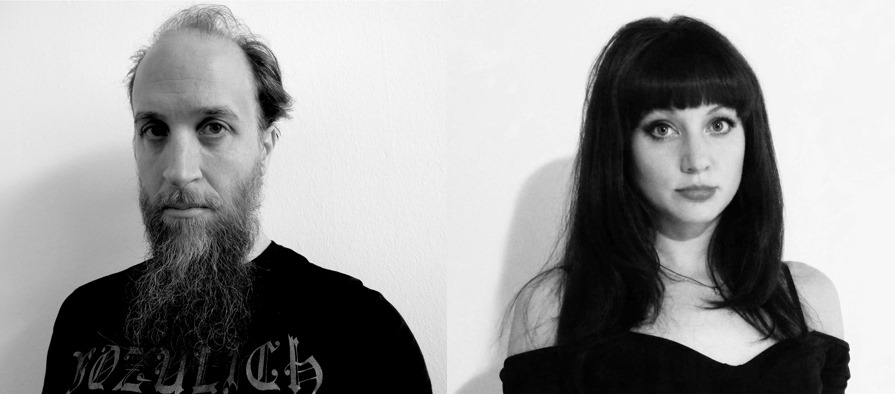
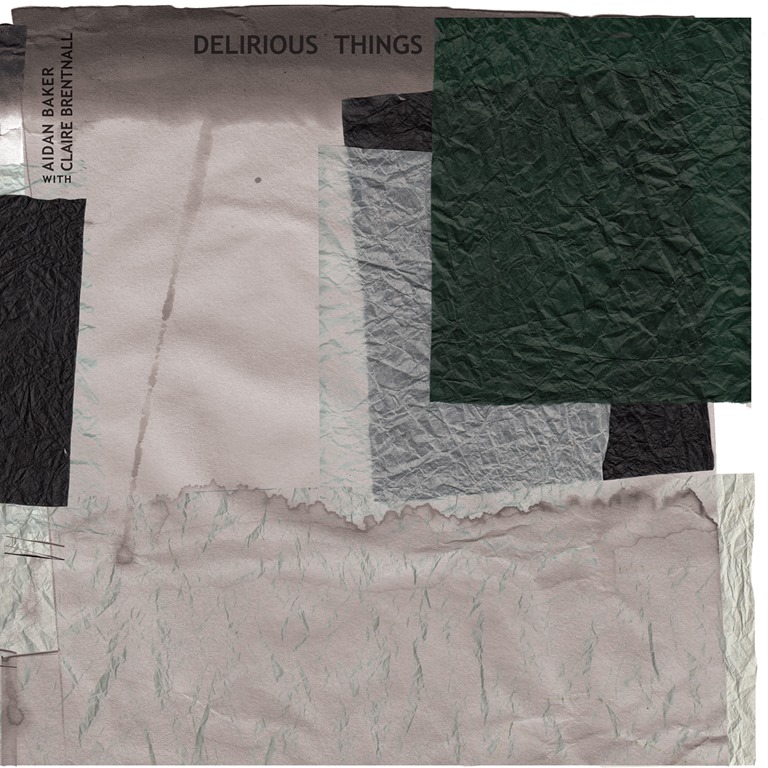
The premise of this collaboration between Aidan Baker and Claire Brentnall of Manchester-based purveyors of ethereal dark pop, Shield Patterns, is neatly summed up in the press release. It’s not an indication of lethargy to quote directly and at length but a recognition of the fact that a label or PR has the best handle on what it’s doing, and is every bit as capable of articulation as a journo. So much so, that there are those who also have a handle on the possessive apostrophe, for which respect is due. So, ‘Delirious Things is an exploration of Aidan Baker’s interest in 80s-influenced cold-wave, shoegaze, and synth-pop from such recording artists as Factory Records’ Durutti Column, Joy Division, and Section 25 and 4AD’s Cocteau Twins and This Mortal Coil’.

‘Combining song-oriented tracks with abstract interludes, the primary instrument on Delirious Things is a 1980s Casio synthesizer, rather than Baker’s usual guitar, though the synth is processed through his usual guitar effect pedals, creating heavy, layered washes of droning synth sounds overlaying electronic rhythms and pulsing bass lines. Baker is joined by guest vocalist Claire Brentnall, whose voice is reminiscent of Liz Fraser and Kate Bush but still distinctly her own.’

It’s a curiously hushed, tempered work and it’s the overall sense of quietness which is its most striking feature. We live in a loud world. As I noted when reviewing Jeffrey Roden’s Threads of a Prayer – Volume 1, I find it increasingly difficult to find the time and space to listen to quieter, more contemplative music: the ‘noise’ of the fast-paced society in which we now live is no longer a metaphor, and it’s evermore difficult to find a moment’s peace, metaphorically or literally. I’m not in a position to offer empirical evidence to substantiate the correlation between the pace and volume of life with the increasing prevalence of mental health issues because I’m a) a lazy journalist b) too busy to invest time on such detours while researching album c) struggling with my own anxieties (aren’t we all in our various ways, whether we admit it or not?). All that said, it’s perhaps also worth noting that despite the bewildering quantity of releases I receive to review, either physically or digitally, the number of works which dare to explore such low volume registers are few and far between. This means that while often being barely audible in some settings, such releases stand out alone by virtue of their difference. But, significantly, Delirious Things also stands out on merit.

Delirious Things is an album which is rich in atmosphere, but there’s something about it which feels uncomfortable and radiates a subtle but inescapable sense of discomfort. It takes a while to ascertain precisely what it is that’s awkward and vaguely discombobulating about it. Superficially, the songs are spacious, atmospheric dreamworks, th tructures loosely defined, the sounds partially abstract, the emotions they convey as fleeting and ephemeral as the recollection of the sensations and images of a dream on waking.

There’s an icy fragility about the songs, and Brentnall’s breathy vocals – as much reminiscent of Cranes’ Alison Shaw and Toni Halliday of Curve as the common touchstones of PJ Harvey and Kate Bush – are captivating yet, at the same time, also subliminal in their power. Laid down in layer upon harmonising layer, her voice is everywhere, and drifts from every corner of the music and even the silence between the sounds. This is nowhere more true than on the album’s vaporous final track, ‘Shivering’, which delicately glides beneath the skin and brushes at the bones and the soft matter beneath. The funereal ‘Dead Languages’ has echoes of late Joy Division or Movement era New Order, and distils its sonic elements to a stark minimalism that’s spine-tinglingly powerful.


Aidan & Claire


Beneath the surface, ripples of tension radiate and currents of darkness surge, silently but powerfully. Baker utilises stereo panning to optimal effect and subtle details like a fractional lag between beats across the left and right channels are incredibly effective, particularly when listening through headphones (which is strongly advised, because it facilitates optimal appreciation of the detail, while also reducing the bled of noise from the outside world, be it the babble of work colleagues, the hum of the boiler or the whirr of the laptop fan: reducing extraneous interference is essential in order to absorb the meticulous detail of this album). There are fractional delays between some of the beats between the channels. The effect is barely perceptible, but nevertheless a tiny bit disorientating. Of course, once you’ve noticed this, you can’t unnoticed. It’s impossible to tune out. But tuning in and embracing the It’s when one begins to look closer into the album’s detail that its true magic discloses itself.

On the surface, it’s a collection of quiet, calm, opiate-slow songs with a misty, hazy quality. How does this, and the referencing of the Cocteau Twins reconcile with 80s-influenced cold-wave, shoegaze, and synth-pop? Again, it’s in the detail: Delirious Things incorporates stylistic elements of all of the above, but reconfigures them, so, so carefully. The album’s success lies in the way it draws together recognisable genre trappings and familiar stylistic tropes and renders them in a fashion which is similar enough to be still familiar and yet different enough so as to be unfamiliar. What is different about this? you will likely ask yourself. In the mixing – the pitching of the beats way down in the mix, the way in which the sound is scaled down and paired back and stripped out of made for radio / iPod compression and exists with a very different set of production values. This gives Delirious Things a feeling of freshness, and ultimately renders it a triumph of artistic vision over commercial conformity.


PL055-LPjacket