Posts Tagged ‘project’

25th July 2024

Christopher Nosnibor

The art world is not so much a desert as a breakers’ yard, stacked to the sky with abandoned and aborted projects, works which were commissioned and shelved or otherwise dropped, canned, kicked into touch. The endless hours spent on projects which have never seen the light of day hardly bear thinking about. A career in the arts is likely to be one dominated by failure over success, even for a successful creator. But what is success? Artistic success and commercial success exist in different spheres, and while the world at large seems to judge more or less anything by the measures of the latter, one should ask why this us. Units shifted, radio plays, streams on Spotify, these are the metrics of success, based on the monetisation of art. Something is simply not right.

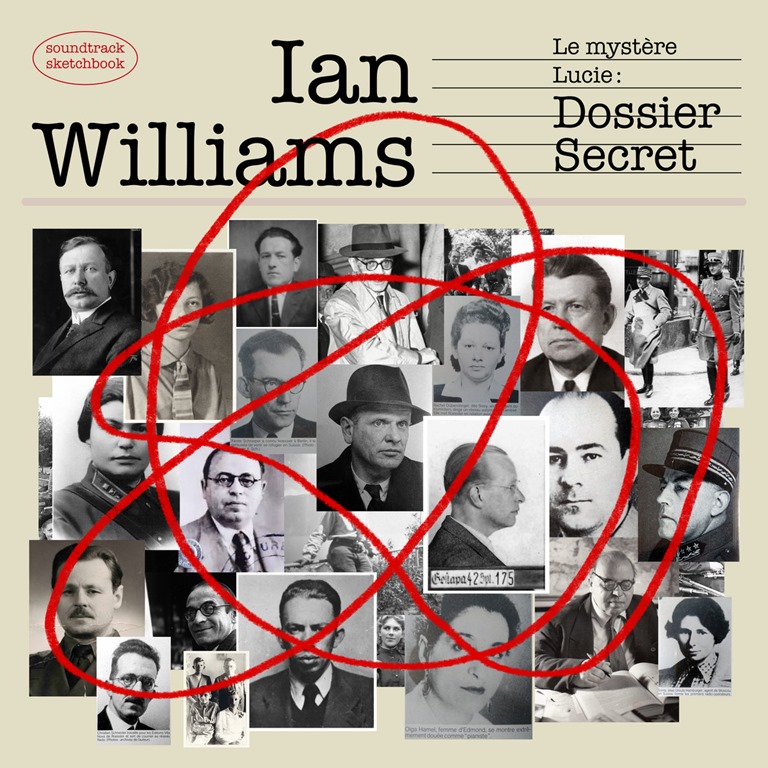
Ian Williams’ latest release is a product of failure. Le Mystère Lucie (Dossier Secret) (that’s Codename Lucy (Spies Against Nazism)’, a companion piece to the recently-released Le Mystère Lucie (Des Espions Contre Le Nazisme), his recent soundtrack album of music for the 2023 French documentary Le Mystère Lucie (Des Espions Contre Le Nazisme) / Codename Lucy (Spies Against Nazism).

As the accompanying blurb expounds, ‘it features music composed for but ultimately not used in the documentary, which was originally conceived as a 75 minute film but eventually released as a 52 minute TV broadcast. It seemed a pity not to make these additional themes and sketches available, so here they are, another collection of World War II spy music – melodic, electronic, orchestral, tuneful, abrasive, with both releases showcasing Williams’ knack of fusing big tunes with occasional blasts of industrial noise.’

Grand, bold, epic, expansive… these adjectives give a hint of the cinematic compositions n offer here. Being designed as a soundtrack, the album’s seventeen compositions are brief – largely under three minutes – and gentle, employing smooth synth bass and conjuring an atmosphere which is accessible to the ear. The tracks blur into one another with great rapidity, as one would expect for a soundtrack, where the segments flow with the scenes.

Le Mystère Lucie (Dossier Secret) is rich in mood and atmosphere, as befits its subject. There’s not much industrial noise present here but string-soaked cinematic sweep abound. Le Mystère Lucie (Dossier Secret) feels filmic, it builds drama and layers of simmering tension, as well as lakes of brooding darkness and ripples of uneasiness. It’s an accomplished score, and one which most certainly was too good to go to waste.

AA
a2382814546_10

17th July 2020

James Wells

Given that I’ve barely left the house other than to go to the supermarket and haven’t seen family or friends since March, it’s been a seriously fucking lonely summer, and a lonely fucking spring before this. Crying Swells’ new single may or may not be about this, but the press release suggest is may be, outlining how ‘Crying Swells is the project of East London-based Musician / Producer Daniel Armstrong, born out of lockdown. He also performs and records with UK psych-rock collective Frankie-Teardrop Dead’.

I miss bands and all that stuff, although I suspect bands miss bands even more, and in content, it would stand to reason that Armstrong would launch a new project while unable to record or perform as normal.

‘Lonely Summer’ is a really neat tune that’s a bit indie and a bit post-punk and broods hard, with a multi-tracked vocal and a bursting chorus that’s a blast of guitar that’s grunge and shoegaze exploding in a kaleidoscope of sound. Too full-on to be breezy, it’s nevertheless catchy and soars while it broods.

AA

AA

a1662897737_10

24th July 2020

Christopher Nosnibor

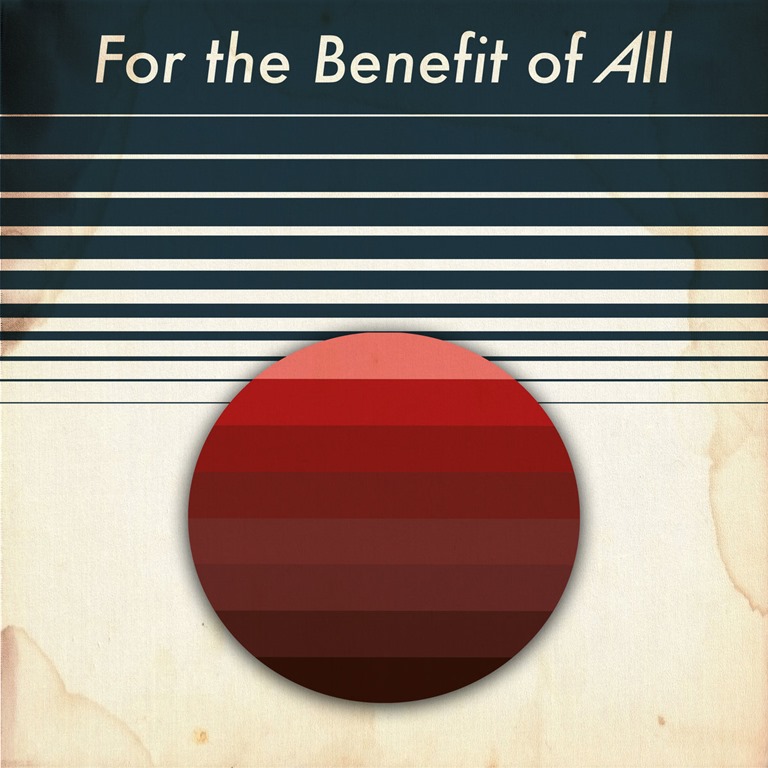
For the Benefit of All represents the coming together of two artists whom the descriptor ‘visionary’ isn’t really hyperbole: having led Her Name is Calla through a decade-long career of turbulence which produced a catalogue of truly definitive, landmark releases in the field of post-rock which pushed the boundaries of the genre in myriad directions, as well as forging a solo career as a minor-key acoustic troubadour T.E. Morris’ cult status is based on his creative singularity. Meanwhile, Jo Quail has very much created her own niche, bringing the cello to a whole new audience with her tempestuous compositions that are far more rock than classical, turning her instrument of choice from an orchestral element to a full band and more courtesy of her innovative playing techniques and judicious use of effects (admittedly a bloody huge bank of effects).

As the press release outlines, For the Benefit of All was inspired by, and was originally intended to be performed within, Kelly Richardson’s Mariner 9 panoramic exhibition at the Attenborough Arts Centre in Leicester, but was cancelled due to the global Covid-19 pandemic.

As such For the Benefit of All is essentially a soundtrack work, but also a narrative work, which plots the trajectory of a mission to Mars. It’s a sci-fi hybrid that tells of a future based on true events past and present, and more than this, it’s a reflection on time and space. With the original project plans put paid by the COVID-19 pandemic, they elected to continue work remotely and release the music as a standalone work, and it succeeds – although it does work best with an understanding of the context, because an abstract ambient work without context is simply one more abstract ambient work. In context, it’s very much a departure for both artists, devoid of climaxes and crescendos, instead focusing on the recreation of the emptiness of space, where movement is slow, and the immediate surroundings are filled with vast expanses of nothing.

In many mays, it also stands as a metaphor for the circumstances of its creation: we’re all together apart, distant, separate, isolated however adept we are at calling, Zooming, or meeting in the street. We are all floating in space, just out of reach, and sometimes two metres may be two thousand miles. And we’re not built for this.

The chapters contained within the booklet which accompany the compositions provide a textual narrative which adds to the substance of the work. The track titles, meanwhile, signify dates on the journey, from the significant 1972 ‘(A map from Mariner 9)’ which was the first vehicle to orbit another planet and successfully returned over 7,000 images from the enigmatic red planet, to the futuristic dates projected for colonisation. Going further back, 1610 relates to Galileo, the polymath from Pisa, the first person to use a telescope for astronomical purposes, and his viewing the red planet through the newly-invented ‘spyglass’.

The majority of the music is quiet, spacious, minimal, and while the plot includes raging global and galactic wars, the soundtrack is more given to creating the sense of distance, of isolation, of… space. The emptiness. The void. The tranquillity. The absence of atmosphere.

A hushed rapidfire beat flickers like a palpating heartbeat beneath the barely-there ripplings of the penultimate piece, ‘2212 (We Had it in Our Hands the Whole Time)’ and while it’s still subtle, it’s dramatic in its effect, and the rising tension is palpable.

The final section, ‘2452’ leaves us with both a cliffhanger and a sad sense of emptiness at the end of an expansive and exquisitely delicate album that often belies the violence, turbulence, and often bleak reflection on humankind that it soundtracks.

AA

a2831098516_10