Posts Tagged ‘Microtub’

Thanatosis Produktion – 30th August 2024

Christopher Nosnibor

Reconnecting with Microtub via their new album takes me back: a year or two into doing this reviewing thing, I began to find myself with access to a whole array of experimental music the likes of which I never knew existed, as released on labels like Editions Mego and Room40. Revelation is an understatement. It was the opening of the doors to a whole new world – a world where albums would contain a single track of ten to twenty minutes on each side, or otherwise a raft off really short snippets of what sounded like digital code, or… well, anything.

I thought I’d heard it all, having explored Metal Machine Music and picked up a stack of grindcore releases where a 7” EP packed in anything up to a dozen tracks and still had more playoff than a three-minute pop single. Pah. I knew nothing, and my tastes were so, so narrow.

Suddenly, my eyes were opened to new vistas, and I even learned that I didn’t actually hate all things jazz, and I lapped up all of these crazily inventive exploratory releases. Among them, Microtub stood out because I was simply blown away – and also somewhat amused – by the very idea of a microtonal tuba. What even is that? What does it look like, and who came up with the idea? And how on earth were there three players off this instrument who managed to find one another and come together to form a creative unit?

I still don’t have all of the answers to these questions, but Thin Peaks is the sixth album by Robin Hayward (UK/DE), Peder Simonsen (NO), and Martin Taxt (NO), and it contains five pieces: the four comparatively short compositions, ‘Andersabo’ (parts 1-4), which occupy side A, and the seventeen-minute title track which fills side B.

As ever with such works, the process is both interesting and integral when it comes to appreciating its evolution and final emergence, as well as the timespan from conception to release:

‘Initially developed during an artist residency in Andersabo, Sweden, the two pieces ‘Andersabo’ and ‘Thin Peaks’ underwent several adaptations before being recorded in 2022. The pieces draw on the acoustic phenomena of half-valve combinations, creating distinctive timbres and harmonic spectra based on the unique half-valve signature of each tuba. Whilst ‘Thin Peaks’ hockets between the pitches arising from a single half-valve combination, each of the four movements of ‘Andersabo’ results from a different half-valve combination, sometimes resulting in surprisingly consonant harmonies.’

A fair bit of this sounds quite technical to me, but technical knowledge and ability isn’t essential when it comes to listening – it may help, but I suspect many ‘technical’ musicians would find the way in which they use their extreme technical skills to create sound which doesn’t necessarily confirm to many people’s concept of ‘music’. The pieces on Thin Peaks are droney, often a shade atonal, a little dissonant, and almost completely without structure when compared to either conventionally-shaped rock, pop, etc., or even jazz or classical. There are no crescendos, no hooks, no… no nothing to grab a hold into. It’s a whole other realm when it comes to conceptions of what constitutes music. It isn’t an easy in. Abstraction is simply not part of musical convention or what our brains are generally attenuated to process. But if you can open your ears and enter this other sonic realm, it can be enriching in the most unexpected of ways.

Thin Peaks is intriguing, its sparse arrangements and contrasting tones acting simultaneously like a scarification and soothing of the faculties. Breathe slow, and go with the flow…

AA

THT35 front

Bohemian Drips – BD10 – 30th August 2019

Christopher Nonsibor

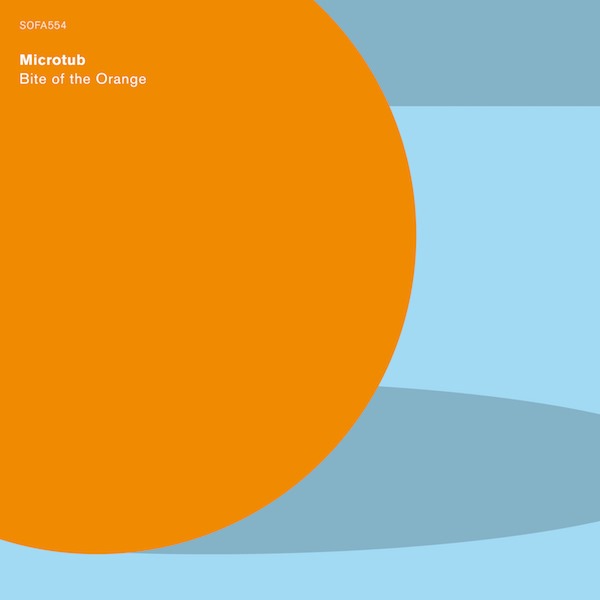
January 2017: I was introduced to Microtub on receipt of their album Bite of the Orange.it prompted all kinds of tangential associations, few actually or specifically related to the album’s sonic contents. But then, that’s s often one of the great pleasures of music for me – the ideas and images it has the capacity to unlock. And while more conventional musical forms – especially lyric-orientated works – resonate on a more direct level in that sound and sentiment combine to connect with given emotional states, more abstract works have greater potential for far freer associations.

July 2019: I’m reintroduced to Microtub and reminded that I still don’t really grasp what a microtonal tuba is, and remain amazed by the idea of there being three microtonal tubas in existence, let alone musicians to play them. Because, yes, as the press release informs / reminds us, ‘Microtub is the world’s first and only microtonal tuba trio, exploring Just Intonation and the rich harmonic potential of the tuba. In collaboration with bohemian drips and Ace Tunes they bring us their new release Chronic Shift, featuring recorded material from the stunning “Großer Wasserspeicher” (large water tower) in Berlin-Pankow, mixed with analog synthesizers’.

It gets a bit technical after that: ‘Carefully recorded in binaural audio by the bohemian drips engineers, this unlikely combination of tubas and simple synth pitches provides a meditative and immersive experience, and an auditory glimpse into a truly unique acoustic space. By using Kunstkopf stereophony and the perspective of a so-called dummyhead microphone (Neumann KU-100), the acoustical scenary of the tank was captured in 3D-audio, relocating the listener into the actual recording situation’.

More usefully, we learn that ‘the title track ‘Chronic Shift’ is a rework based on the piece ‘Sonic Drift’, a Robin Hayward composition written specifically for Microtub. Not that I’ve heard ‘Sonic Drift’ to compare, or know if I’d be able discern the connections.

Still, the two pieces on Chronic Shift are yawning longform experiments in organic hum and drone that sound nothing like anything involving an actual tuba. Which is probably for the best.

BD010_front

Whereas many microtonal explorations manifest as tiny, pinging blips, Microtub’s Bite of the Orange is constructed using immense, elongated notes. Perhaps somewhat obscurely and tangentially, I find myself considering Andrew Marvell’s poem ‘To His Coy Mistress’, specifically the following couplet:

My vegetable love should grow
Vaster than empires, and more slow.

No, not on account of the popular tumescent implications most readings of the lines offer: I’ve even explored the mirthsome connotations of Marvell’s emerging bulbous courgette during undergraduate seminars in an attempt to draw some kind of engagement from a room of late teens who really couldn’t give a crap about Elizabethan poetry, but that’s not why Bite of the Orange evokes Marvell in my mind. Instead, I’m drawn by the poem’s allusions to the Aristotelean connotations of a love borne out of the vegetative soul, as commented on at length by Lawrence Burton in his magnificent Anatomy of Melancholy, one of my favourite 17th Century texts (largely, it’s true, on account of Burton’s magnificent language). Burton makes a connection between the ‘vegetative soul’ and ‘natural love’; a love which is a slow-growing, evolutionary condition.

Granted, an orange is not a vegetable, but, like this slow-growing love, Bite of the Orange moves at an almost imperceptible pace, organic. Microtub’s slow, microtonal explorations require patience, and it’s only through time that a true appreciation of its qualities and its sonic depths can be truly appreciated.

The three tracks seep into one another, both in terms of the structures of their titles, and sonically. ‘Violet Man’ ventures into the dark, its low rumblings feeling their way through subterranean territories and poking the deepest recesses of the mind, and the three long-firm tracks combine to offer a full, panoramic perspective on the nuanced tonalities three microtonal tubas can create.

Bite of the Orange is not an album of action. It is an album which unfurls, creeping, revealing its aspects in greater detail the more closely one listens.

Microtub