Posts Tagged ‘Mellow’

3rd May 2020

Christopher Nosnibor

Ashley Sagar is a man with his finger in manifold musical pies, spanning the semi-ambient droning improv of Orlando Ferguson to the thumping Krautrock grooves of The Wharf Street Galaxy Band. It’s Sagar’s willingness to experiment, and to try anything once that’s a significant factor in his interest as a musician. What’s important for anyone engaging in experimentalism is the acceptance that degrees of success and failure may vary along the way, and it’s with no embarrassment that I recall sharing a stage with him and Namke Communications’ John Tuffen for a hastily-assembled improv set built around a sort of sequence and structure that was actually ok, but not what any of us had really anticipated.

Anyway, under lockdown and unable to play his distinctive wandering basslines live with any of the eighteen or so bands he performs with, Sagar has delivered his second solo album of the year, in the form of the soft ambient work that is Beyond Life, which comprises a single track with a twenty-six minute running time.

It begins with slowly rhythmic vibraphone tones that reverberate softly into a warm atmosphere. Immediately I begin to question this: is it a vibraphone? I’m not strong when it comes to mallet percussion instruments, or synthesised emulations thereof. Equally, I can’t trust that my perception of a ‘warm atmosphere’ isn’t coloured strongly by the unseasonably warm and sunny weather paired with the unusual quietness outside on such a balmy evening, where I’d ordinarily likely be at a gig and the street and back gardens would be chocka with people between pubs and stoking early bank holiday barbecues.

As my thoughts drift, so does the music, and although it doesn’t grab my full focus, is does very much permeate my reflections as I go inside myself, recalling a life before all of this, a life when life was actually life, when, however much going out and being among people may have been a cause of anxiety, it was an option, and live shows provided the opportunity to be among likeminded individuals coming together to escape into sonic domains.

And so here we are, all isolated together, supposedly, in a state beyond life. Sagar provides a subtly-structured soundscape to ease these contemplations along, quietly shifting from one tone and texture to another, from light and airy to low and sombre, piano notes ringing out into the emptiness.

The streets are empty. The pubs, hotels, gyms, shops are empty. The sky is empty. The world is empty. We are all empty. And Beyond Life is beautiful.

AA

a1792484157_10

Kranky – 10th May 2019

Cristopher Nosnibor

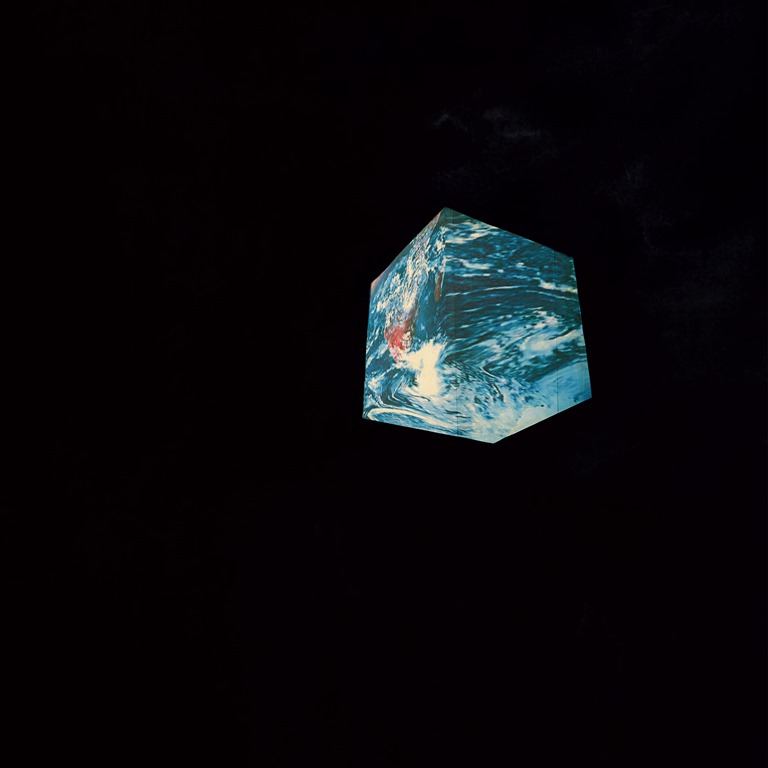
As with its predecessor, Konoyo, Anoyo draws its inspiration from traditional Japanese music, but very much reconfigures it not only through an ambient lens, but through Hecker’s own unique musicality.

Anoyo is very much a sequential, linear work, to the extent that the song titles create poem, and also a form of micronarrative:

That world / is but a simulated blur

Step away from Konoyo / into the void

Not alone / you never were

This sense of narrative also extends to the overall listening experience. ‘That World’ begins tentatively, tightly-wound strings picked, twanging. Washes of sound, reversed, flit like will-o-the-wisps as the tapers run the wrong way and slow, warm pulses flesh out the immense spaces between the notes. It’s ambient, and it’s (superficially) background, and quite hypnotic, but not without points of interest: in fact, while it’s easy to simply allow it to drift past, turning up the volume a way and concentrating reveals almost infinite details and ever-shifting forms. This is where Tim Hecker stands out in his field.

‘Is but a simulated blur’ presents a very different dynamic, dominated by irregular percussion. The arrythmia contrasts with the soft wave forms which drape, mist-like around the beats, which evaporate into the air, and the tracks bleed into one another. Things become fuzzier, less distinct, less clearly focused on ‘Into the void’, as piano notes stutter and glitch, warp and bend in the most disorientating ways.

‘Not alone’ brings bold, thunderous drums, but again the beats are erratic and ever-changing in pattern, before melting into the static-rumbling ‘You never were,’ which fractures and stammers like something’s damaged in the playback mechanism, like something in the process is broken, and the effect is disconcerting, discomfiting.

And so it is that Anoyo subtly transitions from delicate and mellow to something altogether more fragmented and more difficult. The subtlety is the key here: it creeps up on you, barely noticeable… and then, by the end, you find yourself wondering how you got here from there.

AA

449080

GoldMold Records – 10th February 2016

Christopher Nosnibor

Once upon a time, everything was tapes. The romanticism of a frustrating and often inconvenient medium has endured perhaps largely on account of the potential impermanence of their nature: how many music fans of the cassette age mourn the loss of a beloved recording on account of a moment’s forgetfulness which resulted in overrecording, or some freak event which resulted in demagnetisation? How many hours spent spooling and respooling tape which had become mangled in the heads, or otherwise stretched or snapped? The albums of yesteryear, all recorded to quarter inch tape, slowly decaying are an integral backdrop to our appreciation of the existence of the sounds they contain.

But is with books in the printed medium over digital text, it’s easier to form a bond with an artefact which feels somehow personal and personalisable. Just as a book with various creases and marks, perhaps even annotations develops a tangible, unique sense of ownership a Kindle edition never can, a playlist can never have the same resonance as a lovingly-sequenced mix-tape with hand-scribbled notes accompanied by a creased post-it or page from a spiral-bound notepad containing a covering note, folded into quarters and stuffed inside a scuffed case. On an emotional level, at least, sonic fidelity counts for less than fidelity to a pure moment, and it’s the thought that counts: those analogue documents of yesteryear can contain the entirety of a crush that dissipates in weeks or the early stages of a lifelong relationship on any level.

While the debates over the nostalgia ‘industry’ continue to rage, it’s fair to say that the renaissance enjoyed by the cassette is not a purely economic one. After all, the costs involved in burning a bunch of CD-Rs and stuffing them into handmade sleeves is negligible, and even though a bulk batch of 100 C30 cassettes can be obtained for in the region of 55p per unit, the time and effort required to dub even a small run of tapes is proportionally greater than any number of CD-R burns. But the changing nature of the music industry means that where it’s at now is in the small-scale, the personal, and the idea that an artist or label has invested time and personal attention on a product imbues the object with an instant emotional resonance.

The debut release from Glasgow’s Forehead – the vehicle of Sean Garrett (said to be ‘the shyest frontman you’ll ever meet’ and mother goose of the Lovely Ladies) – is appropriately named, as it is being released – if you hadn’t already deduced – on (baby blue) cassette, in a limited edition of just 15. It’s also being released as a download of course. Because no artist makes a release exclusively for 15 people.

The blurb notes that the four tracks contained herein ‘have been about for a while but are only being released now, a testament to Sean’s wholly unwarranted modesty’. And yes, the songs are superb, in a sketchy, nervous, hesitant yet achingly sincere way. You get the impression that Garret’s shyness is integral to the material, to the extent that its awkwardness defines what makes it special. And by no means interpret awkward as clumsy: there’s a skilled songwriter hiding behind the sonic fog here.

Regardless of the protracted journey between conception, recording and release, in keeping with the EP’s title, Bedroom Tapes conveys the spirit of 90s analogue enthusiasm. Low-key, lo-fi indie rock songs, reminiscent less of Pavement and more of Silver Jews, define the Forehead sound. This only serves to amplify the nostalgic quality of the release, evoking the excitement of hearing something stubbornly lo-fi, dubbed from a cassette or a record, the grind of a worn stylus on cheaply-pressed vinyl, for the first time.

Forehead also captures the awkward shyness of J Mascis on ‘Honest’, and the swampy plod of ‘Corner Pieces Falling Apart’ bursts into slanted psych-hued noise before crawling off to hide under the table.


Forehead