Posts Tagged ‘journey’

Coup Sur Coup – 17th October 2025

Christopher Nosnibor

Few drummers receive much recognition, unless they’re the backbone of bands who are household names (people know Ringo Starr, Keith Moon, Dave Grohl, Mike Joyce, Lars Ulrich), or have otherwise featured prominently in a specific musical milieu (Martin Atkins and Paul Ferguson come to mind). Their contributions are overlooked and underappreciated, and in the main, there’s a tendency to only notice exceptional drummers, or poor ones. It’s not the job of a drummer to grab attention, but to hold everything together at the back. Consequently, you might be forgiven for being unfamiliar with William Covert, whose career is defined more than 15 years of drumming in math rock, post-rock, and post-hardcore bands (Space Blood, Droughts, and Rust Ring).

As the narrative goes, ‘Covert began experimenting with live-looped synths alongside acoustic and electronic drums. This experimentation birthed two full-length solo albums characterized by post-rock and krautrock-inspired synth loops and melodies, all performed solo with loop pedals and sequencers.’ Dream Vessel was born out of a desire to pursue a different approach and a different direction, and indeed, the first part of this latest offering was a collaborative, group effort, with Nate Schenck on bass and Jack McKevitt on guitar, while we learn that ‘the other half was performed entirely solo, diving deep into cinematic ambient soundscapes, dreamy Frippertronic-influenced guitars, modular synth, and free-jazz drumming filtered through a post-industrial lens.’ Nothing if not varied, then.

The album’s five tracks span thirty-eight minutes, and it’s very much an exploratory experience. ‘Brotherhood of Sleep’ eases the listener in gently, with a slow, strolling bass and reverby guitars. It’s an expansive and spacious instrumental work, rich in texture and atmosphere – a shade proggy, a little bit jazzy, unfurling at a sedate pace. ‘Trancers’ fades in, and offers similar vibes, but it’s both more spacious, and more groove-led. The guitars bend and echo that bit further, and as the track progresses, so the pace and urgency build, along with the density of the guitars, which warp and stretch more with every bar. It may not hit the extremity of My Bloody Valentine’s Loveless, but the guitars do sound as if they’re melting by the midpoint, before the track locks into a muscular, driving groove that’s a world away from where it began. There’s an appeal that’s not easy to pin down when it comes to compositions which begin in one place and end up entirely in another, while it’s not entirely clear how they’ve transported the listener from A to B. The experience isn’t completely unlike making an absent-minded walk somewhere, when you haven’t been paying attention, and arrive with minimal recollection of the journey- although the difference is that the walk is usually via a familiar route that requires little to no concentration or engagement, whereas a song that swerves and switches involves an element of brain-scrambling along the way.

‘Dream Void’ is a centrepiece in every way: The third track, right in the middle, it’s over nine minutes in duration and a towering monolith of abstract drone. It’s immense, cinematic, widescreen, gentle. Around the mid-point, the drums arrive, and they’re busy, but backed off in the mix, and we’re led down a path to a place where frenetic percussion contrasts with chords which hover and hum for an eternity. Slow-picked guitar brings further texture to the mellow but brooding post-rock soundscape of ‘C-Beams’, which pushes toward nine minutes, as the album ventures into evermore experimental territory. As present as the drums are, they don’t provide rhythm, but bursts of percussion, swells of cymbal and wild batteries of rolling, roiling whomps.

The more concise, feedback-strewn ‘Throttle’ marks a change in aspect, a roar of noise, a wail of feedback, and positively wild, before ‘Come True’ closes the set with some Kraftwerkian bubbling synth and undulating bass, paired with a rolling beat. It’s all nicely done. And this is true of the album as a whole.

Dream Vessel is gentle, overall, but not without edge, or variety, and certainly not without dynamic. Here, ‘interesting’ and ‘unusual’ are not dismissive shrugs with a hint of condescension: Dream Vessel brings together a host of ideas and traverses a succession of soundscapes , never staying still for a second.

AA

a0283722598_10

10th January 2025

Christopher Nosnibor

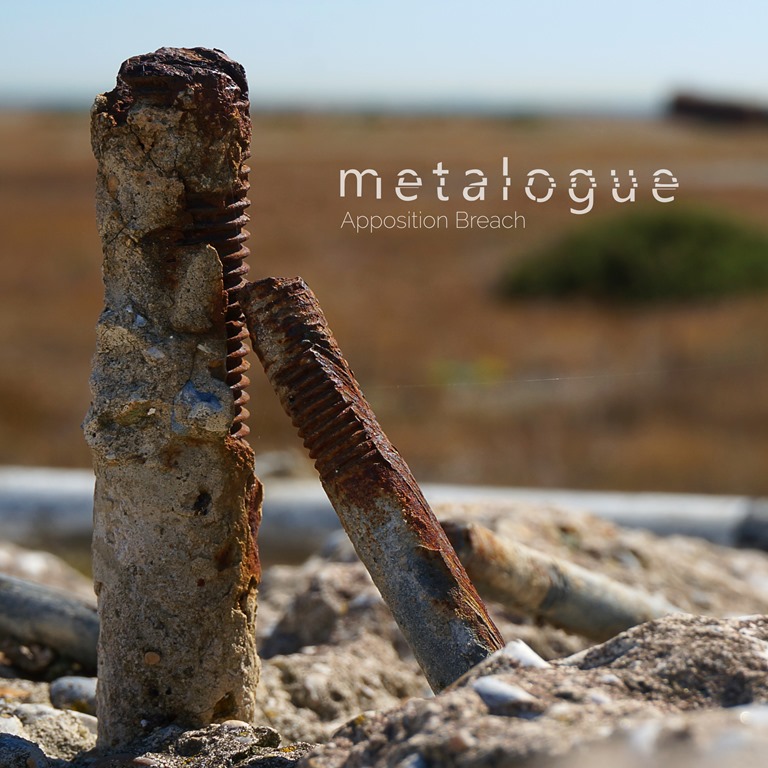
Metlaogue’s Bandcamp pitches the project as ‘Industrial/IDM/breakcore with cinematic tendencies’, while the notes for Apposition Breach note how it ‘explores the threshold of geography and inner world – where landscape becomes the medium for emotion’. This, for me, seems to carry almost Ballardian connotations, the idea of inner geographies, the way in which the geometry of a landscape can slide between the literal and the metaphorical, how one can become an analogue of the other. The inner and outer worlds exist almost separate of one another, and the only point at which they intersect is in the mind as one processes the physical world as experienced through the shading of the emotional state. A sunny day may be a joy to behold, but may not bring joy in the face of a trauma. How we respond to our surroundings is influenced by not only circumstance, but the way we react to it. Yet rarely do we pause to consider these variables. Why did you have a shit day at work? Was the work itself shit, or did you arrive carrying the burden of something else which made something comparatively minor a catastrophe? You may walk the same route daily for a year, but it will never be the quite the same experience. The variables are infinite, and on Apposition Breach, Metalogue interrogates those variables and the reflex of memory and their complex relationship on a nuanced suite of compositions, some six years in the making.

The atmospheric ‘Threshold’ draws the listener into that fluid space, where soft ambience wraps itself around hard mechanical drones, and the percussion shifts in pace and intensity, at first muted, subtle, but firing forth in explosive bursts to become the dominant feature, and in doing so marking a dynamic shift in mood. It’s somewhat akin to climbing a gentle hill and suddenly finding a sharp crag just as the wind picks up and clouds darken the sky. The temperate changes with the change in tone.

While the images which accompany the release are illustrative, the soundscapes themselves evoke rusted machinery, dilapidated mills and farming equipment gradually yielding to the elements. As much as it’s industrial, Apposition Breach offers haunting echoes of industry, once-thriving communities and factories abandoned – not the collapse of civilisation, but the decline which comes with ‘progress’. Wraith-like synths wisp and envelop pulverising beats on ‘Triangulation’, a composition which builds and transitions through a series of different forms. The pieces tend to be on the longer side, in excess of six minutes and pushing to almost twelve on ‘Outer Margin’. This gives them time and space in which to evolve at a pace which feels natural and necessary.

‘Ilira’ is ominous, scraping drones create an eerie fog of tension which is punctured by hard, violent beats. Between the snarling mechanical grind of ‘Reflection’ and the dark, pulsating title track, Metalogue conjures an array of sonic sceneries which present a journey of sorts. Not a linear journey whereby one travels from A to B, B to C, but one which seers the retinas and scours the mind with a succession of scenes, flashbacks, rapid cuts, with the effect being not dissimilar to the way memory skips here and there in time and space when triggered by seemingly unconnected and unrelated prompts – a word, a sound, a smell, nothing at all – or a dream, in which one suddenly finds themselves in a different location or setting seemingly apropos of nothing. Just as William Burroughs remarked of his discontinuous narratives that he was not concerned with explaining how characters get from one place to the next, so it is that we, as participants in the immersive experience that is Apposition Breach, find ourselves effectively teleported.

There’s the hard attack of ‘Redoubt’ and the echoing mystery of the swampy but hypnotic ‘Day Marker’, and in between, all shades of hefty percussion and cold, razor-edged synths shiver and scrape kneed and throb to render an altogether uncomfortable experience. Apposition Breach is expansive, ambitious, and meticulously realised.

AA

cover

Not Applicable – 25th June 2021

Christopher Nosnibor

Chris Sharkey’s first album released under his own name is what I suppose one might call an ‘environmental’ album. Not an album about the environment in the broader sense, or the ecological sense, but in the sense of having been inspired by the artist’s surroundings, and the music herein is a direct response to that in many ways. While so many releases from the last year have been environmental in the context of creative responses to lockdown and a shrunken vista consisting of four walls and the view from the window, paired with a pervading anxiety on account of the 24/7 news media and social media doomscrolling, Presets comes from a very different perspective. First and foremost, its inspiration is travel.

“I had been touring and travelling a lot. Lots of long car journeys, the M1, driving between shows in Europe. Long waits in airports. The occasional long-haul flight to play farther field. Throughout this period my relationship to music changed. I found that listening to songs or short pieces would leave me agitated and frustrated. I’d been listening a lot to Actress, particularly ‘Ghettoville’ and ‘Hazyville’ which really worked for me on the road. I wanted a music that develops slowly over time, drawing you in, making you forget about the clock. Music that has so much grain and texture that you could almost pick it up and turn it around in your hands, examining from all sides. Like a physical object. Music that resembles something you might see out of the window of a plane, high above the clouds, a meteorological event or a storm on distant mountains from the back seat of a car.”

I can certainly relate to the agitational effects of listening to certain musical forms while in transit: I always had to stop music and be on full sensory alert on arriving at a train station and walking through an unfamiliar city, for example, and since lockdown, I’ve not been able to listen to my MP3 player at all while walking around anywhere.

The physical setup for the album’s production was minimal, and Presets is the product of two months’ intensive recording, producing hours of material. But this was only the start of a protracted second stage, which Sharkey details as follows: “As the process continued, I would select my favourite parts and create playlists just for myself. By the end I had over 4 hours of music that lived on my phone and whenever I would travel, I’d listen. Over the course of the next 5 years: touring, travelling, listening, I slowly whittled it down to what you hear on Presets.”

In short, Presets is the product of many years’ work – not just the five years in post-recording evolution, but the years of experience and observation that preceded its creation also. It was, unquestionably, time well spent: while many of the individual segments are quite short – mere fragments – the album as a whole sees them sequenced and segued so as to feel like one continuous piece that gradually transitions between tones and shades. It’s also an immense work, clocking in around the eighty-five minute mark. It’s very much a good thing that it’s intended as a background work, because it’s practically impossible to sustain focus for that kind of time. But Presets is about not focusing, about disruptions and interruptions, about life.

It begins with quavering, key-ranging notes that do, at least vaguely, sound like guitar, before layers of processing build, before the source instrument becomes lost, evolving to conjure organ -like drones and entirely abstract washes. Before long, particularly over the course of the eighteen-minute second track, ‘the sharecropper’s daughter’, you find yourself not so much listening as floating along with the sounds as they slowly creep and shift.

The titles are sparsely descriptive and evocative at the same time: from ‘blue cloud, red fog’, to ‘scorpion bowl’ via ‘detained at the border’, there are hints of mini-narratives attached to each piece, and the sense of travel and movement does come across through the difficult drones and scrapes of feedback that build and buzz through the foggy murk.

It’s an epic work, and a major achievement.

Chris Sharkey Presets cover 3000px

Opa Loka Records – OL2004

Christopher Nosnibor

Just over two years on from The Forcing Season: Further Acts of Severance, and Michael Page delivers another instalment of Sky Burial music.

According to the accompanying text, ‘Stations of the Sun was composed in the spring of 2020 after returning from travels through Europe, the Middle East, and North Africa’, and ‘the five tracks form a ritual soundtrack to a journey which became an inadvertent pilgrimage to view the rising and setting sun from ancient sites of historical significance’.

As is often the case with ambient works, while intended to be evocative, its evocations remain secret, hidden from the listener and locked inside the creator’s mind and separated by process. The sense of journey, the sense of location, isn’t particularly apparent here, and as is so common, to the genre where there’s a concept and an inspiration deriving from some specific experience or place, that sense of place, space, and inspiration is largely lost in vague mists. That said, there are some rich textures and nice tones here, and while the idea of ‘journey’ may not be readily conveyed, there is a definite trajectory and evolution across the album’s five tracks.

The expansive opener drifts and washes broad strokes, with little detail, but over its sixteen-minute duration becomes increasingly calm and soothing. As you let it wash over you, you become more attuned not to the location in Michael Page’s mind, but your own immediate surroundings. As ever, I’m in a small, tunnel-like rectilinear room, but at the same time, I am drifting beyond it in my mind due to the transportative effects of music on the mind.

‘Stations of the Sun 2’ is sparse, fleeting notes that glide in and out through tweets and trills of sounds that imitate birdsong without being actual birdsong, as n erratically-pulsing beat throbs and glitches at its heart, like a muted Kraftwerk, or an ultra-muted take on Throbbing Gristle’s ‘Discipline’. As the album progresses, distant samples and incidental interventions creep in, changing the tone, and the rhythms become more pronounced and the atmosphere grows darker, although by ‘Stations of the Sun 5’ – a sixteen-minute megalith to bookend the album with a counterpart to the opener, the beats have evaporated, replaced by random, clanks and scrapes that echo dolorously through eternal caverns of gloom. Whirs, bleeps and whooshes like shooting stars occasionally flicker and flash through the dense, dark space.

And so it ends more or less as it begins, and we find ourselves, having been led onwards and through a succession of sonic spaces, that the terminus resembles – at least in memory – the origin. So where have we been? For each of us, the answer will be different. From the comfort of our own spaces, Stations of the Sun leads the listener on a journey of the mind.

AA

OL2004_front