Posts Tagged ‘electroppop’

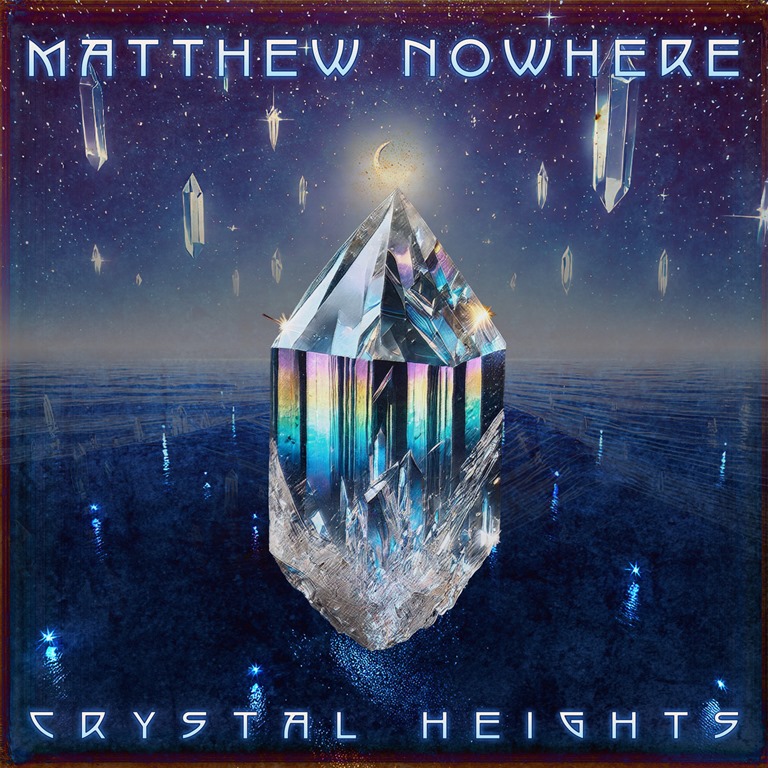
How times have changed. Back in the early 80s, this would have been mainstream. It would have been major label. It would have been huge. It would have smashed the charts. 2025: nah. And so Crystal Heights is a self-released effort, and the chances are its audience will be respectable but limited.

This is an album which is steeped in all things retro: it’s an electropop work which is light and airy and easy on the ear, and low on demand.

He describes it as ‘a sonic love letter to the 1980s’, and the title track is exemplary: it’s light, bouncy, melodic. But it feels somewhat shallow, a shade flimsy. Then again, this was also true of much 80s pop, and it was a criticism levelled at pop music at the time. Critics in particular were not especially enamoured by electronic instruments, particularly sequencers. Here in the UK, the Musicians’ Union sought to ban drum machines as they were seen as doing drummers out of a job. They weren’t really all that keen on synths, either. Using machines to make sound wasn’t considered ‘real’ music.

Again, how times have changed (although drum machines in a ‘rock’ context are still unusual). Drum machines didn’t eradicate drummers, but the death of small venues pretty much killed off bands, impacting the number of places for them to play in the most dramatic fashion. And the proliferation of two-piece acts, and solo acts, is nothing to do with technology, and everything to do with the simple practicalities of performing live music. Rehearsal spaces are as scarce as gig spaces: what are bands to do?

The mid-tempo ‘Love is Only What We Are’ sounds like mid-80s radio-friendly movie soundtrack material, and drifts along nicely with some picked reverby guitar work, and it works nicely as a counterpoint to the crisp snare and clinical kick drum sounds. ‘Echoes Still Remain’ is atmospheric, evocative, and also sounds so familiar – not because it is, but because it’s the very quintessence of so much music released circa 1984. It’s hard to fault the level attention to detail here. ‘Ruby Shards’ provides perfect evidence of this, in that it manages to compress pretty much the entirety of New Order’s output into four and a half minutes.

‘Transforming’ was recorded with Lunar Twin, and is a bona fide electropop banger. Constructed around a rippling loop, it’s a supple work that oozes 80s vintage. It’s going to nag me for weeks which songs it reminds me of. It’s a clear standout in an album that’s solid but… but what, exactly? It feels light, perhaps lacking, even. But what more should we want from it, realistically? Innovation? No, that was hardly the objective here. Lunar Twin also features alongside The Antonio Family Singers on ‘Persist3nce’, a brooding slow-burner built around a mesmeric beat which fades to grey.

With Crystal Heights, Nowhere has achieved something that’s not insignificant – an album that’s instantly accessible, strong on melody, and enjoyable.

AA
a0495838035_10

Klanggalerie – 18th December 2020

Christopher Nosnibor

There’s no questioning Eric Random’s pedigree, having begun his musical career with The Tiller Boys with Pete Shelley and Francis Cookso before becoming part of the post-punk and experimental milieus of both Manchester and Sheffield, recording his first solo works at Cabaret Voltaire’s studio, and later fronting Nico’s band until her death in 1988. But while many artists dine out on their former glories – and it’s true that since the majority fail to scale to any great heights, a brimming resumé is something to celebrate, there’s equally a certain truth in the belief you’re only as good as your latest work.

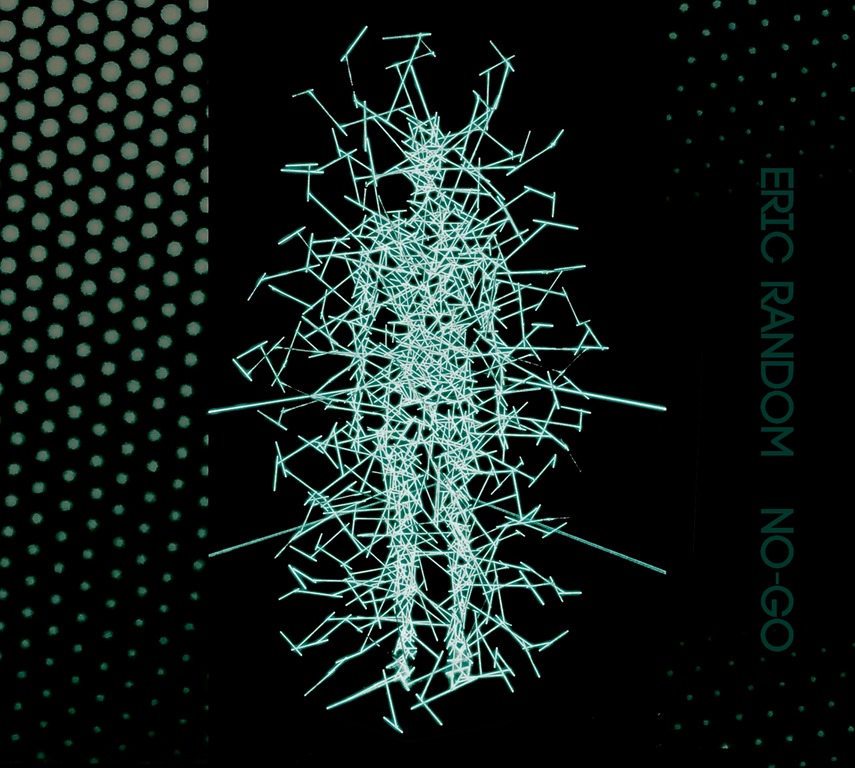
No-Go is his fourth album since his return in 2014 following a lengthy time out. Pitched as a step further into an electronic dance direction, and inviting comparisons to Wrangler and Kraftwerk, No-Go is brimming with 80s stylisations, and all the 808 and Akai snare cracks and robotix vocals you could imagine are crammed into these eleven tracks.

A jittery stammer runs through the entirety of the opener, ‘Synergy’, while all over, multiple other synth sounds swipe and bleep over the ultra-retro groove, and all over, Random recaptures not just the sound of the late 70s and early 80s scene in which he was so deeply immersed in, but also the feel of the period. It’s easy to forget just how vibrant the energised spirit of newness was around that time, with the rapidly evolving – and ever-cheaper – technology opening new doors to seemingly infinite possibilities. This was music that sounded like the future in every sense, and while a lot of it may sound dated now, the fact there appears to have been some kind of revival or renaissance under way for the best part of the last 30 years speaks volumes. Of course, where Random differs from the oceans of retro revivalists is that he’s not attempting to reconstruct a fantasy version of a bygone era: he was there, at the cutting edge, doing precisely this.

‘Compulsion’ is a bleak wheezy cut with tinny marching drums and vocal that are oddly reminiscent of early New Order in their flat, distanced delivery. It’d Depeche Mode that spring to mind in the opening bars of the buoyant yet bleak ‘Is the Sun Up’, but then

‘Sinuous Seduction’ leaps out on account of the sample of William S. Burroughs narrating a segment of Naked Lunch, and while one of the numerous passages about giant black centipedes may not be revelatory or even particularly inventive, it does serve as a reminder of Burroughs’ vast influence on music, in particular acts like Throbbing Gristle and Cabaret Voltaire, who swiftly recognised the analogy between the cut-up and the sample, something Burroughs himself had initiated with the experiments he conducted with tape in the late 1950s and early 1960s with Ian Sommerville. But then, equally, there’s just something about Burroughs’ creaking, dry-as-sticks monotone that is just unbelievably cool, and also sends a unique shover down the spine, distinctive to the point of being immediately recognisable, and also really not of this world, that detached, flat intonation about stuff that’s plain weird is perfectly suited to the music of the early years of the electronic age. The track itself is sparse, monotonous, robotic, and while it’s as much an example of doomy Eurodisco in the vein of The Sisterhood’s Gift, it’s not a million miles away from The Pet Shop Boys circa Disco – and that’s by no means a criticism.

Sandwiched between this and the blustery hard-edged disco of ‘No Show’, the ‘It’s come again’ offers some welcome respite with its more loungy leanings. Things get lively to the point of dizzying with the last few tracks, which are uptempo an mega-layered with bewilderingly busy arrangements, and it’s a tense climax to an album that shudders and judders, bubbles, foams, and fizzes with electronic energy.

In going back to his roots, Random has really hit the zone and delivered some old-school stompers in the process.

gg347_front