Posts Tagged ‘Eerie’

22nd March 2024

Christopher Nosnibor

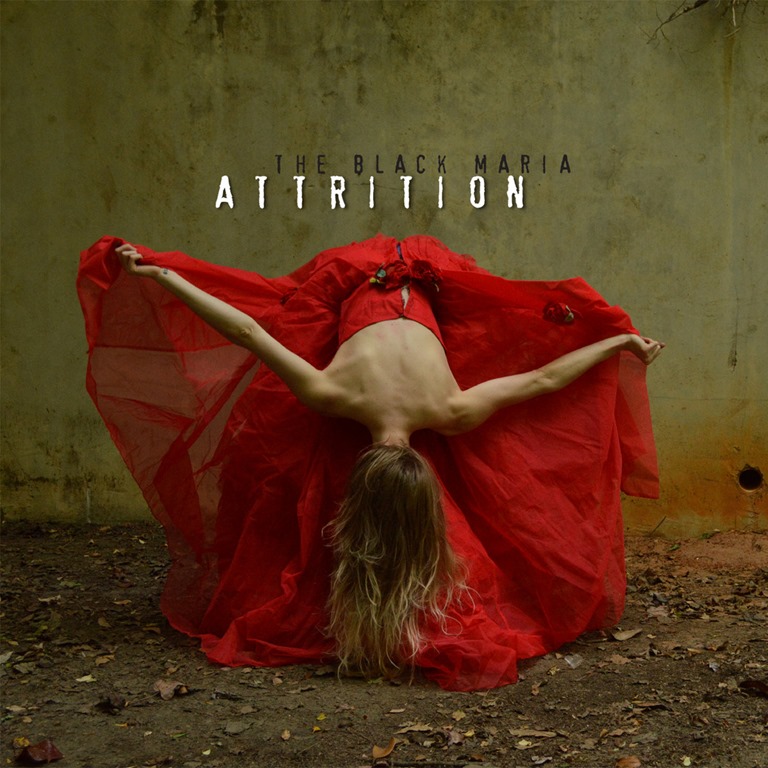
Everyone has a different way of processing, everyone’s cognition operates differently. It’s all a matter of experience and perception. The broader one’s experience, and also one’s exploration of art – in all media, be it books, music, visual art – the broader the network of intertext and references available. Formative experiences and interactions are also a significant factor in the way we come to shape and comprehend our world. And so it s that the moment I encounter the words ‘Black Maria’, my mind immediately leaps to ‘Afterhours’ by The Sisters of Mercy – my first encounter with the term, long before I would understand that it was a term for a police van. Attrition’s latest release certainly doesn’t elicit images of dark vehicles, but does hint at the seedy backstreet scenes that the Sisters song brings to mind, with its sense of disconnection, of being outside yourself, .the paranoid twitch of sleep deprivation

The album’s brief intro track, ‘The Promise’ is a murky ambient piece with hushed spoken-word vocals which is build a mood, a sense of dark atmosphere and foreboding. This intro track thins has really become a vogue in recent years, to the point that it’s becoming predictable and even frustrating to be presented with an atmospheric opening piece which probably isn’t particularly representative of the album it prefaces.

In the case of The Black Maria, it’s a fair primer for the wildly varied, even cacophonous blend of musicality which follows. ‘The Great Derailer’ brings operatic vocals and some bold technoindustrial grooves, before ‘The Switch’ gives us some techno-heavy goth with strong hints of Twitch-era Ministry woven into the mix. But once again, against the busy backdrop that alludes to the likes of PIG and KMFDM, there are ethereal moans and wails which drape themselves hauntingly. I’ve loosely reminded of some of the contributions Gitane DeMone made to Christian Death around the time of Ashes, or maybe Jarboe on Swans’ Children of God, but this is somehow different, and if anything, more difficult to assimilate.

Attrition bring a vast array of styles to the table for a start. ‘The Pillar II’ is exemplary: a low industrial throb brings a heavy tension, an unsettling uncertainty, which manifests as a discomfiture in the lower regions of the gut. But the wailing wordless vocals evoke tortured souls, wandering in purgatory. There are tense strings swelling and holding a tight grip, you find your chest tightening and it’s hard to swallow for this clench of tension. It evokes physical response: I feel my jaw clench and my breathing growing more laboured as the track builds layers of sound: there’s a hum that tortures the ears, and when it falls away, the sensation is strange, empty.

Music box melancholy prefaces more ultra-tense violins on ‘The Alibi’, which really takes a turn for the disturbing. The dual vocals grate against one another, dark sinister, deranged, almost schizophrenic in their whispers. The layers are busy and there are serpentine instrumental intrusions amidst the strolling piano and skittering strings and the wild cacophony of backing vocals: the effect is absolutely dizzying. The title track draws the album to a close with warping, time-bending synth dissonance and pulsating bass which contrasts with operatic quailing providing the backdrop to a growled, menacing spoken word vocal – and then it goes large near the end, with industrial-strength percussion cutting through the melee.

‘Spooky’ feels like such a weak, tame adjective in the main, but it’s the best I’ve got when it comes to summarising the otherworldly discomfit of the experience that is The Black Maria. But throughout The Black Maria, Attrition channel all of the dissociation and disconnection, and I’d challenge anyone to listen to this and keep their feet completely on the ground.

AA
a0847003042_10

Möller Records – 23rd March 2023

Christopher Nosnibor

It’s clear that while the pandemic is officially over, collectively, we’re still very much coming to terms with it, and its aftermath. Lockdown, in particular, has had a deep psychological impact, on so many. Everyone’s experience was, and is, different, of course. I have friends who almost deny to themselves that it happened, that it was a dream or something, and for some of us, in some respects, it’s as though it never ended. This is how people deal with shock and trauma.

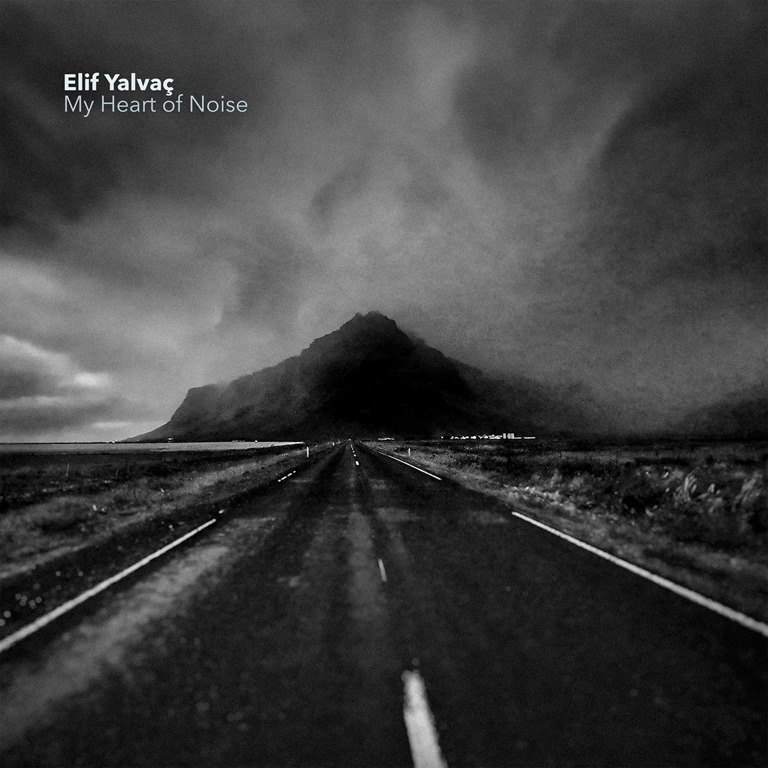
My Heart of Noise is not a pandemic album, a lockdown album, a post-trauma album, but as Elif explains, the album “began with a collection of studio and concert recordings from my travels north before the pandemic. It became like a puzzle: I could hear something special, but also that the pieces didn’t fit together well or feel complete. The breakthrough came in realising that this project was meant to be more about creation than preservation, and that it didn’t need to be a literal document any more. It could still be faithful, but instead to the spirit that inspired this music and my travels in the first place, instead of a particular recording. I created new musical starting points, and invited artists I met on my travels plus others, asking them to choose one to begin to work with together. Some artists incorporated our previous recordings, others set off in a new direction, while I shaped the pieces and found a way to connect them together.”

Recent history, then, is marked not as BC and AD, but BP and AP – before pandemic and after pandemic, and My Heart Of Noise reflects Yalvaç’s attempts to ‘make sense of a noisy world’. And the world is indeed, noisy, and difficult to articulate. There is simply too much noise too much happening all at once. It’s a perpetual sensory overload.

For this, her debut album, Elif Yalvaç involved a number of the people she encountered along the way of her journey, and the title also references this, the way she became the hub in a collective process.

The collaborative aspect means that each track does have a slightly different feel, despite all being centred around eerie ambient soundscapes.

‘Orchestra of Light’, the album’s first track, is a layered composition of dronies and hums and whispers which drift and swirl around some of the mind’s darker recesses. The textures and tones rub against one another and the edges aren’t all smooth, with buzzes and barbed, drilling sounds grating against the grain, meaning there’s a certain friction, a tension, creating a sense of discomfort.

‘Gate Check’, which follows, is softer, but the notes bend and twist and the supple, mellow tones are spun with a sense of the awkward and the uncanny, but nothing so warped as ‘Mielmaisema’, with its collage of human vocalisations and clunking clumps of thuds and thumps Amid whirls and crackles and hums, from which grinding groans of decaying Krautrock creak. It may be less than five minutes in duration but it packs a lot of shiversome strangeness into its short space, in which even chirruping birdsong feels somehow unsettling.

My Heart of Noise is not an overtly collage-based album, but it does assemble many sources and sounds, and often overlaps and overlays them to disquieting effect, and I’m at times reminded of vintage sci-fi and the BBC Radiophonic Workshop.

‘Cloud Score’ sits somewhere between post-rock and classic drifting ambience, while seven-minute closer ‘Taiga II’ very much feels like the lifting of the clouds and the breaking into light, but at the same time feels like a storm building on the horizon, and ‘Dronasaurus’ indicates that it’s not 100% serious 100% of the time.

My Heart of Noise is a restless work, one which ventures and explores, and never for a moment settles into comfort or conformity. It is not an easy album: whenever things feel like they’re settling into something nice, a cloud of disruption and difficulty will drift over and raise a shiver. You can never really settle or feel at ease with My Heart of Noise – but as a representation off life in the world as is, this is a fair summary. Keep your eyes and ears open: there is always something around the corner.

AA

a3629223309_10

Cruel Nature Records – 11th June 2021

Christopher Nosnibor

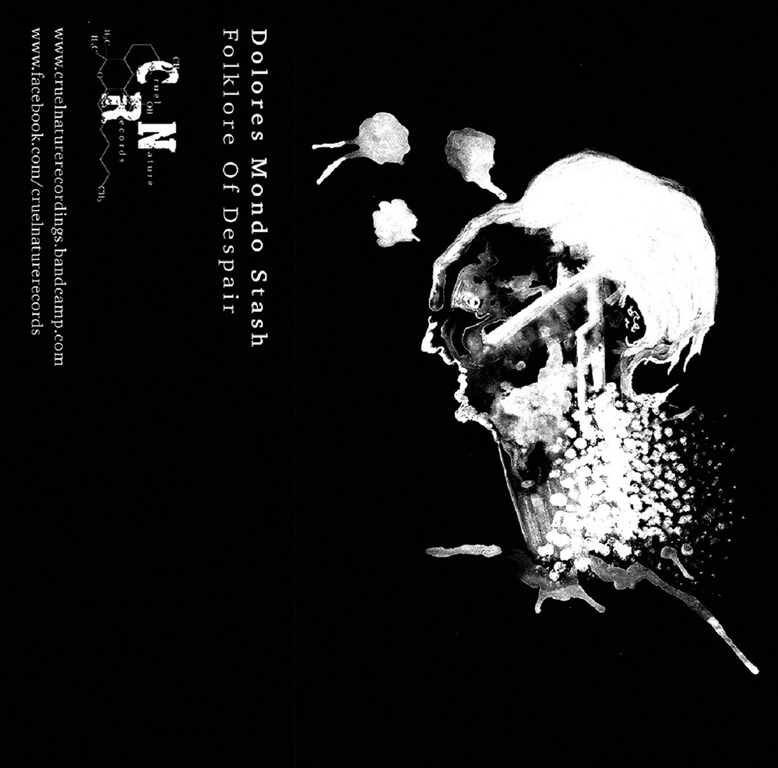
We’re in eerie electronics territory here. Haunting, creepy. Suspenseful. There’s something of a vintage sci-fi feel to this nightmarish trip, as gurgles and scrapes bibble up through swamps of whistling organ-like drones. It’s a dark record, but not because it relies on heavy drones, low, rumbling, doomy bass, hard volume or distortion: Folklore Of Despair worms its way into the psyche, prodding and poking stealthily into the recesses of the subconscious, gently rubbing and scratching at those small, nagging uncertainties that stem from the fear of the unknown. Whistles and bleeps intermingle with tense violin-type drones and quibbling analogue sounds, spooky, spectral notes and crashing crunches which disrupt the flow and create a different kind of tension, one that feels like things are going out of control and colliding on every side, a catastrophic nightmare where carks skid into one another as every third driver find their steering no longer works or their brakes have been cut. It’s disorientating, and the effect is so strong because everything about the album is so unpredictable.

There are no conventional structures here, or even any clear structures at all. Like the best suspense movies, the unexpected always occurs unexpectedly. The tense build-ups are often false markers, but then again, there’s not much letup in the tension, which they sustain and sustain, and your nerves are jangling because your gut tells you ‘something isn’t right’.

Things get really weird really fast: second track ‘Darkness is Driving the Machine of Debauchery’ is quite headfuck, as glitches and warping sounding like a stretched and buckled tape struggling to traverse over the heads. It squeaks and squeals and sounds as if whatever was recorded on the tape before is bleeding through, like voices from the other side – I’m reminded tangentially of the 7” containing sample recordings of voices from the ether that accompany Konstantin Raudive’s 1971 book, Breakthrough: An Amazing Experiment in Electronic Communication with the Dead (something that would feed into the theories expounded by William Burroughs on the tape experiments he conducted withy Brion Gysin).

An actual voice, murky, muffled, drifts, disembodied and strange through the creeping chords on ‘If the Forest Ate the Trees’, where the notes drift like fog, but there’s more to its being unsettling than that: there’s an otherness, a strangeness you can’t quite put your finger on, as if maybe the drifting fog in the graveyard scene has been filmed in reverse. It’s the fact it’s difficult to pinpoint that heightens the effect so.

Thunderous beats – distant, as if playing in a club three blocks away – pulse, deep, and bassy, on ‘Floral Patterned Gearshift’, and the sound is all but drowned out by the shrill, clamorous shrieking synapse-shattering tweets that flurry like a swarm of bats scurrying and flurrying. You have to fight the impulse to duck to avoid the aural assailants, invisible yet somehow tangible in the mind’s eye.

At times, everything simply collapses into chaotic cacophony. It’s hard to process, and ever harder to digest. Folklore Of Despair is a complex and uncomfortable album, which is nothing the title hints it may be. I’m not even entirely certain what it is, but it leaves you feeling jittery, jumpy and on edge.

AA

a0307778435_10

Room40 – 11th September 2020

Christopher Nosnibor

I struggle to keep up with the influx of material I’m sent for review, and have done for at least the last 8 years, which may or may not be coincidental with a) becoming a parent b) rapidly developing a massive network or PR and band contacts. It turns out that there comes a point when you don’t need to ask to be added to mailing lists, and people just find you. Anyway. Sometimes I just struggle, but that’s a whole other matter.

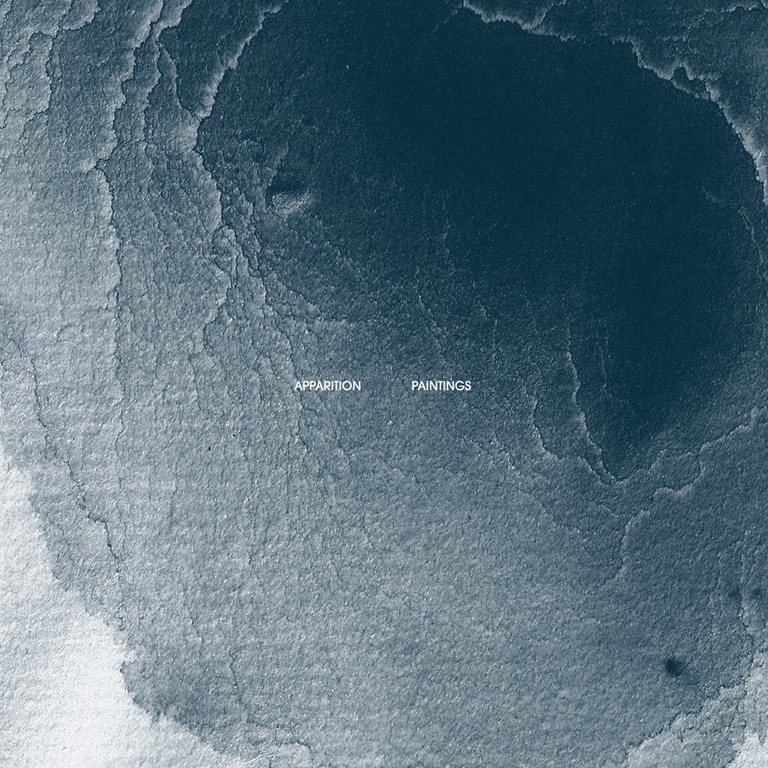
Apparition Paintings is a collection of oddly disjointed compositions that alternately soothe and trip the listener, moving between mellow melodies and rippling calmness – ‘All I Desire’ is a slow melt of chillwave, electronic post-rock and Disintegration-era Cure – and eerie weirdness – ‘When I first came here (I thought I’d never get used to the trains; now when it’s quiet I get nervous)’ is part chamber-pop, part deranged spookiness. None of this sits comfortably, in any context, and the deeper one delves into the eerie collage work that is Apparition Paintings, the more unsettling it becomes.

Toop’s notes which accompany the release are as disjointed and confounding as the music they accompany: ‘Don’t ask me about genre or consistency. Who cares? Half the world is drowning; the other half is in flames. Each story is an animal, a plant, something you drink, a surface you touch, a faint line, some memory emanating from a cardboard box. “’Things’ in themselves are only events that for a while are monotonous,” wrote Carlo Rovelli in The Order of Time. Maybe sounds are melting ‘things’, tired of the monotonous real.’

Yet on a certain level it makes sense. In a post-Covid world. The monotonous real is the lived experience of the everyday for many – not that it wasn’t before, but now, without the commute, without being in proximity to the volatile colleague, the explosive tension or the whatever, the monotonous real is confined to the household and to within the head. It may not be immediately apparent, but Apparition Paintings is a sort of inside soundtrack of the now, with extraneous and unexpected noises pinging back and firth across the main sonic backdrops to each piece.

‘She fell asleep somewhere outside the world’ finds a disembodied female voice singing a quavering melody, hesitantly. It’s a popular trope, but the deranged, childlike singing against a spooky backdrop is an effective trigger for cognitive dissonance. Apparition Paintings is an album that very much speaks to the sounds of the interior.

AA

a2399192845_10

Grappa Musikkforlag – 24th August 2018

Christopher Nosnibor

I used to watch a fair few horror films when I was younger, but don’t get to so much these days: my wife isn’t a fan, and, moreover, I can’t watch movies and listen to music at the same time. Spending my evenings reviewing means it’s the movies that have had to give. But when I did have the time to watch horror movies, I always preferred the films that unsettled the mind rather than overloaded the senses with in-yer-face viscera and gore. It isn’t necessarily that I like to be scared: I just like to be mentally challenged, and the imagination is a powerful thing. For the same reason, I usually prefer to invest the time in a book rather than TV show or movie. Greater effort tends to yield greater reward, and what’s more, the mind can conjure scenes far beyond the scope of any film set and special effects.

The mind’s eye is a terrible thing, but also a wonderful thing. Just look at your dreams: they’ll likely present vistas beyond anything you’ve ever seen in any movie. And even if not, these scenes are your own, rather than something pre-presented, the product of someone else’s imagination.

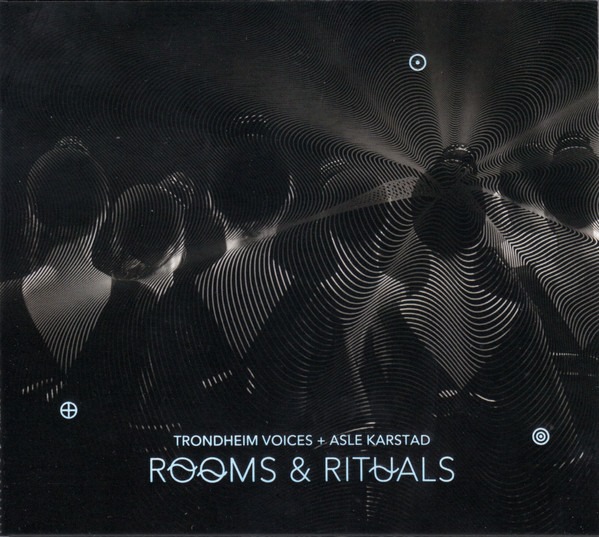
Rooms & Rituals is an album which engages the mind and encourages it to explore the darker recesses. The compositions are haunting, to the point of being outright scary. tapping into the deeper realms of the psyche, teasing out the horror of disquiet, and poking around in those dark, uncomfortable places. The voices are those of no less than ten female singers, although not necessarily at the same time. This is, indeed, a choir like no other.

‘Steamsaw’ sets the tone: dark, ominous, rumbling thunder and fear chords drifting almost subliminally… It’s minimal, and it’s a discomfort you can’t quite put our finger on. But it’s there, it’s real, and it gnaws at the pit of your stomach. ‘Pulser’ is eerie. Voices, disembodied, and as if rising from the grave, amidst unintelligible guttural utterances from the underworld, shrieks, and industrial pulsations and the occasional, sporadic clash of grating undifferentiated noise conglomerate to forge something stomach-churningly tense.

‘Ritual #3’ is a series of bleeps and tweets over a low-end rumble, and is reminiscent of some early Whitehouse, minus the trebly shouting. ‘Rise; is a voice lost in a gale, the sense of dislocation, distance and isolation rendered palpable in the drift. ‘Hymn’ pitches vocal melody that’s evocative, haunting, almost a Celtic folk piece, against a gnawing hovering synth hum, and elsewhere, ‘Gleam’ goes gloriously minimal, trilling organ pulses providing the backdrop to ethereal vocals that drift skyward.

Collectively and cumulatively, these pieces move and unsettle the listener, bringing a sense of dislocation, and disorientation. It creates a space for pondering. This is art.

AA

Trondheim Voices