Thanatosis – THT23 – 12th May 2023
Christopher Nosnibor
I might have ordinarily made some quip about my own system and that of many being nervous, but then I read the accompanying notes and thought better of it, as this album, the debut full-length album by Swedish producer Autorhythm, aka Joakim Forsgren, a visual artist and former bassist of several punk and rock groups, comes from, if not from a dark place, then certainly a serious one.
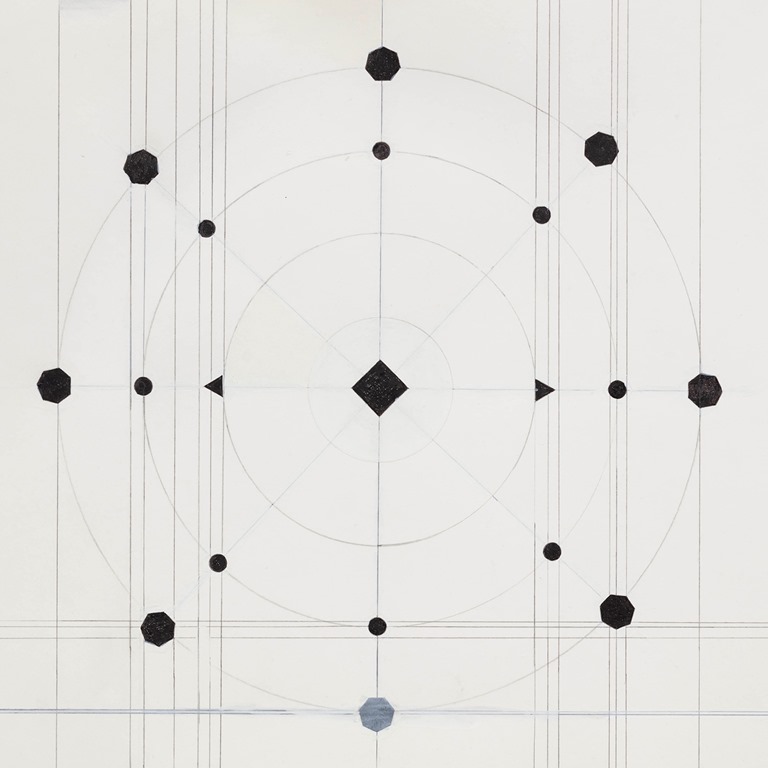
As the notes explain, ‘Forsgren started to work on what was to become Songs for the Nervous System in 2015, after having been diagnosed with Parkinson’s disease. The album is a series of intuitive compositions drawing from the latest medical research on how light and sound at specific frequencies has a potential to affect bodily functions, down to the cellular level. The resulting contemporary but surprisingly human electronic music is a dynamic mix of driving rhythms and meditative soundscapes. While the polyrhythmic beats suggest a kinship to some contemporary club music, the work of Brian Eno would be a more obvious point of reference in its genreless amalgamation of music, life and conceptual art.
‘Except for mixing and minor adjustments computers were shunned, with Forsgren instead relying on an assortment of synthesizers, of roughly the same age as himself and thus all members of the pre-digital generation. Conventional sounds and solutions were avoided, as much out of incapacity as imagination. The name and the impetus for the music were born out of the question of what music his electronic devices and machines themselves would play if Forsgren were not able to play them himself.’
The album contains six tracks, most of which sit within the midrange of around four to seven minutes in length. The first, ‘Clairvoyance’ is seven minutes of squelch and pop dance music that has a real analogue vibe and a nagging insistence, as well as a hint of Factory Floor. The beat doesn’t alter, but the tones shift and layers build.
Sequencing matters here, and two shorter compositions, ‘Doom Variations’; and ‘Neuropathic Factors’ – complimentary pieces which perhaps render the album’s objective to present ‘intuitive compositions drawing from the latest medical research on how light and sound at specific frequencies has a potential to affect bodily functions, down to the cellular level’ most apparent: there are some unusual sounds here, and the interplay between them is unusual and not always easy to consume in comfort. It’s hard to explain just how these pieces are affecting – but they are. Perhaps a greater understanding of the theory and practise may help, but listening to Songs for the Nervous System leaves me feeling too drained to do anything much.
Opening side two, ‘Plasticity’ is a six-minute slow-trip-hop throb kicked along by a vintage drum machine. The bass groove is one you can nod along to, but there are rather more uncomfortable, discordant elements and a strange warping drag that makes time twist and stretch a little. It’s the time signatures: they don’t seem to match up and induce a deep dizziness and a sense of disorientation, of discombobulation. It’s an overload, too much too process. Around the midpoint, amidst laser snaps and synth bass pulations, it slopes down to a point where you feel very much like you’ve stopped for a break before grind an in to our infinite arrival at our, final destination. That final destination is the album’s longest track by far: ‘Intercelular Communication’ presents as an extended audio research piece, and it’s well-realised, but difficult.
Three times I’ve tried to write this review: three times I’ve listened to this album and it’s left me feeling tired and strange and my writing has stalled. Perhaps I’m tired, or perhaps this really does reach the most inaccessible parts, and perhaps it does speak on a very different level.
AA
 Aural Aggravation