Posts Tagged ‘dada’

Upset The Rhythm – 27th June 2025

Christopher Nosnibor

It’s rare to be presented with something that has no immediate or obvious reference or context in terms of other music. But this is where I find myself with This Material Moment, the sixth album by Me Lost Me. And so it proves necessary to delve into the creative process for what Newcastle-based experimental artist Jayne Dent describes as “the most emotionally raw album I’ve ever made”. And so it is that for this release, she utilised ‘the automatic writing techniques she developed during a workshop with Julia Holter, and in the process has spun her music in different directions that draws on poetry, psalms and using mesostic poems and phonetic translations to generate words.’

And in this context, This Material Moment makes sense – at least in its own way. While automatic writing has a long history, dating back to the 16th century, it grew in cultural awareness via Dadaism, before becoming synonymous with Surrealism, and that fact that the results have yielded Dent’s ‘most emotionally raw album’ should not necessarily be a surprise – the theory is that that the process is dissociative, enabling a free passage between the subconscious and the page, with the mind freed from the constraints of self-censorship and linear thought. And This Material Moment very much seems to present an explosion of unfiltered, often free-flowing ideas, untethered by the conventions of form or structure.

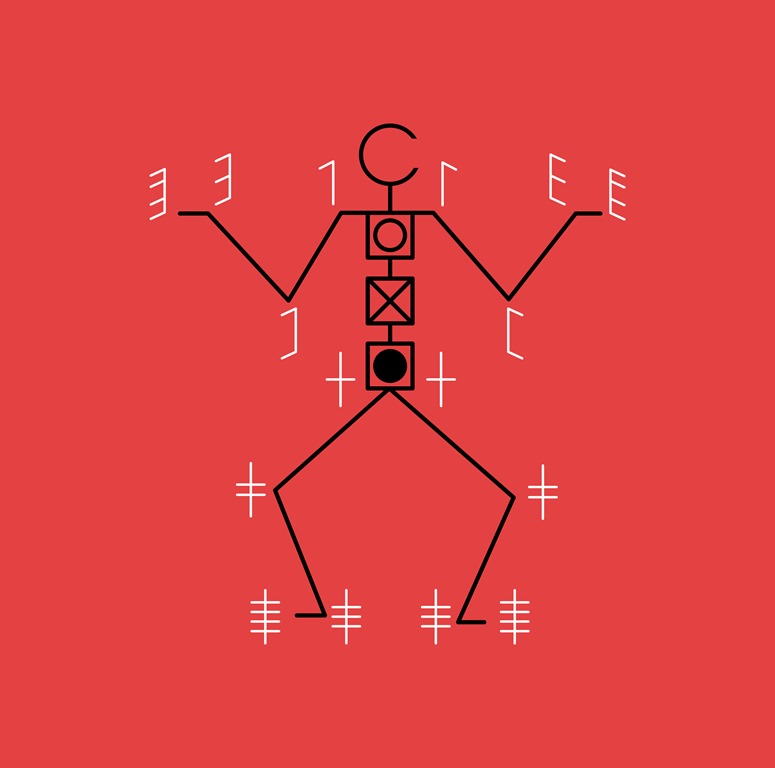
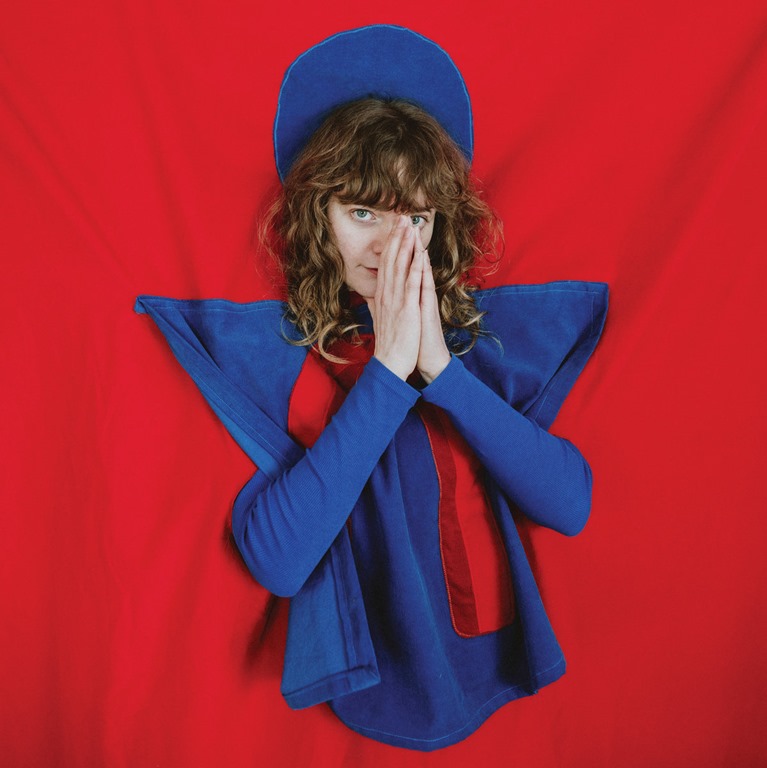
The cover art alludes to the album’s quirkiness, but in a way which rather too easy, a shade gimmicky, perhaps, failing to convey the level of nuance and complexity contained therein.

It’s on the second track, ‘Compromise!’ that the level of ‘otherness’ which defines the album. The drumming is weighty, serious, and Dent’s voice adopts an air of detachedness which is hard to define… there’s both a folksiness and elements of Eastern influence in the way it quavers against the dramatic, expanding backdrop which comes to resemble something of a mystically-hued, almost abstract, Burroughsian psychological interzone.

AA

AA

And so Me Lost Me leads the listener through a succession of dreamscapes which are often simultaneously idyllic and nightmarish. There’s a shanty-like tone to ‘Lasting, Not to Last’, but there are shrill, terrifying wails of strings or feedback which conjure images of dead souls trapped within this dimension. ‘A Painting of the Wind’ presents a sense of the unheimlich. It’s a lilting folk song… but something sits just to the left of centre, the instrumentation isn’t readily recognisable as anything, there are layer and something about is not of this plane. ‘I want to be carried away’, she intimates, and yes, perhaps so do I, I find myself thinking.

The clamour of church bells on ‘Still Life’ chimes a cord of an historical nature, evoking times past with a certain sepiatone sensation, but ‘A Souvenir’ strips everything back to an acapella – albeit multi-layered – delivery, with folk-influenced harmonies conjuring a sense of a bygone era which in many ways contrast with much of the album’s lyrical content.

I find myself flailing here: how to articulate the disconnections and disparities which are the very essence of this album? These disconnections and disparities are nowhere more highlighted than on ‘Ancient Summer’, where Steeleye Span style trad folk meets prog with a darker, almost goth vibe, with a dash of jazz and trip-hop thrown into the mix. ‘A Small Hand, Clamped’ may offer so many meanings in terms of its title: the words aren’t easy to decipher, but the atmosphere… Oh, the atmosphere. It billows and breezes, while a strolling bass… strolls.

Sometimes, albums which are ‘awkward’ to place are a turn-off in their ‘wrongness’, but This Material Moment is so absorbative, compelling, it’s impossible not to be dragged right into its very heart.

This is art which more accurately reflects our lived realities. No conversation really exists as a straightforward back-and-forth whereby each participant delivers a neat line of dialogue, and there isn’t a second in anyone’s life where their thoughts take for form of clear-cut, structurally-sound sentences. And so it is that Material Moment speaks not in a way we can readily pinpoint or identify, because it reaches us through deep, subconscious channels. It’s not an accessible album, and it’s certainly not an easy album to hail for its commercial potential. But it is an understated and yet immensely powerful album – beautiful, crafted, a folk album in many respects, but also an experimental work that seeks to explore dark psychological spaces.

AA

AA
a0524912561_10

Futura Resistenza –16th June 2025

Christopher Nosnibor

Much of Felix Kubin’s work since the turn of the millennium has involved radio, although film and theatre and other soundtrack works have also been a feature. Der Tanz Aller is one such soundtrack work, which was ‘created for the performance of the same title by the experimental arts collective LIGNA. The group specialized in site-specific, participatory works. Der Tanz Aller is based on Rudolf von Laban’s radical 1920s concept of ‘Bewegungschöre’ (movement choirs), collective dances in public space that aimed to reimagine social order through shared movement.’

The context and objective behind the composition are particularly useful to be aware of when listening to this album in isolation, as Kubin sets out: ‘When the performance group LIGNA approached me in 2012 to compose music for a play based on Rudolf von Laban’s revolutionary kinetic theories and so-called ‘Bewegungschöre’ (movement choirs), I thought of a soundtrack that would be both rhythmically engaging, abstract and mechanical. I knew there would be pre-recorded voices talking about his philosophy and guiding the audience via headphones. So, I had to leave some “air” in the arrangements, allowing the visitors to concentrate on the spoken words, while simultaneously becoming dancers. In LIGNA’s conceptual works – just like Laban’s idea of the movement choirs – the audience members become the performers.’

I shan’t dwell too long on the conceptual aspects here, beyond noting that this predates John Cage’s 4’33” by more than two decades, and while Cage’s silent work was on many levels a quite different proposition, the way in which any sound made by the audience – be it a cough or the shuffling of feet or the creaking of a chair – immediately becomes part of the performance indicates clear common ground. Likewise, William Burroughs’ cut-ups, which invited ‘creative reading’ whereby the engagement of the reader and their experience and perception was integral to their success, arrived some thirty years later. As such, ‘Bewegungschöre’ represent the cutting edge of avant-gardism, belonging to the era which brought us Duchamps’ readymades and – perhaps more pertinently – Tristan Tzara’s directions to make a Dadaist poem.

For the most part, the ‘air’ in the arrangements is apparent: there is space, separation, and while we can only imagine the prerecorded voices talking about Laban’s philosophy through headphones, it’s possible to get a sense of how it would work. But then, occasionally, Kubin’s compositions get father more busy, as on ‘Dämonen der Zerstreuung’, with big band percussion and noodlesome orchestration that’s of a strong jazz persuasion, but has a whole lot happening, and often simultaneously. There’s drama with orchestral strikes, and creeping, urgent glockenspiels that bring a noirish, detective movie feel – not a chase scene, but a cat-and-mouse scenario.

There are some spoken-word passages, in German, as on ‘Raumstunde Vera Skoronel’, accompanied by evolving sonic backdrops, the likes of which I find hard to imagine inspire dancing, but spasmodic twitching and erratic lurching, while the title track is a slice of jerky, and quite insular and intense, Kraftwerkian synth bleepery, and ‘Rotes Lied’ is a perfect exemplar of sparse, spaced-out, glooping, blooping, reverby weirdery with occasional chimes and stuttering shot of snare. There is plenty of air here, as you sit and wonder what exactly is going on?

Who knows? And does it even matter at this point? The percussion builds from all sides, and the nagging away – until suddenly it doesn’t.

The unpredictability of Raumstunde Vera Skoronel is its strength. It is weird, unexplained in many respects, beyond simply the initial onboarding awkwardness. We should probably celebrate this weirdness, this sense of separation. Raumstunde Vera Skoronel is never dull, but always strange and alien – and these are reasons to appreciate it.

AA

AA

RESLP040 front

Discrepant – CREP53

Christopher Nosnibor

This double album gathers two previous CD-only releases, both of which focus on Laurent Jeanneau’s love/hate relationship with China.

Soundscape China comprises two side-length sound-collages, with long samples of songs and TV shows, including what sounds like an exercise routine, and street bustle and radio, children’s voices, are overlayed with sounds of the sea and myriad extranea. Jeanneau’s work under the Kink Gong guise is often described as ‘surreal’, as collage works so often are, on account of their tendency to collide incongruence. The effect of displacing objects or text (with sound and moving images included in this category… one could argue that anything and everything is text in some form or another) and relocating it to an unfamiliar setting or alien context has the capacity to instil a sense of the uncanny. ‘Soundscape China Part 1’ doesn’t produce this effect, and feels more like reportage, a work which captures something of the flavour of the county without making any inference or comment, and without affecting any discernible change to the material or what it represents.

The Kink Gong website carries the notice that ‘Under the name KINK GONG you find 2 activities, the 1st one is to record ethnic minority music mostly in south-east Asia, the 2nd is to transform, collage, recompose the original recordings into experimental soundscapes’.

The second piece fulfils these both: it is far more intense, with jarring juxtapositions, crashing percussion. The material is more overtly spliced, the collaging nature of the work more apparent, and the overlaid noise louder, more abrasive. Yet there is still no sense of location in either time nor space. Not that this is a criticism, or something that could be considered a failing of the work: it’s simply its nature, and, more likely than not, my personal reception – Jeanneau’s experience of, and relationship with, China is considerably more deeply engaged than my own virtually non-existent experience beyond television.

Destruction of Chinese Pop Songs, on the other hand, is indeed, surreal. In fact, it’s fucking weird. Recorded (?) between 2000 and 2002, made mostly from skipping CDs of Chinese pop songs and further recomposed in Kunming (China), Vientiane (Laos) and Paris.

Why would anyone do this? And then, why would anyone listen to it? I could defend my choice to stick the album’s full duration – and in a single sitting – as research in the line of duty as a critic, but the truth is, these skipping, jitter, scratched-up, fucked up defacements hold a perverse pleasure, and I listen with bemusement.

‘Car crash’ is a phrase that’s been overused to the point of cliché obsolescence, but it’s appropriate here: not only does it convey the awkward compulsion to continue listening despite the discomfort and the knowledge that it will be impossible to unhear this, but it also reflects the mangled musical wreckage that’s wrapping itself around your ears. That said, having driven past two accidents within a short distance of one another on the A1 on Good Friday, noting my wife’s irritation and snappy frustration at all of the cars slowing as they passed, I made a point of not looking to prove that it is possible to resist. I felt a little cheated at denying myself from observing the Ballardian spectacles, but have no such need for restraint in the face of this exercise in avant-garde appropriation and defacement.

And the collisions keep on coming. ‘Hit Qin Qin’ sounds like R2D2 in the middle of a circuitry meltdown in a sea of distortion and static, while plinky-plonky piano lift music rolls on, despite the notes warping and melting. It’s simultaneously comedic and horrific. Elsewhere, ‘Pingtan’ sounds like a string instrument being slowly pulled apart while a radio plays random stations in the background, and ‘Bai Street Dance’ sounds like it was recorded on a condenser mic and played back through a Walkman speaker with a torn cone.

Everything about these songs is difficult and obtuse. Even when the ‘songs’ aren’t devoured by stutters, glitches, sticks and all other kinds of sonic wobble that’s a variant on the digital stutter, or by distortion and static and fast-forwards – yes, even when the form and sound of the song beneath the fiddling is fundamentally intact and discernible – there’s other shit thrown in to interfere and interrupt it. So yes, it is surreal, and continues the lineage of William Burroughs’ audio cut-ups, while revisiting the questions of context, ownership and defacement raised by Duchamp and the Dadaists before.

It’s obscure, awkward, bizarre, messy. It’s disorientating, destructive and really rather silly, both in terms of concept and execution. But these are all the reasons to appreciate Kink Gong’s commitment to forging his own path.

Dian Long: Soundscape China / Destruction of Chinese Pop Songs present two very different – if closely connected in thematic terms – aspects of the artist’s work, and releasing them together as a single document makes perfect sense, so long as you’re amenable to experiencing a total mindfuck.

AA

Kink Gong - Soundscape

Christopher Nosnibor

It seems as if this release is designed to cause maximum confusion. It’s called 2014 and is being released here in 2017. It was ‘originally’ released by German label Attenuation Circuit on 8th August 2017, and has been – so far as I can make out – independently released by the artist himself, with the subtitle of Attenuation Circuit 2017. Given the album’s contents, it sort of works.

The accompanying blurb – which is in fact culled from a review published on August 12th (is this chronology messing with your orientation yet?) is a curious mix of hyperbole, unusual metaphors and theoretical reference points:

‘Gintas K will shower the ears with a whole lot of incredible data streams, all clustering electronica bits and bytes that drop down in a wild way. As if data communications had been flushed through the shower head, tumble down and ending up together in the drain. Strangely when the tap is closed and these electrodes have calmed down in their dripping ways, they actually form beautiful sounding music… well, music might not be the word for all to say, but it does feel like there is a lot of beauty to be discovered in these busy data dada streams.’

As much as the quirkily playful application of abstract digitalism does clearly it comfortably within the framework of Dadaism, it’s also a work which readily aligns itself to the postmodern, in the way that it effectively recreates the experience of information overload, and does so in a fashion which is both nostalgic and retro (the sparking circuits are more dial-up than fibre optic) and executed with a certain hint of parodic pastiche. At the pace of progress as it stands, even 2014 feels like a point of nostalgia on the cultural timeline: a year which predates the vote for Brexit and the accession to power of Donald Trump, it may be a year with little going for it and which has little to mark it as memorable, but many would likely concur that 2014 stands in a period which is better than the present.

2014 is certainly one of Gintas K’s noisier and more challenging releases. While Slow was a subtle and quite quiet, delicate work, 2014 is far more up-front and attacking in every respect. It’s also more difficult to position, in that it absolutely does not conform to simple genre categories like ‘ambient’, instead straddling vague brackets like ‘electionica’, ‘industrial’, and ‘experimental’.

Hurtling from the speakers from the get go streams a barrage of gloopy digital extranea, a glissando of chiming binaries and a dizzying digital wash that flickers and flies in all directions, an aural Brownian motion of beeps and bleeps.

The eight-minute ‘max’ starts very much as ‘min’, with a full three minute’s silence, before a brief crashing facsimile of some metallic kind of percussion makes a fleeting appearance. There are sporadic clunks and scrapes and minute glimmers of higher-end frequencies, but for the most part, the silence of space dominates the clutter of sound.

‘5 zemu ir max2’ sounds like R2D2 having a seizure, with occasional blasts of distortion and random thuds punctuating the frenzied stream of bleeps. It’s ten minutes long. And I have no idea what the title – or indeed any of the titles attached to the individual pieces – stands a s reference to, just as the overarching 2014 has no obvious connection to the seven tracks it contains.

Crackled a gloops and bloops and whiplash blasts of static, crashes like cars impacting at speed and jangling rings all congeal into a digital mush which bewilders and disrupts the temporal flow. 2014 is disorientating, and not just in the immediate moment, but in terms of a wider placement and sense of time / space.

Gintas K - 2014