Posts Tagged ‘Cold Spring Records’

Cold Spring Records – 23rd June 2025

Christopher Nosnibor

It may be a heretical stance, particularly as a big fan of Throbbing Gristle, but Psychic TV never really did it for me. They felt a bit meandering, wanky folky, in the same way as a lot of David Tibet’s stuff does. This may be to my detriment, and I may be missing the joys and benefits of a huge catalogue, but… I can shrug it off, and I will live.

TG and seminal filmmaker Derek Jarman were kindred spirits, provocative, avant-garde, and testament of their reciprocal artistic respect is cemented in their 1980 collaboration, where TG soundtracked Jarman’s movie Under the Shadow of the Sun (with the soundtrack being released some four years later).

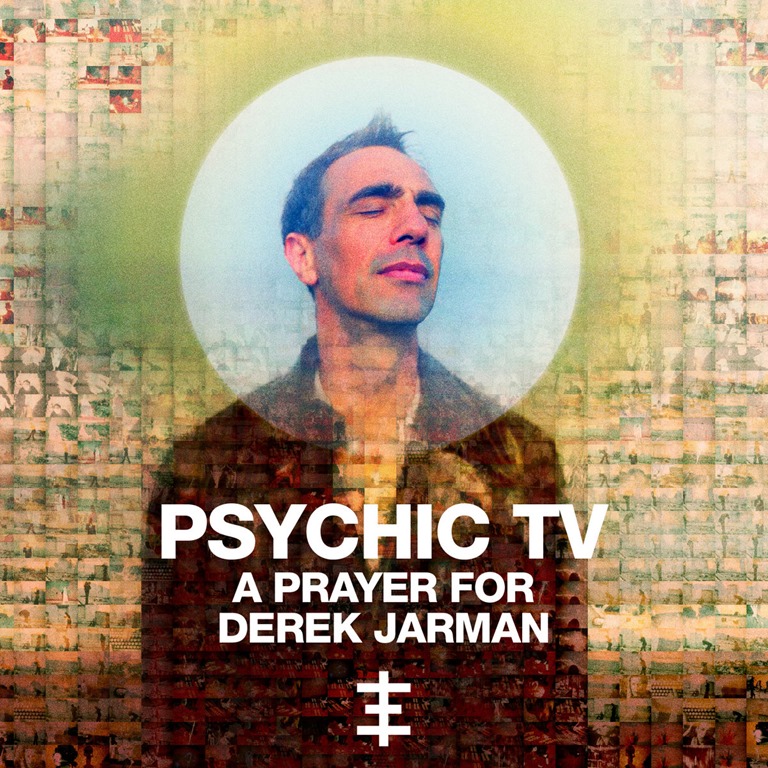
A Prayer For Derek Jarman was recorded later, on LP in 1985 by Temple Records and subsequently reissued as an extended CD version by Cold Spring in 1997. As the accompanying text explains, ‘Unavailable for almost three decades, this collection from the Cold Spring archive has been repackaged and remastered with new artwork. A documentation of the soundtrack work created by Psychic TV for the film-maker and artist Derek Jarman, it serves as a demonstration of why PTV were one of the most important groups in the underground scene of the 1980s and 1990s.’ The material on this disc was – as far as I can discern – last available in 2011 as part of the Themes six-CD box set, also released via Cold Spring, and this represents a solo release of disc two.

There’s no mistaking that both Jarman an PTV were important, although I would personally rank the former above the latter – that may be a rather subjective position to take, though, and there is no denying the immense shadow Genesis P Orridge would cast over the scene for many a year and perhaps an eternity.

The titular ‘Prayer For Derek’ is intended as an invocationary prayer and is based on Tibetan rituals; a collage of sounds including field recordings of the lulling waves running aground on the shingle beach opposite Jarman’s Prospect Cottage in Dungeness, Kent, home of some of the UK’s best preserved ‘sound mirrors’ – alongside bird song, crying babies and massed ritualised chants to aid the late director in his after-life journeys. It follows the seventeen-minute churning abstract noise whorl that is ‘The Loops Of Mystical Union’ – and which is, on balance, as good as any of Throbbing Gristle’s expansive dark noise works, and ‘Mylar Breeze (Parts 1 & 2) on which the promo for the album is predominantly pitched, and the ‘Mylar Breeze (Part 3)’. These compositions are piano-led and border on neoclassical. Dainty, charming, and musically eloquent, they certainly mark a departure from the work more commonly associated with Orridge or PTV, as well as evidencing the reasons why they are such a difficult act to pin down, or even distinguish the ‘good’ and ‘not so good’ works in their immense and wide-ranging – and variable – catalogue. With its echoed, looped vocal layers redolent of Gregorian chants, it’s not so hard to determine why ‘Mylar Breeze (Part 3)’ is not mentioned in the promo, although it’s entirely captivating.

As the accompanying text observes, ‘Other tracks feature elongated drones, washes of dissonance, melancholic guitar chime, evocative piano scoring, Burroughs cut-ups, gothic chants and snarling dogs.’ ‘Rites of Reversal’ marks a clear contrasts from the delicate piano-led compositions, diving in with some hard-edged grinding oscillations, which, again, lean more toward the kind of dark noise that was the TG trademark.

A Prayer For Derek Jarman is broad in scope and mood, and this is as appropriate is it is likely deliberate. It certainly presents the more experimental aspects of Psychic TV, and as varied as it is, the quality is also there.

AA

AA
a2838757322_10

Cold Spring Records – 16th April 2021

Edward S. Robinson

William Burroughs maintained a prolific output over the course of his lengthy career, and not only in the written form, committing many hours of recordings to tape. Yet even now, Brion Gysin’s contribution remains largely overlooked, despite being not only the man who ‘discovered’ the cut-ups and introduced the idea to Burroughs, but as a long-term collaborator and an outstanding polyartist in his own right. This album devotes a significant portion of the second side to Gysin’s recordings, and goes some way to redress the balance, although one suspects the immense Burroughs mythos will mean Gysin will eternally exist as a (lengthy) sidenote.

A great many of those recordings made by Burroughs – with Gysin – have been released, and a number are almost legendary in Burroughs circles in their own right, notably the 1965 introductory collection Call Me Burroughs (re-released recently), and the collection of audio experiments released in 1981 on Throbbing Gristle’s Industrial Records as Nothing Here Now But the Recordings.

Now, the last time I reviewed a Burroughs release, Let Me Hang You, back in 2016, I copped some flak from certain quarters of the online community of Burroughs fans and experts for having failed to spot that what was pitched as a ‘new’ recording excavated from the archive was in fact a previously-released recording of Burroughs with new music. My bad, as they say: I’d failed to fully research all aspects of my 1,400-word critique. Like The Who, I won’t get fooled again.

The liner notes for this vinyl-only release contextualise as follows: ‘Rare recordings of beat/cut-up writers and artists William S. Burroughs and Brion Gysin. Comprises the complete recording of Burroughs reading live in Liverpool in 1982, plus performances by Gysin of a selection of his permutated poems, as well as home recordings made by the pair in Paris in 1970. All recordings are taken from original tapes in the British Library collection.’ If ‘rare’ suggests unreleased or otherwise incredibly difficult to find, it’s worth noting that this exact track listing was released on CD, with a running time of sixty-six minutes, in 2012 by the British Library on its own label under the title The Spoken Word, credited to William S. Burroughs and Brion Gysin and is available via Discogs for a tenner. The cover image is also the same as the British Library release. That said, of all the Burroughs CDs I own, this isn’t among them, and I’ve never seen a copy or heard the majority of the material, and in many ways, this is as much about the artefact as it is about the material, and if the title seems a little lacking, at least it’s descriptive of the contents.

The Live in Liverpool recording is an interesting one, recorded as it was the night after Burroughs’ reading in Manchester as part of The Final Academy tour, where Burroughs featured alongside Cabaret Voltaire, Psychic TV, and 23 Skidoo, as well as screenings of the experimental movies Burroughs made with Gyson and Anthony Balch. The Manchester Hacienda performance was filmed, but only edited highlights made it to the ‘Final Academy Document’ released in 1983 on Factory subsidiary IKON, and re-released on DVD by Cherry Red in 2002.

However familiar you may be with Burroughs’ voice, the first few minutes of playback on a recording has an impact. No-one else sounds like Burroughs: that perfectly-enunciated drone – well-spoken, slow, deliberate – not a drawl as such, just a flat, paced rhythm with unique intonation and timbre just hits you somehow. And so it does again as that voice echoes across the decades from c.1963 on the first piece, ‘The Beginning Is Also The End (Excerpt)’, also credited elsewhere by its opening line, ‘I am not an addict, I am the addict’. Cracked, as dry as parchment, the voice summarises one of the leading themes of his work, particularly his most famous novel, Naked Lunch.

The Liverpool set opens with a reading from the foreword from his recently-completed but as-then-unpublished novel The Place of Dead Roads, where he outlines the world view that divides the population into Johnsons and shits. Obviously, back in 1982 he could not have predicted the rise to power of a shit called Johnson. The performance finds Burroughs – then aged sixty-eight in fine form – sprightly, energetic, and engaging, and demonstrating precisely why he was in demand as a spoken-word performer during his later career. He’s not only a great performer – clearly well-rehearsed, he doesn’t fluff a line, and his timing is impeccable – and entertaining, but he’s also funny, the tongue-in-cheek humour perhaps translating better via the medium of spoken word than on the page. The lively characterisations are delivered with gusto, and the audience response speaks for itself. You didn’t have to be there to appreciate this, but is certainly makes you wish you had been. Touching on smallpox and ‘anti-vaccination cults’, we’re once again reminded of Burroughs’ prescience.

Gysin’s voice – also well-spoken, but distinctly English and sounding for all the world like a 1950s newscaster as he advocates trying cut-ups for yourself to see the words ‘gush into action’ – contrasts with Burroughs’, and the audio quality of ‘Cut-Ups Self-Explained’, recorded between 1960 and 1962 but which would not see the light of day as a text until 1978 on the publication of The Third Mind, is somewhat muffled. But as an archival recording, it’s absolute gold. It’s hard to really know what’s going on during ‘I Am This Painter Brion Gysin’, and it sounds like the scraping of a marker against a wall-mounted pad. You feel as if you’re only getting half the story.

But then the sequence of ‘pistol poems’ is something else: bewildering, baffling at times they are best appreciated as sound, and works rather than poems hearing Gysin work through the permutations of ‘I’ve Come To Free The Words’, ‘No Poets Don’t Own Words’, ‘Kick That Habit Man’ and ‘I Am that I Am’ is revelatory (the latter featuring some wild pitch-shifting and delay / echo effects), although his delivery of ‘Junk is No Good Baby’ is simply hilarious. The layered cut-up experiment of ‘Calling All Reactive Agents’, which featured on the Break Through in Grey Room album on Sub Rosa in 1986, is also a remarkable example of rudimentary sampling and looping a fill two decades before the start of the real electronic revolution which saw the likes of Cabaret Voltaire and Foetus advance the principles in a musical context.

The four short Burroughs tracks that close off the album are scratchy experiments in multi-tracking that might not sound like much now, but in context, they provide essential insights into recording history.

As such, while this release provides no material which hasn’t been circulated before, it does bring a remarkable collection of material back into focus, and perhaps to a new audience – and of course, on a format that previously wasn’t available. For that experience of sitting down and concentrating, vinyl is hard to beat, and this is a release worth digesting at leisure.

AA

a2467006287_10