Posts Tagged ‘Avant-garde’

Music Information Centre Lithuania – MICL CD 089

Christopher Nosnibor

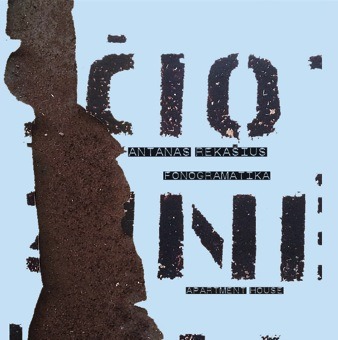
A retrospective collection is perhaps the most instructive place to begin when being introduced to the work of a late artist with a substantial body of work to their name. And so it was that Fonogramatika, 26-track collection culled from seven projects from between 1970 and 1981 featuring the work of Lithuanian composer Antanas Rekašius (1928-2003), as performed by the six-piece Apartment House ensemble came into my possession for review. My first contact with a composer clearly of some renown, but of whom I had absolutely no prior knowledge. A small amount of research revealed the composer is believed to have committed suicide, aged 75, after suffering poverty and depression.

There’s nothing depressive about the quirky music on offer here: indeed, there are humourous touches at every turn in Rekašius’ lively, unconventional and often quite audacious musical works.

Anton Lukoszevieze’s substantial liner notes (subtitled ‘Unsettling Scores and Unstable Tendencies’) are informative, and help to provide some kind of handle on Rekašius’ work, but needless to say it was extracting the disc from the incredibly heavy-duty and immaculately-presented four-way gatefold sleeve (really, the packaging super, and you really can feel the quality) and actually hearing the music therein which proved more instructive.

Rekašius’ style is often informed by jazz, but with a keen ear for atmosphere and experimentation, using the instrumentation of a chamber orchestra to create a range of effects. There’s a fluidity to the compositions, and a certain deftness which makes for rapid and often unexpected transitions from sparse, stark atmospherics to wild brass. The strings howl and mew, bend and bow, and Rekašius makes a trademark of combining dissonance and subtle melody. In fact, it’s the fact that there are strong, albeit brief, passages of melody, and a ken for swinging rhythms and off-kilter repetitions that render the works so beguiling: the listener can marvel at the scope and style of the compositions, the apparent randomness and the dynamics which are worked into the pieces, because yes, it is all very clever. But equally, it’s possible to simply enjoy the music.

Often, the music is jarring, but Rekašius invariably pulls back from the brink of spine-jangling awkwardness with cadent musical flourishes which are pure joy. Wild cacophonies, lumbering menace, twisted folk fiddle and notes that simply sound ‘wrong’ all contrive to keep the listener alert and entertained. ‘Atonic I’ (the individual tracks on each album are known by number only, with the exception of those from Phonogram) evokes the soundtracks of old, silent movies. If anything, Fonogramatika demonstrates just how able Rekašius was at turning his hand to different styles and making them work, while at the same time adding his own idiosyncratic stamps to them. The musicianship of the Apartment House players shouldn’t be underestimated, by any means: they play with nuance, intuition, and passion.

It’s now 13 years since Rekašius’ death. While his work has been performed in the United States, Italy, France, Finland, Sweden, Germany and Hungary, as well as Lithuania and Russia during his lifetime, his substantial output, which includes nine symphonies, 12 ballets, seven concertos and an opera-oratorio, Rekašius’ legacy seems rather limited in most territories. Perhaps the release of Fonogramatika will go some way toward addressing this, and earning Antanas Rekašius wider posthumous recognition.


Rekasius


Apartment House Online

clang records – clang031 – 6th November 2015

Christopher Nosnibor

This isn’t how the instrument was designed to work. Just as John Cage made the piano sing in ways it really oughtn’t by the addition of various foreign objects, so Hans Tammen has made the Disklavier his choice of instrument for desecration.

The Disklavier, for those who don’t know (and I’ve had to research this) is an electronic piano produced by Yamaha, which first came on the market in 1987. The way it works is key to Tammen’s project, and I’m going to quote from that fount of all information, Wikipedia, here, and accept any harangues over ‘lazy journalism’ because surely some research is better than none: ‘The typical Disklavier is a real acoustic piano outfitted with electronic sensors for recording and electromechanical solenoids for playback. Sensors record the movements of the keys, hammers, and pedals during a performance, and the system saves the performance data as a Standard MIDI File (SMF). On playback, the solenoids move the keys and pedals and thus reproduce the original performance.’

Tammen’s project is concerned with the ‘hidden sonic qualities’ of the machine. Tammen explains his methodology thus: ‘technically the Disklavier is fed too much information, and at the lowest possible volume. At this point the hammers do not have enough power to bang the strings anymore, and ideally they only vibrate to produce low a rumbling sound. Occasionally the MIDI brain stops for a few seconds – “chokes” – on a chord due to the data overload, hence the title Choking Disklavier’.

Calling to mind Reinhold Friedl’s 2011 ‘Inside Piano’, a colossal exploration of the prepared piano, Music for Choking Disklavier finds Hans Tammen make his instrument sing in unexpected ways, and with intriguing and often very interesting results. And it’s not all unlistenable, experimental noise, either. There are clear and definite tunes present here, albeit played in the most skewed of fashions.

A clumping rhythmic trudge provides the basis of ‘Ascending and Descending Chairs’; over what sounds like slow marching feet, delicate single piano notes rise crystalline into the rarefied air, The levels of dissonance and discord grow as the notes begin to emerge stunted, jarring. ‘Looking Down Sacramento Street’ resembles the whupping hum of a helicopter’s rotas; and so many of the sounds which occupy the album are rhythmic, mechanical, and owe little resemblance to a piano, electreic or otherwise.

The compositions make full use of the Disklavier’s diverse capabilities, especially when messed with. Swing goes south and ragtime goes out of time with fuzz and crackle, the sound of drunken piano being played with wild abandon in heavy rain, and thumping the low notes with a dogged persistence: these are the sounds that tinkle and topple precariously from the speakers at the hand of Hans Tammen. It’s an innovative work, which finds Tammen exploring ways of making new sounds by previously unexplored means and confirms, pleasingly, that originality isn’t entirely dead yet.


Tammen

http://tammen.org/