Posts Tagged ‘Avant-garde’

Sê-lo Net Label – 12th May 2017

Christopher Nosnibor

This isn’t an album that’s easy to position, but I’m not about to labour any hyperbolic proclamation that it’s genre-defying or even unique in its hybridity. The press blurb pitches Stars are a Harem as a modern day answer to Miles Davis ‘Kind of Blue’, where the music is steeped in the avant-garde tradition while being accessible to the public ear thanks to “pop” recording techniques and a softening of the harsh sounds associated with the 1960s avant-garde amidst American jazz music.

I’d actually go so far as to say that aside from some unconventional structure as some unusual and incongruously explosive percussion – and perhaps a tendency to incorporate unexpected stops and starts to stutter the flow of the subtle, mellow and overtly jazz-inspired instrumentation – Stars Are A Harem is a raw and soulful work which has mass appeal.

Gaugh has one of those voices that wows people: you just know that casual listeners catching him perform a low-key club show (and I rather suspect that’s the kind of show Gaugh tends to perform) would absolutely melt and rush to the merch stall once they’d done clapping their hands off, even if they hadn’t quaffed a quart of prosecco. Yes, he has soul: deep, deep soul. And however wayward or experimental some of the songs are in their conception, and however ‘jazz’ the pieces are stylistically, the execution is smooth.

Alongside urgent, arrhythmic drumming, not to mention segments of deftly created and technically impressive drumming, strolling soothing and strolling basslines, pegged back and considerate (even when they build to the calamity of thunder) are a consistent feature of Stars Are A Harem.

While Stars Are A Harem clearly and explicitly exploits the wilder tendencies of avant-garde jazz stylings, it also does a while lot more. Moreover, while Stars Are A Harem excitingly finds Micah Gaugh mine an avant-garde seam, the more experimental tendencies are kept rigorously in check. And herein lies the album’s greatest achievement, in that it’s an overtly accessible and enjoyable album, but one with unconventional undercurrents, pitching to the underground and the overground at the same time.


Micah Gaugh – Stars Are A Harem

ti-Records – TIRECS004

Christopher Nosnibor

What do you need to know about this album? Well, GIW is the solo project of trumpeter & performer Pablo Giw. He hails from Cologne, Germany, and Never is Always is his debut album.

‘Morning Machine’ finds Pablo spin some rhythmically-intoned spoken word that’s archetypally beat in its style and delivery. Slow, subsonic trip-hop beats glitch beneath warping free jazz parps which cut their way across spaced-out drones.

A nagging looped motif provides the core of the framework of ‘What’s Outside Isn’t There’, and it’s around this that changes in tempo and tonality, force and spirit that the atmosphere and mood of the piece shift over its duration. The blurb describes GIW as ‘having electronic music in mind, but creating it by acoustic and instrumental means’, and while there are times when his plays the trumpet like a trumpet, over the course of the album’s eight tracks, he demonstrates a stylistic eclecticism and inventiveness that’s hard not to admire.

Never is Always finds GIW striving to ‘redefine his role as a trumpet player and us[ing] his instrument as sound generator for complex harmonic layers, a drum machine or as a filter for his voice. It’s when GIW pushes his boundaries the furthest that he’s most impressive and successful compositionally, and while the more obviously trumpet-led, jazz-flavoured compositions like ‘The Golden Calf’ aren’t short on late-night hot city isolation tension and atmosphere, even with the swaying rhythms which underpin its loose groove. Far more interesting are the swelling cathedrals of unsettling noise which form the fabric of the short but intense cracking blast of ‘Right Endeavour,’ which forges a dense noise which is both electro and other-wordly in its manifestation.

If the dreamy soul which occupies the first half of ‘I Saw You – Trouble’ is unremarkable s of and in itself, the fact it sounds like it’s a synth tune is indicative of Pablo’s technical abilities, and when it skips into darker, glitchier terrain around the mid-point, the context is rendered even more impressive.

‘Hain’ barrels into avant-garde technoindustrial territory, with clattering, clanking percussion and blasts of white noise that calls to mind the experimentalism of early Cabaret Voltaire or Foetus.

Never is Always is nothing if not varied in its approach and style, and in being something of a mixed bag isn’t wholly consistent. However, it would be wrong to be overly critical, and not only because it’s GIW’s first effort but because it’s the work of an artist willing to explore, to experiment, and to throw it all out there. It’s less a matter of variable quality as a matter of taste, and while I abhor anything that whiffs of ersatz Beatnick bollocks, that’s just me, and what really matters is that Never is Always is an ambitious and eclectic effort which shows that we’re looking at an artist with substantial and possibly unique potential.

TIRECS004_front

Nakama Records – 27th February 2017

Christopher Nosnibor

You think of the human voice and you’ll probably immediately cast your mind to speech and singing. But the extremity of the range of the human voice is truly remarkable, and extends far, far beyond these limited parameters. Index sees Oslo-based Agnes Hvizdalek explore, over the course of forty-seven minutes – mastered as a single track – the potentials and possibilities of her vocal cords. The CD’s packaging offers nothing but a fingerprint by way of an explanation, but thankfully, the accompanying press release assists with the provision of context and framing the ‘pure vocal sounds that oscillate between fragility and levity, in the most well-shaped musical manner’ by explaining the way in which they’re ‘interwoven with, and set in contrast to the buzz of the city sounds and the building acoustics’. That city buzz is São Paulo, and the album was recorded at the bottom of a 60-metre-high chimney at the old factory “Casa das Caldeiras” in the heart of the city with the world’s largest helicopter fleet. As such, Index captures the correspondence between the individual and environment as well as exploring the limits of the individual themselves.

It perhaps goes without saying that this is about as far into avant-garde territory as it possible to get: a work of pure experimentation, of parameter-pushing and prioritising process over end product. That doesn’t mean that Hvizdalek’s concept is entirely original: Mike Patton’s Adult Themes for Voice (1996) stands as a bewildering document of one man’s immense vocal capabilities. It’s largely unlistenable, at least in anything more than small doses, but at least it’s broken into bite-sized chunks of sonic derangement. Hvizdalek makes no such concessions to accessibility, and while many of her vocal acrobatic are less extreme than Patton’s, Index is nevertheless a hugely challenging album, a morass of saliva and tongues and brain-bending bleating and blowing.

To describe the various sounds would be essentially pointless – not only dull, but abjectly failing to convey the actual experience of the album. So, Hvhizdalek hums and drones, wheezes and moans, ululates gutturally and breathes like a bellows. She squeaks and snarls and snarks and spits. But what’s remarkable is that while at times she sounds perfectly human and natural, oftentimes the sounds issuing forth from the speakers sound like no creature on earth. And yet the bewildering polytonal rasps and drones sound like no instrument known to wo/man either.

There’s no way in the world anyone is ever going to sit down and play this album for pleasure. I write as someone who’s actually spent the best part of an hour with these sounds rippling and bouncing from the speakers wired to my laptop wearing pyjamas and a bemused expression. A part of me feels obliged to give the album at least one more run-through, but the fact is, while I have absolute admiration for Hvizdalek’s artistic commitment and vision, I simply can’t face it, at least not now. This is absolutely no sleight on Hvizdalek’s work: Index is a true work of art. It’s a work to ponder, to reflect on and to sample when the mood takes. This may not be often, but in a world cluttered with sonic wallpaper, there’s a real need for an album like Index.

Agnes Hvizdalek – Index

Play Loud! Productions – PL063LP

Christopher Nosnibor

Mark E Smith is not Damo Suzuki. Only Damo Suzuki is Damo Suzuki. Damo Suzuki requires no introduction, of course. However, his vast and almost immeasurably influential output seems to exist almost in the ether, his own name and that of CAN being names to conjure with, but perhaps carrying more connotations than actual connection.

Suzuki’ status as an innovator and a one-off requires no comment, either. The fact he’s been going for multiple eternities, and continues to perform sets that are completely off the wall means his reputation remains unharmed, and this release – one more addition to already impressive body of work which essentially stands to define Krautrock – won’t dent that.

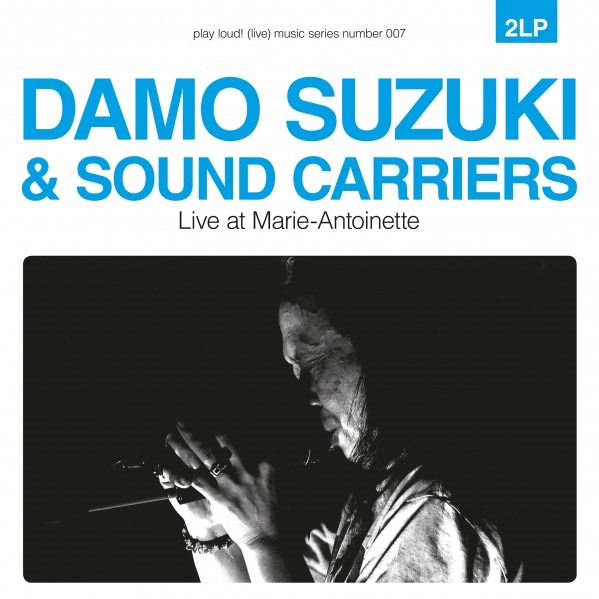
As the title suggests, this set was recorded live at Marie-Antoinette, Berlin, Germany, on 24th November 2011. Damo Suzuki was joined on stage by a stellar lineup, consisting of Dirk Dresselhaus (Schneider TM, Angel) on electric baritone guitar and effects; Ilpo Väisänen (Pan Sonic, Angel) on electronics and effects; Michael Beckett (kptmichigan, Super Reverb) on electric guitar and effects; Claas Großzeit (Saal-C) on drums and percussion, and Tomoko Nakasato (Mio, JINN) on dance and electric rake. No, I have no idea what an electric rake is, but on vinyl, each of the album’s half-hour tracks occupies a side of the two-disc set.

Ordinarily, live releases take the best cuts, or the single best night of a tour. Dirk Dresselhaus’ comments which accompany the release suggest that this recording doesn’t necessarily follow that rule, and instead presents an honest account of a singular event: “I find it fairly difficult to say something about how the music in this concert came about, cause we didn’t plan or rehearse anything and hardly were able to hear each other on stage. Wherever it came from, the energy and course of this concert is very much based on group dynamics and an almost telepathic sort of communication, like a swarm of fish. When I mixed the sound later on in the studio I discovered a lot of weird things on the separate tracks: for example Kptmichigan’s guitar signal is changing level for about +/-30 dB once in a while which is a lot and was probably caused by a broken microphone cable. Luckily the fucked up parts made the sound even heavier and more distorted instead of destroying it,” he says.

At times the lack of planning and rehearsal is apparent, but in the main, Live at Marie-Antoinette captures a collective who are capable of a rare musical intuitiveness. And whatever it may have sounded like on stage, and regardless of the occasional stab of feedback and errant extraneous intrusion, the recording captures a tense, atmospheric musical soundscape which transitions across the various parts with a creeping stealth.

To draw attention to any one passage would be to entirely misrepresent the overall arc of the performance. From the tribal chants to the undulating synth-like tones to the slow-building crescendos and the sustained sonic blitzkriegs which absolutely tear through the curtains of sonic decency, each and every aspect of the set is integral to the overall experience, which is built around a series of ebbs and flows, often rising from next to nothing to a whorling tempest quite unexpectedly. And it’s true that the colossal peaks are accentuated by the shuddering volume and crackling distortion they produce. Sometimes, fucked up is good.

This is all part and parcel of the live medium: while the studio affords total control over every aspect of every element of the sound, when playing live, anything can happen. The real test of a band’s capabilities is how they deal with the unexpected eventualities and how they deliver the show to a crowd under adverse circumstances. There is no audience sound on Live at Marie-Antoinette, which means it’s impossible to gauge the audience reaction to the show. But the sound balance suggests the audience were subjected to a punishingly loud and challenging set. It’s probably one of those rare live albums where the recording is more pleasurable than the actual event.

http://playloud.org/archiveandstore/trailers/damosuzuki/trailercode.html


damo-suzuki-sound-carriers-live-at-marie-antoinette

Bearsuit Records – 24th March 2017

Christopher Nosnibor

Talk about a car crash. This split release between Swamp Sounds / Uncle Pops & The Dumbloods isn’t so much a hybridised sound clash as a head-on train wreck. Bearsuit Records can be relied upon for giving a platform for the most eccentric crossover works going, and this meeting of Japanese electronic/experimental musician, Yuuya Kuno, aka Swamp Sounds, and Scottish musician/artist, Douglas Wallace, aka Uncle Pops & The Dumbloods certainly fits the criteria.

You might broadly call it an experimental avant-disco / elecro album, but then you might equally call it pretty much anything you like, because it’s a brain-bending whirlpool of stylistic elements, thrown together with a wild and reckless abandon, with no regard for the effect it may have on the listener’s psyche.

And so it is that shrill analogue tweeking and frenetic, messy electro beats crash into a wall of screeding, mangled noise that pulses and throbs. The first half of the album belongs to Swamp Sounds, and the opener, ‘Marionette’, piles more ideas and juxtaposing elements into a dizzying three and a half minutes than seems even halfway sane.

When Uncle Pops takes over for the second half and things down to a more sedate groove, the overloading static abates, but as on ‘Harry Smith’s Paper Planes’, there’s still weird, woozy note bending in abundance, along with interruptions of extraneous noise and unexpected incidentals, tempo changes and myriad pan-cultural influences in the mix.

The split works well, as it means it’s not all crazy, deranged noise and mental overload: while switching between shuffling, low-key passages and cinematic sonic bursts, ‘Portrait in an Egg Cup’ brings both atmosphere and impressively expansive aural vistas, and by placing Swamp Soinds’ more manic stuff on what would effectively stands as side one , the album gradually tapers into more ambient territory over the course of the later tracks.

Exploring deep into the seam of the strange and excavating new layers of the uncanny, it’s all spectacularly oddball and wilfully weird, but without being smug or irritatingly zany in execution.


Swamp_Sounds-Uncle_Pops_Front_Cover

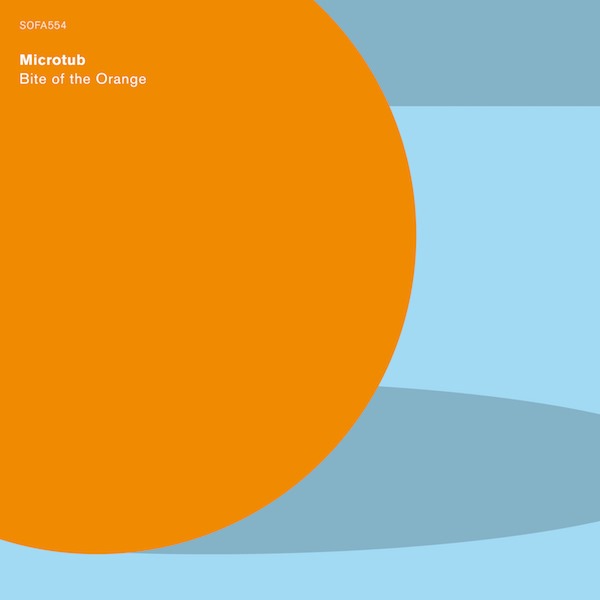
Whereas many microtonal explorations manifest as tiny, pinging blips, Microtub’s Bite of the Orange is constructed using immense, elongated notes. Perhaps somewhat obscurely and tangentially, I find myself considering Andrew Marvell’s poem ‘To His Coy Mistress’, specifically the following couplet:

My vegetable love should grow
Vaster than empires, and more slow.

No, not on account of the popular tumescent implications most readings of the lines offer: I’ve even explored the mirthsome connotations of Marvell’s emerging bulbous courgette during undergraduate seminars in an attempt to draw some kind of engagement from a room of late teens who really couldn’t give a crap about Elizabethan poetry, but that’s not why Bite of the Orange evokes Marvell in my mind. Instead, I’m drawn by the poem’s allusions to the Aristotelean connotations of a love borne out of the vegetative soul, as commented on at length by Lawrence Burton in his magnificent Anatomy of Melancholy, one of my favourite 17th Century texts (largely, it’s true, on account of Burton’s magnificent language). Burton makes a connection between the ‘vegetative soul’ and ‘natural love’; a love which is a slow-growing, evolutionary condition.

Granted, an orange is not a vegetable, but, like this slow-growing love, Bite of the Orange moves at an almost imperceptible pace, organic. Microtub’s slow, microtonal explorations require patience, and it’s only through time that a true appreciation of its qualities and its sonic depths can be truly appreciated.

The three tracks seep into one another, both in terms of the structures of their titles, and sonically. ‘Violet Man’ ventures into the dark, its low rumblings feeling their way through subterranean territories and poking the deepest recesses of the mind, and the three long-firm tracks combine to offer a full, panoramic perspective on the nuanced tonalities three microtonal tubas can create.

Bite of the Orange is not an album of action. It is an album which unfurls, creeping, revealing its aspects in greater detail the more closely one listens.

Microtub

Ideologic Organ – SOMA025 – 10th February 2017

Christopher Nosnibor

The accompanying press release is instructive and informative as to the premise of the latest offering from The Necks. Entering their thirtieth year of their existence, the trio continue to innovate and to create music which expands the parameters of jazz music:

The latest document from this long-running ensemble, Unfold, presents itself as a double LP, with four side-length tracks. A deliberate absence of numbered sides hands a substantial swatch of participation over to the listener, allowing her to navigate his own path through the soundscape at hand. The shorter length of the vinyl format, far from being a constraint upon the members of the ensemble, instead offers them a more compact horizon to contemplate, wherein the distance travelled is recalibrated to more immediate and dynamic textural concerns.

The title is appropriate, in that it gives a fitting indication of the nature of the compositions. Although the vinyl format is pitched as being a ‘shorter’ format, the fact that each track occupies a full side of this double album means that each piece still has a running time of between fifteen and twenty-one minutes. And unfold is what they do: gradual evolutions, slow unfurlings and near-imperceptible outspreadings which creep from sparse to near-overwhelming.

‘Blue Mountain’ begins with a delicate piano, but over time builds in depth, tension and pace to a sustained crescendo that never quite breaks. It simmers long and leisurely, cymbal crashes rising in intensity, resembling an intro to a track on a recent Swans album. I mean this as a compliment: it’s a lengthy piece, but there’s movement, there are dynamics, there’s a tangible sense of trajectory.

Noodling Hammond keys wander over a slow, pulsating undulation on ‘Overhear’, and it’s hypnotic and mellow. Perhaps the most overtly ‘jazz’ composition, it also encapsulates perfectly the wide-ranging elements The Necks incorporate within their music. Bongos bubble up jittery rhythms while the trilling organ notes meander and weave, intersecting time signature s forging an increasing sense of spatial disorientation over time.

The tribal rhythms which dominate ‘Ride’ slowly but surely increase in pace, raising the tension as the elongated, barely perceptible notes hang in slow suspense. Ultimately, the pace reaches a frenetic peak, before collapsing into arrhythmia , a conglomeration of discord and distempo, and the fourth track, ‘Timepiece’ is nothing short of a bewildering chaos of percussion, discord and orchestrated dissonance. Against the clattering rattle of drums and more, bass notes resonate and xylophone notes ring out in different directions, and over time, it becomes increasingly unsettling disorientating, difficult.

Unfold is by no means an easy album. It’s by no means a ‘jazz’ album in conventional terms. But in terms of an album which bounces off the wall in myriad unexpected directions freeforming and freewheeling as the musicians explore interpersonal musical boundaries, it’s the epitome of jazz. It’s also really rather good. Well, it is a Necks album, after all.

The Necks - Unfold

Aurora – ACD5084

Christopher Nosnibor

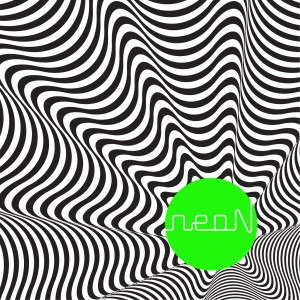
The cover suggests a blinding trip of an album, the sonic equivalent of an immense op-art extravaganza. Ensemble neoN, a collective of twelve Oslo-based musicians present on their debut release performances of compositions by an array of luminaries in the experimental / avant-garde music world, chosen for the uncompromising and original nature of their work. And while the collective’s objective is to ‘initiate, produce and perform music that reflects current trends in music and other art forms’, and to do so with a spirit of youthful conventionalism, they’ve set themselves well beyond the mainstream as far as fashion goes, and have produced an album that shows a lot more restraint than the lurid dayglow Digipak would imply.

Their rendition of Kristine Tjøgersen’s ‘Travelling Light’ heralds the ensemble’s arrival in bold fashion, and sets the tone, manifesting as an energetic sonic excursion that grabs the attention and holds it in a firm grip. Twangs and pings whip into space like a squash ball pelting into zero-gravity while long, quavering drones rise and decay.

There’s a keen element of playfulness which runs through Jan Martin Smørdal’s experimental composition ‘My Favourite Thing’, which toys with the tropes of orchestral soundtrack pieces with an avant-garde bent. Clamouring strings and creeping fear chords meet with marching drums and

The choice of ‘Monocots’ by Oren Ambarchi and James Rushford as the album’s centrepoint is well-conceived: the rippling acoustic guitar hangs in a fuzzy mist while a minuscule sound, like the trickle of water, continues to run through the silent sections.

Alvin Lucier’s epic ‘Two Circles’ is an exercise in uncomfortable droning minimalism. It doesn’t do much, and nor is it required to do so. Instead, it highlights the multi-faceted nature of the ensemble’s playing skills, and taken collectively, these five pieces are well-considered and well-executed. And the liner notes by Jenny Hval make for a nice bonus, too.


Ensemble neoN

Bearsuit Records – 9th December 2016

Christopher Nosnibor

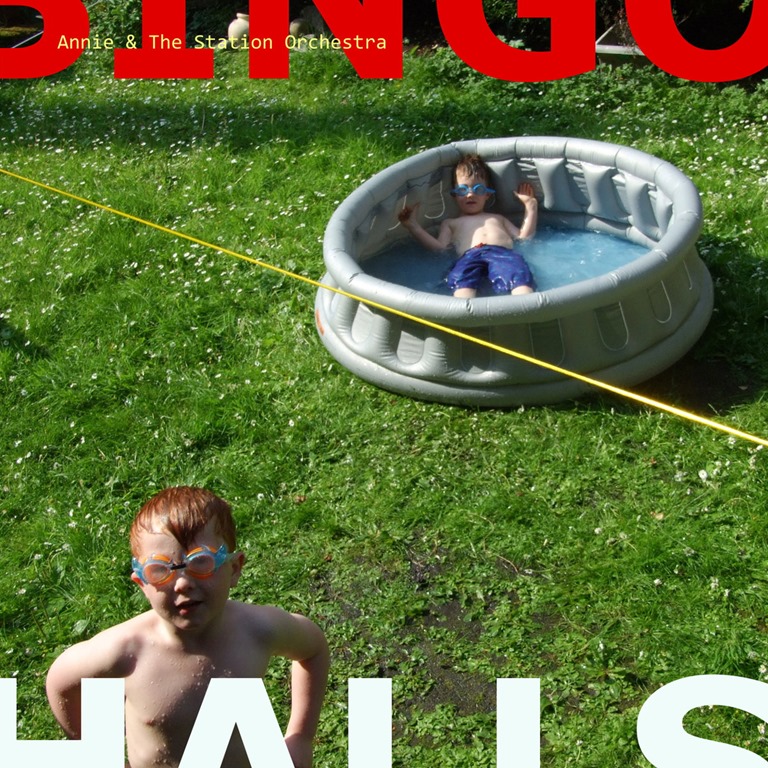
It begins with an immense drumbeat and a warped guitar that calls to mind early Swans as it warps and distorts… but then, behind a piston-pumping mechanoid beat, it all goes a bit Stereolab. Within a minute, I’m feeling confused, disoriented, as chimes hang gracefully in the air above a demonic, guttural snarl and discordant synth chimes and eerily chirpy whistles. What the actual fuck is this? And how does the music relate to the title, or vice versa? Nothing about the album is remotely evocative of plump older women with their eyes down, smashing away with their dabbers in the bustling pursuit of the next line, and nor does it conjure any images of the 70s heyday of the bingo hall, the smoke-hazed babbling equivalent of the WMC. Annie & the Station Orchestra’s Bingo Halls is an entity unto itself.

Pitched by the label as ‘a little experimental and challenging in places’, it’s also sold as being ‘very melodic, playful and pretty accessible in its predominantly instrumental context.’ These things are all relative, of course and this is a Bearsuit Records release: these guys are all about the far-out, the whacky, the weird – something I salute them for. There is, most certainly, a degree of melody and accessibility about this release but don’t think it’s some kind of Justin Beiber / Lady Gaga / Little Mix bollocks.

‘King of the Idiots’ is a brilliantly-engineered electro-pop instrumental with a dark edge, minor chords played on analogue synths wend their way over a thumping programmed beat that says ‘1984’. It builds and swerves and builds some more until it’s ascended to the position of towering space-age electro-rock. The lilting melody of ‘The Return of Banjo Williamson’, which amalgamates elements of oriental chimes with a thrumming bass and juddering electronic beats, quite unexpectedly evokes the spirit of latter-day Cure before going all weirdy Muzak electro.

Doodling, noodling guitars and synths, drenched in echo, place the album somewhere between electronica, Tangerine Dream style ambient Krautrock and post-rock. Is there a term yet for electronic post-rock? If not, there bloody ought to be, and someone needs to let me know what it is, like, yesterday. It’s not as if worriedaboutsatan haven’t been straddling these very genre divides for around a decade. Still, Annie & the Station Orchestra offer something that’s distinctive and unique, and while elements of the various tracks lean towards a range of identifiable genre trappings, the overall effect is one of abstraction, of immediate distraction, and of stubborn non-conformity. This makes for an album that’s idiosyncratically innovative, and stands proudly in a field of its own.


Annie & the Station Orchestra – Bingo Halls

Hubro – HUBROCD2582 – 25th November 2016

Christopher Nosnibor

Gathering pieces composed over the span of some thirteen years, Sound of Horse provides an insight into the compositional methodology of Laurence Crane, with each of the pieces performed by the shifting lineups of the Norwegian Asamimasa ensemble.

It begins with ‘John White in Berlin’ (2003), a long, low, ominous rumbling drone-based composition for electric guitar, cello, percussion and piano. The piano is sparse and way off in the distance. The strains of guitar feedback scrape at the senses in contrast to the low, almost subsonic rippling bass hum: it builds tension, but eventually this plateaus. There’s a daring fragility to the composition, but there’s little by way of movement or progression and little to really get a grip on. ‘Riis’ (1996), for clarinet, cello and electric organ manifests first as a cloud of ambience, from which elongated organ notes pipe a slow, majestic sound, a sort of semi-ambient church muzak. It’s an imposing work, as much by virtue of the instrumentation as the composition, although Crane does cast an immersive atmosphere.

The three ‘Events’ pieces for voice, three clarinets and a vibraphone move further into the realms of the spiritual, the wordless vocals are hushed, reverent, brushed with a celestial hue radiating upwards as they entwine with the sparse, soft-edged instrumentation. It’s the sound of a dark corner, illuminated by flickering candlelight. These pieces may be short, but they’re quietly powerful, moving.

The title track consists of seven parts spanning a full twenty minutes. It sounds nothing like any horse. With clarinet, bass clarinet, acoustic and electric guitar, as well as percussion and cello, the pieces offer a greater range of texture and tone than the other pieces, and at times offer more conventional melodic passages. Chords are strummed in slow repetition while the wind instruments make minor chord progressions underscoring an atmosphere of brooding melancholy and, in places, trepidatious uncertainty. Choppy electric guitars and thumping drums on the fourth section mark the biggest divergence from the overall form of not just the suite, but the album as a whole, and hint almost toward an assimilation of the elements of rock music, albeit in its most deconstructed and experimental form.

Precisely how to summarise what this album ‘does’ is immensely challenging, and equally, it’s not particularly clear what its purpose is to convey. It isn’t that the compositions lack finesse, but they do, all too often, lack focus. While Sound of Horse is a collection, there seems to be little connection, stylistically, between the pieces, giving it something of a scrapbook feel. But what to make of it? I dunno. Maybe it needs time. Maybe it need different ears. Maybe I need a different headspace. But at the time of writing, I’ve got little more than a shrug.

Laurnce Crane - Sound of Horse