Sacred Bones – 23rd August 2024
Christopher Nosnibor
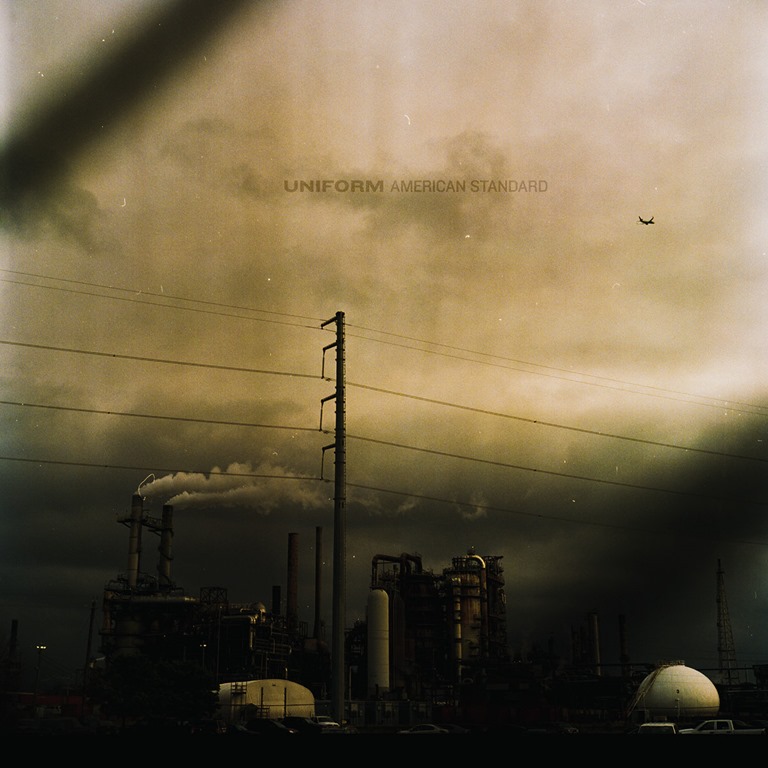
You know that when the bio for an album’s release is prefaced by a trigger warning, this is going to be some pretty powerful stuff. But this being a Uniform album, it almost goes without saying. Since their inception, they have gone all-out on every level, with the harshest noise providing the backdrop while Michael Berdan strips his skin to make the most brutal, unbridled, rawest expositions of the human condition, invariably born out of his own personal traumas.
I’ve often wheeled out the line that in the personal lies the universal, and even where there’s no direct correlation in terms of shared experience, the articulation of extreme emotions often provides a vessel whereby the outpouring of an individual’s catharsis offers a chalice into which others may pour the flow of their own emotional stigmata. If the metaphor seems a shade overwrought, bear with me.
Uniform is, unquestionably, a vehicle through which Berden vents endless pain and anguish. He’s a troubled person, and he’s open about this, to the extent that it’s more than just a but uncomfortable. But this isn’t some kind of trauma porn ride: the appeal of Uniform is this raw honesty, the absence of filter. You know – and feel – this is real. It’s not a case of manipulating the listener’s emotions, but an example of creativity as a vital outlet, a survival mechanism, even. It doesn’t exist for anyone’s entertainment. And with each release, Uniform, seem to find new heights of intensity, and new levels of sonic brutality, while dredging new emotional depths.
Shame felt like a gut-wrenching pinnacle which would be difficult, if not impossible, to surpass – but then, so did The Long Walk. In this context, it should come as only small surprise that American Standard goes even harder and harsher, but the simple fact is it would hardly seem possible. But here we are.
In the run-up to the release, Berden has spoken / written openly and in detail about his struggles with bulimia, and the fact that over many years of managing alcoholism and having come to a point whereby this is no longer a taboo topic, breaking down this particular wall has felt altogether harder.
Even the preceding singles, ‘Permanent Embrace’ and ‘This is Not a Prayer’, could not have provided anything like adequate forewarning of the intensity of the album as a whole.
I shall quote, while I take a moment and steel myself for this:
“The following songs are about a lifetime of making myself vomit,” Berdan writes in the personal essay that accompanies the album. His pain is so apparent, so immediate, that it feels like hearing someone scream for the very first time. “There’s meat on my face, that hangs off my face, sweats like I sweat, cries like I cry.” The music finally begins with those words, not in a glorious crash and clatter but in the tones of a gurgling drain. This is the sound of liquid moving through pipes that are full to the point of bursting with things usually hidden inside of stomachs and behind mental walls.
It all starts with an admission. Beneath the harrowing screams, there’s the pain of bulimia nervosa. There’s the pain of a sickness that is as physical as it is psychological. This is a kind of coming out. This is a kind of emergence. A far cry from edgy provocation or high school level transgression, this is something truly unacceptable.
As one might fear, this is just the beginning. As Don Delillo once wrote, “There are stories within stories.”
American Standard contains only four tracks, but the first, the title track, is fully twenty-one minutes long is the definition of harrowing. It’s a massive departure, in that with perhaps the exception of their 2015 debut, their compositions have conformed to the fairly defined structures, often with verse and chorus structures built around chord sequences and the arrangement of the percussion.
After an intro that can only be described as a scream of pain, ‘American Standard’ lurches into life as a churning throb of noise, and Berden’s bonne-rattling roar is only just audible amidst the pulverising fizz. When the power chords kick in, they’re like a full-on slam to the guts. Around the nine-minute mark, some keys enter the mix and there’s almost a redemptive tone, at least in the music, but Berden’s vocals continue to articulate the upper reaches of anguish. This is a different kind of purging from the subject matter – a flaying, emotional purging, a release of all of the years of torture and self-flagellation, distilled to the highest potency. It’s the barely human sound of breaking, breaking, emptying, over and over. The lyrics may not be easy to decipher, but the excruciating pain Berden articulates in their delivery is unmistakeable as he howls his larynx to bleeding shreds amidst a thunderous cacophony worthy of Swans live performances. If it’s not the heaviest shit you’ve heard all year… well. Just making it to the end of the title track is a thoroughly draining experience that leaves you feeling utterly spent.
The pounding machine-gun drumming, squalling, atonal synths and booming bass blasts of ‘This is Not a Prayer’ offer no respite, the layers of vocals, all screaming in pain, is beyond punishing: you feel your chest tightening and breath growing shorter with each intake, your throat clenching. The sheer physicality of the piece – which they sustain for a relentless six and a half minutes – is a panic attack in a can.
If the introduction to ‘Clemency’ swirls into ambience, it’s a bilious, nauseating brew of sulphur and fumes that festers just long enough to unsettle before the hardest percussion and the dirtiest guitars lurch in and everything becomes intensely claustrophobic. Again, there’s no oxygen, you’re constructed by the density and sheer relentlessness of it all. And it slams away like a lump hammer for almost eight minutes. The arrival of ‘Permanent Embrace’ feels like relief, of only for its brevity. There are some uplifting synths in the mix, but it’s the most savage finale they could have mustered.
The last time a record affected me this intensely in a physical way was over thirty years ago, when at the age of fifteen or thereabouts, having been introduced to Swans by way of Children of God, I picked up a copy of Cop at a record fair. I found it hard to conceive the record was actually revolving at 33rpm: it felt more like three, as time stood still and I felt my body being compressed by its crushing weight.
American Standard is certainly anything but standard. It goes beyond – way beyond – harrowing, or heavy, in any sense that words can easily convey. It’s the hardest listen. It simply hurts. But you know that this was the album they had to make. Forget your discomfort, and feel the pain.
AA
 Aural Aggravation
[…] like an exercise in Masochism. It’s also a superb example of alternative marketing, landing this alternative version of American Standard less than a month after the album’s release, on digital and tape […]