16th February 2024
Christopher Nosnibor
A good cover brings something different to a song. That doesn’t mean rendering it unrecognisable or necessitate complete irreverence, but a cover that’s so faithful to the original as to be a carbon copy is utterly redundant. Marilyn Manson’s cover of Soft Cell’s cover of ‘Tainted Love’ is a perfect example of a pointless cover. Johnny Cash’s cover of ‘Hurt’ and The Fall’s take on ‘Lost in Music’, on the other hand, are everything you could want from a cover. ‘Owning the song’, as they say on shit like X Factor and The Voice.
How could any artist bring anything new to either of these well-trodden and frankly threadbare standards? That Ever Elysian have actually succeeded is quite a feat, and a welcome and pleasant surprise. They pitch themselves as purveyors of ‘classic rock,’ ‘soft rock,’ and ‘soul rock’ which does them rather a disservice on the evidence of this inspired offering.
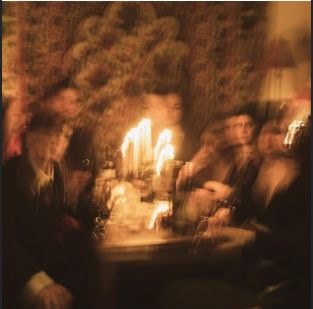
The blurred image which serves as the single’s artwork conveys the woozy, warped opening of their take on ‘Feeling Good’. It’s still got the essential jazzy vibe, but it’s twisted, messed: sultry is replaced with sedation, as if the room is spinning in a late-night nightmare. It’s the sound of ‘feeling good’ a few moments before you fall flat on your face and find you’re incapable of getting up, and you realise everything looks weird and you haven’t a clue who you are, let alone where. And then it takes wings with some big, bold strings, and finally, the flourish of a heroic guitar solo.
‘House of the Rising Sun’ again pairs it back, and slows it down, too, getting deep under the skin of this cautionary tale to render it with nightmarish qualities. This is one of those covers that gives one a moment’s pause to confirm it is in fact a cover, and when the penny drops as to how they’ve approached it… it’s a shiversome moment. Deep, dark guitar tones imbue the performance with a haunting, gothic quality, delivered with a dash of theatricality. The jazz flavour leans into tipsy post-rock and a slow burn that surges to something like the Amy Winehouse Bond theme that never was. It’s a daring rendition, but by absolutely no means disrespectful or irreverent: instead, these two interpretations draw out dark elements which lie at the heart of the originals and bring them to the fore. These are smart, considered, well-executed and exciting versions.
AA
 Aural Aggravation