Posts Tagged ‘Room 40’

Room40 – RM469 – 20th May 2016

Christopher Nosnibor

The liner notes describe Memory Fragments as ‘a collection of compositions from sonic fragments recombines, thinned, edited, rejected, re-listened to, improvised, forgotten, filtered, slowed, remembered, reworked, erased, detuned, undone, layered, cut, compressed, trashed, moved, accelerated, pasted, composed, played and exported – undergoing a slowly evolving transience and sedimentation to arrive at this fairly constant state.’ In other words, it’s a collage of fragments which have been utterly fucked about with and manipulated so as to render them unrecognisable. The notes also draw attention to the fact that as integral to the ‘finished’ work (and one must question when a work is the result of such a convoluted succession of processes, to what extent it can ever be truly considered finished) the process is, the listener cannot, and will never hear the process, and the process is something which the artist will only recall through the filter of memory.

These are extremely spacious compositions. To begin, a single note resonates…. And then silence. The notes are some twenty seconds apart. The listener becomes attentive to the silence. Gradually, subtly, but so quietly, the sounds build. The build, the delay… are these notes backwards, or is there extraneous noise loitering in the silence, which then becomes shrinking semi-silence? You listen. You need to listen. And then, to pause for thought. It’s not music to get down to, but to contemplate. It requires focus.

Elongated notes expand as they’re dragged and stretched across time and space. Heavy sounds hang and linger. The track titles are evocative rather than literal, cumbersome but descriptive. Again, some refer to the process, while others carry allusions to how either the artist feels or the sensation. ‘Built on Folds and Braids’ builds a densely-layered wall of tonalities, fizzing and hissing static tears through an ominous low-end and arrhythmic globular beats. ‘Sparseness Gave Way to Infinite’ carries the closest approximation of a tune, but it’s slowed to the point that the output is little more than a protracted groan. The thick, burr-edged electronic sawing of ‘Broadsided by Sudden Swells’ is a dank, fear-inducing sonic experience, bleak and weighty.

But with the seed of awareness sown, it’s impossible not to hear these sounds without returning to the process, and I found myself contemplating the original fragments, the source materials. Specifically, I wanted to unpick the recordings, to examine the ‘original’ Warnecke had done to them. But thinking backwards through the process only provides so much food for thought: as noted in the liner notes, the released version only represents a moment in time, a point at which the artist has deemed the material satisfactory for release. But where could the sounds be taken in future? Is this a ‘definitive’ version? What would the result have been had the project been continued? Such questions are of course unanswerable, but provide fodder to chew on while Memory Fragments unravel from the speakers to form a sonic cloud that’s almost impossible not to get lost in.
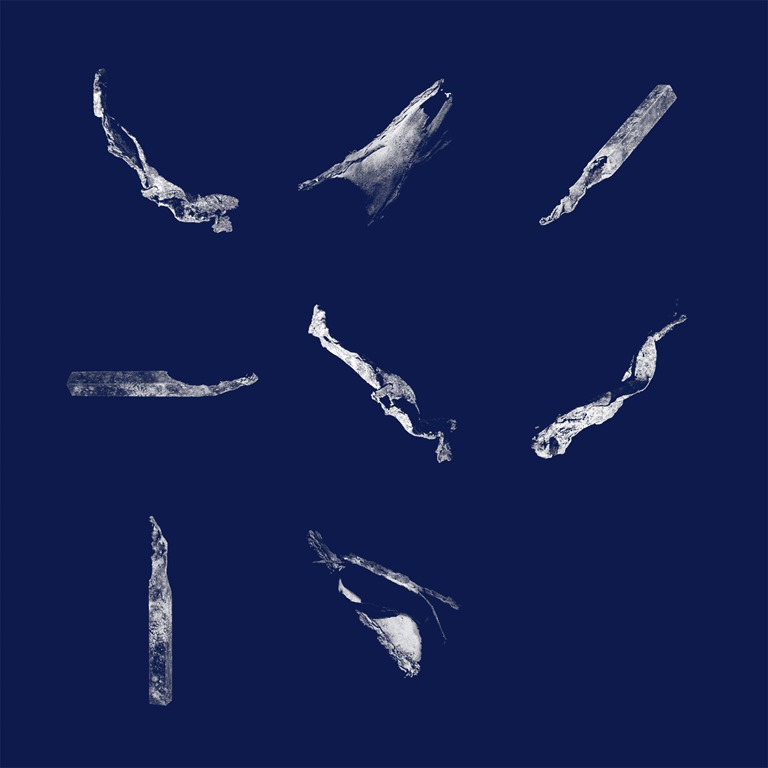
 

Pierce Warnecke - Memory Fragments


Piere Warnecke Online

Someone Good – RMSG014 – 18th March 2016

Christopher Nosnibor

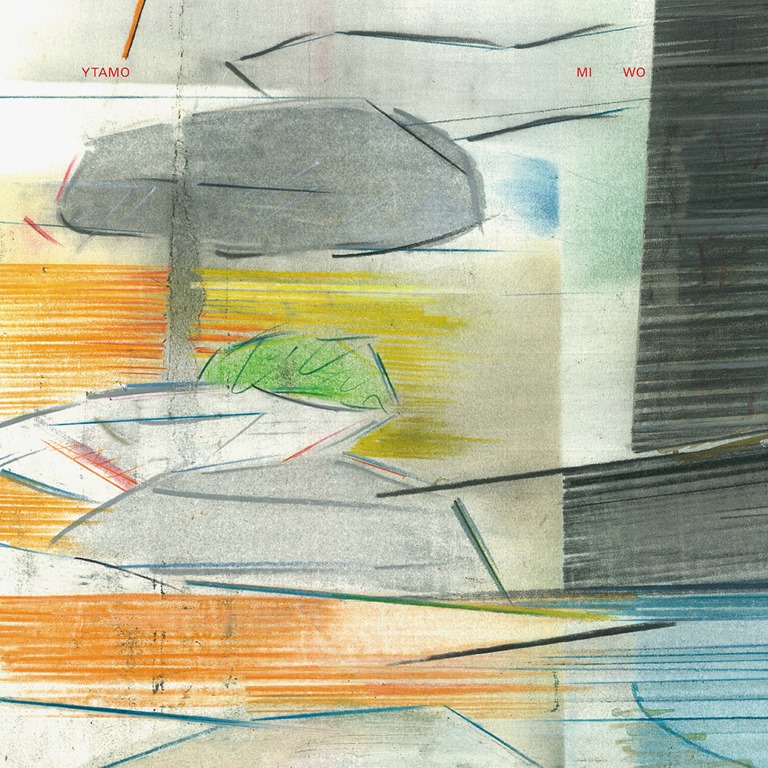
Lawrence English, sound sculptor and the man behind the Room40 label and subdivision Someone Good, has a god ear and a keen sense of what makes for interesting and unusual listening. The liner notes to Mi Wo centre around English’s recollection of his discovery of Ytamo while touring Japan in the early to mid 00s. Specifically, he writes of how the first time he saw her perform, he was completely enthralled by the unusual and soothing music Ytamo conjured.

Listening to Mi Wo, it’s immediately apparent what he found to captivating. There’s an otherworldly quality to the music, and the sounds emerge and fade into one another as if created by some invisible force.

Ytamo’s style is built on diversity and eclecticism, while simultaneously, it’s about understatement and subtlety. The methods by which she draws together seemingly disparate elements transcends not only the boundaries of genre, but also culture and time. Despite its overt modernity, there are motifs and atmospheres which hint at traditionally-rooted music with ancient origins.

Laid back jazz vibes filter through and gradually evaporate in the sparse digital washes of ‘Autopoiesis’, and jaunty bleeps and whistles flicker lightly through trilling easy listening tones and mellow, bumping beats. The familiar blurs into the unfamiliar, with unexpected resonances. Subtly powerful, Mi Wo is a work of musical alchemy.

Print


Ytamo on Soundcloud

Someone Good – RMSG – 18th March 2016

Christopher Nosnibor

Reading the info accompanying the album, I was relieved to learn that it has nothing to do with football. Granted, it says more about me than it does anything or anyone else, but I’ve never been a huge fan of sport. It probably never helped that apart from being quite a handy medium-pace bowler with a nifty Yorker, and a decent cross-country runner (I discovered early on that by getting a move on, I could be back in the changing rooms, showered and reading a book before anyone else got halfway round the course. I loved reading, and hated communal showers), I was shit at sport. It also happens that many of the kind of people who are big sports enthusiasts simply aren’t my kind of people, and I consider fantasy football leagues the biggest, stupidest waste of time going. But let’s not focus too much on the cover art (I’m thinking that despite Tuttle’s Australian background that it’s baseball rather than Aussie rules, but what do I know? And what do I want to know? It could be squash or lacrosse for I care. What matters is that Andrew Tuttle’s fantasy league is about a utopian environment. Said environment sets social interaction against total isolation, self-reflexivity against self-confidence.

It’s an interesting proposition, and Tuttle plays an interesting and rather unusual array of instruments in order to create the sonic structures by which to explore this concept: computer, synthesiser, banjo, and acoustic guitar. Hardly your average configuration for music making. But then, Fantasy League is not an average album, in any respect.

Broadly speaking, it’s an ambient work. Banjo and guitar are present, but woven subtly into shifting, drifting soundscapes of drones and undulating widescreen sounds. Bubbling, bleeping electronics, ripples and swishes are all fundamental parts of the album’s sonic fabric. The strummed and picked strings add a unique slant amidst the burrs of fizzing treble bursts which erupt, wibbling every which way: with hints of hillbilly blues over a static hiss on ‘Forgtten Username?’ and gentle folk motifs informing ‘Forgotten Password? before insect scutters scrabble all over and devour them, the resultant output sounds like country music from another dimension. Elsewhere, there are Tangerine Dream-like moments, notably on ‘Public League’, where multiple time signatures pulse and interweave to form a sonic latticework.

What renders Fantasy League so intriguing and compelling is the way in which Tuttle distorts the familiar: the sounds themselves are no challenge to compute or comprehend, but the way in which they’re juxtaposed and twisted together is uncanny, as if Fantasy League is a soundtrack from a parallel universe. And it sounds like a place well worth visiting.


Andrew-Tuttle_thumb.jpg