Posts Tagged ‘Paul K’

19th April 2024

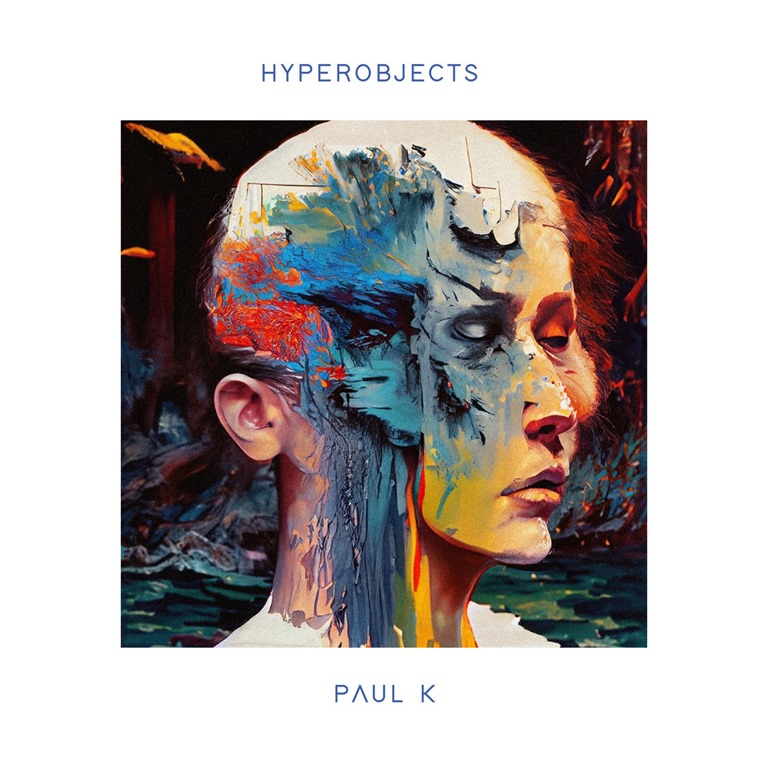
It’s been out a little while now, but some releases have a slow diffusion. Hyperobjects is one of them, and it seems fitting, given that Paul K’s latest work is an immersive work which is ‘a study in musical simplicity with a stripped-down sound creating a space where the listener can both listen to the album and imagine the worlds created by each track’s individual atmosphere’. Paul’s long-shown a fixation with space, as his last album The Space Between, evidenced. But Hyperobjects does something different, and heads in a different direction.

Space. And it’s immediate relative, time. We never seem to have enough of either in the present, or overall. We live in a state of perpetual future-placement, eternal postponement, dragging ourselves through endless days of drudge while promising ourselves a brighter future, be it a holiday, breaking free from a bad relationship, leaving the awful job, or retirement. Gratification is always over there, the aspiration is forever just over the horizon, on the other side of the next hurdle, an inch beyond reach. And we find ourselves entrapped within the special confines of our limitations, the four walls of our homes, the constraints of being unable to go places because of needing to be up and at work the following day, confined by affordability, and so on and so forth. Horizons shrink, and time passes in a blink and suddenly, time and space have both evaporated. What have you done, and what have you got to show for it?

‘Hyperobjects’ is a gentle work, and while much of it is electronically-created, many of the sounds replicate conventional instruments. As such, it’s a moving and mournful piano which leads the first track, a four-part neoclassical composition, ‘Diaspora (Movements I-IV)’.

It’s the sound of a soft, rolling piano which dominates this album, which is in equal parts classical and post-rock, with ambient elements interwoven throughout. ‘Döstädning’ sounds a little like an instrumental outtake by Talk Talk. Ethereal whisps and traces of voice swish around the piano and occasional strings which trace the supple structures of ‘Hyperobjects’, but in the main, it’s showcase of the most minimal compositions.

On ‘Hyperobjects’, the tracks drift into one another to create a continuous, mellifluous whole. Its power lies in its simplicity, its purity, and in doing so, Paul K has achieved something new, artistically, as well as attaining a new peak.

AA
a2391105810_10

21st October 2022

Christopher Nosnibor

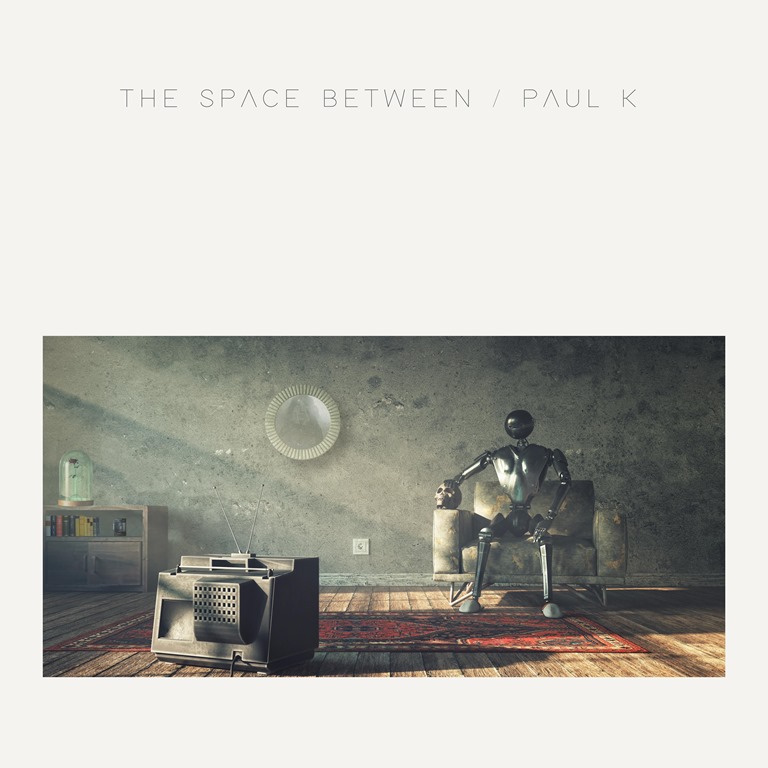
It’s been almost three years since Paul K delivered Reconstructed Memories. Listening to The Space Between, it becomes apparent why. Pandemic or nay, this is an ambitious and complex album which sees Paul return to the territory explored on 2018’s The Fermi Paradox and go the whole hog on devising and scoring a vast conceptual progressive work that’s heavily invested in narrative as it traces what he outlines as being a story ‘about an astronaut who has volunteered for a one way journey through space to pass through the Heliopause and is set maybe 30/50 years in the future.’

Space is both the backdrop and the story, in many ways, and the fascination it holds is something that transcends words or even rational explanation. Perhaps the fact that the sheer enormity and infiniteness of space is beyond our comprehension is a major factor in our space obsession. And however far and deep we probe, I suspect we will never truly be capable of assimilating the universe, especially as we, as a species, struggle to comprehend that we do not exist at its centre.

In classic sci-fi form and echoing 2001: A Space Odyssey, the concept behind the story is that the astronaut’s sole companion is an AI robot that becomes sentient during the journey, before the astronaut eventually dies and the robot continues the journey alone.

As Paul explains, ‘Each track plots the journey from liftoff looking back at the Earth (True Splendour) to the debilitating effect of years alone in space (Pareidolia) and is also related to the love and loss the astronaut has felt in his life’.

Understatement is the album’s defining feature. While it is unquestionably ambitious and incorporates cinematic arrangements, and notably choral-sounding vocals, the instrumentation is subtle and layered.

‘True Splendour’ makes for a gentle introduction and very much sets the tone. The Space Between keeps the drama and pomp to a minimum, and instead, the mood is contemplative, almost subdued, as strolling basslines wander sedately through soft washes of sound. Percussion is minimal, and low in the mix.

‘Sleep Within’ is perhaps the album’s most conventional ‘rock’ composition, but there’s a subdued, soporific overlay to its mid-pace melodic drift, although the reflective, wistful ‘Spektr’ has a certain solidity to it. In contrast, ‘Artifact’, the point at which the AI assumes autonomy, is almost vaporous, a soft piano reverberating among wispy sonic contrails.

The Space Between is an album that functions on numerous levels simultaneously, although they’re not all necessarily obvious. But it’s not imperative to follow the narrative to appreciate the detail; the album works in a way that not only creates space, but conveys space, the eternal distance, the vast emptiness… we are all lost and floating. But some are more lost than others. Welcome to The Space Between.

292588895_411372567443242_3679202510317740520_n

A ‘stripped back electronic companion to Omertà and Fermi’, Reconstructed Memories features just Paul Kirkpatrick and cellist Rachel Dawson. Kirkpatrick describes it as ‘quite different, more ambient but hopefully still engaging and melodic’, and frames it as ‘the story of life in an hour’.

Omertà and The Fermi Paradox were very different albums, with the latter (link) being an ambitiously expansive work, pushing outwards in all directions, not least in its exploration of time and space. Reconstructed Memories is much more inwardly-focused, and while it’s far from claustrophobic or suffocating, its minimal approach is, in itself, enough to redirect the energy and create a very different atmosphere.

As opening piece, the atmospheric, piano-led ‘A Beginning’ suggests, this is a linear, chronological work. The spoken-word intro, presumably delivered by Dawson, is instructive and creates the space for Reconstructed Memories to unfurl. ‘What should I write and tell? Big stories, big memories are always there… Let’s talk about some small, beautiful memories… Life is full of small memories…’ And it’s so very true. Life is not about the events, but the everyday details. It’s is easy to miss those details, too, caught up in simply existing, and waiting for the events, But you won’t move house, get married, have a child, or otherwise experience something momentous daily, or even often. Landmarks are rare and infrequent, and are relative in the context of the trajectory of a life. But life goes on, and is defined by those fleeting interactions. It’s not just the devil who exists in the detail, but life itself which occupies the cracks and recesses, the spaces in between.

And so it moves, in an evolutionary trajectory, gradually unfurling, expanding, revealing new vistas through a series of memories, reflections, and reconstructions. And it’s beautifully executed, each piece a perfectly-formed vignette delicately spun from soft, rolling piano and graceful strings. The moods are varied, at times light and lilting, others more melancholic and pensive, but ever-shifting and ever-evocative.

‘Regression One’ takes a step into darker territories, with a whispered spoken word narrative and connotations of the awkward, disturbing plunderance of the recesses of memory picked psychotherapy. How real and accurate are those memories? Memories are unreliable, coloured by perspective and faded by time. The effect, is, as the title of the next piece intimates, a blurring. Picked guitar echoes hesitantly, decaying into the mist among atmospheric, ambient strings. The arrangements make optimal use of the minimal instrumentation to create music that’s spacious and contemplative.

The artistic success of Reconstructed Memories lies in its vagueness. Such non-specificity places the process of input onto the listener, and it is they who find themselves reflecting on their experiences, their own hazy and tainted memories, prompted by abstract reminders to turn their gaze inwards. It’s the complete absence of context or meaning which renders the album simultaneously universal and personal.

Screenshot_2019-05-16 Reconstructed Memories Pre-Release Listening Masters

Christopher Nosnibor

Paul K first came to my attention with the release of Glitch Code’s debut album, Gifted_Damaged, a real standout release for 2016 in the sphere of dark electronic pop. Omertà saw Paul venture out as a solo artist last year, and revealed a very different musical aspect: instrumental, dramatic, and in places a bit proggy, it found him explore some expansive sonic territories with impressive results.

The Fermi Paradox sees Kirkpatrick expand on this – immensely. And expand is the word: this is expansive both conceptually and sonically, and he explained that ‘the album is about the theme of isolation, exploring our place in the universe and questions “are we alone?” to the perspective of social isolation through social media… It looks at the space race and the billions spent on wondering if we are alone in the universe vs. the juxtaposition of so many lonely people on our own planet.’

As such, The Fermi Paradox ranges from the macro to the micro, casting an eye to the farthest reaches to the most inner of anxieties. So while in terms of what it delivers, The Fermi Paradox isn’t a million miles from its predecessor, in terms of intent and focus, it’s a very different beast from Omertà.

Such isolation is something that’s immensely relatable: I’ve found myself in discussions with a surprising number of people, many with anxiety issues, conflicted over social media. It’s a different kind of paradox from the question of alien lifeforms the title refers to, but nevertheless, it’s a paradox. The dependence on the endless stream of posts and comments is countered by the despondency the belief that your own life is no match for others’, the sense that other people breeze through life, happy and carefree while your own life is fucked. Any sense of connection feels flimsy, secondary to a sense of disconnection and inadequacy. And what happens when, just for five r ten minutes, your phone goes silent: no texts, no notifications? The silence you’ve been craving is a howling void of emptiness.

It’s with ponderous piano and soothing strings that ‘Anomaly’ opens the album, and it’s mellow but twistedly poignant. It’s clear that Kirkpatrick knows how to tug at the emotions without words. The motif that runs through ‘Sagan’ makes me think of ‘Forever Autumn’ from ‘The War of the Worlds’ – surely one of the most heartbreaking songs ever committed to tape. Or maybe I’m just a sap. Nevertheless, regardless of whether this is about the music itself or my response to it based on, its drift into lilting piano and achingly sad strings is simply beautiful.

It’s on ‘Ecce Homo’ that Paul reaches into expansive territory, a cinematic, layered progressive-style piece with soaring chorals and supple rhythms, it drives, but also meanders. At times, as on the opening of ‘Exegesis’, Kirkpatrick slides into near-ambient territory, but for the most part, it’s about sedate, spacious soundscapes, defined by rolling, soft-edged bass. As the album progresses, the song titles suggest a shift from the more inward-looking to gazing out into the cosmos.

Are we alone? Always. Intensely. But with The Fermi Paradox, Paul K has produced a magnificently-crafted soundtrack to play into the void.

513298210