Christopher Nosnibor
Heaven may not be a venue one would immediately associate with heavy, heavy noise, but tonight it’s packed with a broad demographic that only a show as genre-smashing as the line-up would be likely to draw.
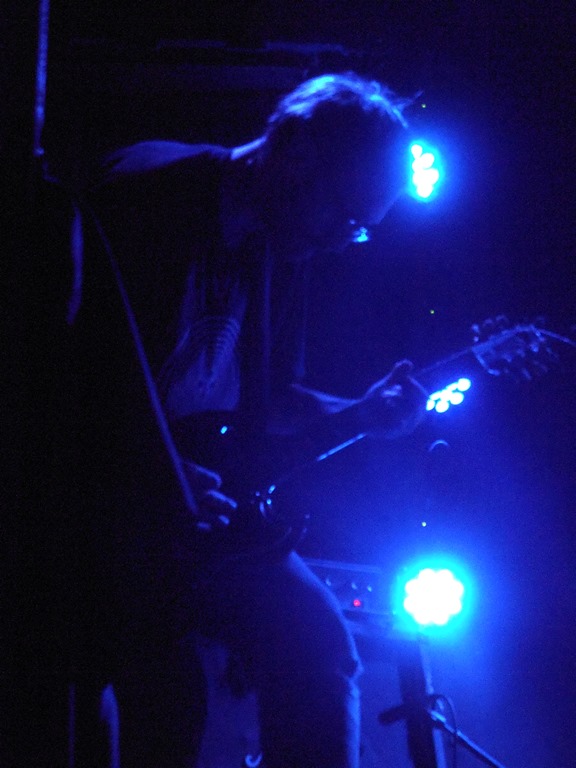
Bong are only just setting up their kit five minutes before they’re due on stage, but despite the absence of a proper soundcheck, they sound every bit as mighty as they ought. The Newcastle trio take their time, grinding out power chords with endless sustain without mercy during a half-hour set that contains just a single track. Epic is indeed the word. For all the leaning toward the doomy, droney low end, the guitar packs a crackling treble hit, which balances the sound against the shuddering, throbbing bass and the megalithic drumming, each thunderous beat registering individually on the Richter scale, crashing heavy through the 20bpm dirge with stutters and pauses to maximise the impact of each stroke. Their thirty-minute set consists of just one song. And this is precisely the way it should be: the band use the allotted time to fully demonstrate the expansive nature of their sound and compositions. This is heavy, grinding two-chord dredging pushed to the max and is designed to simultaneously batter and hypnotise the audience, and they deliver it beautifully.
Bong
If the reality of the studio realisation of Concrete Desert, the collaborative project which saw The Bug’s dubby dancehall stylings drawn out into infinite regressions of reverb as they collided with the dark drone of Earth’s earlier works felt somewhat restrained, and at times bordered on the ambient, in a live setting, the dynamics prove to be altogether different. Perhaps The Bug’s input felt somewhat muted on the release, as Carson’s murky, chiming ambient drones dominated he sound. Sure, the stealthy, bulbous bass and clacking beats, paired with quavering guitar notes which occupy the album’s grooves are atmospheric, but it often feels somewhat cautious, even subdued. Live, however, it’s an entirely different proposition and it feels far more like an equal partnership.
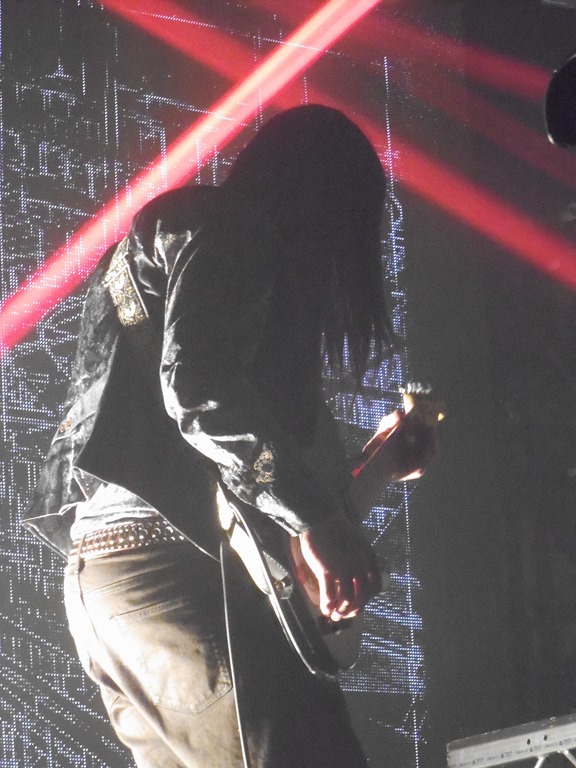
On the surface, the pair exist – and perform – in entirely separate, personal spaces, despite sharing a stage. The Bug – aka Kevin Martin – and Dylan Carlson, representing Earth, stand apart, separated by a wall of equipment: Martin is surrounded by banks of electronic gadgetry and stands focused on his Apple laptop for the majority of the set, while Carlson stands, side-on to the audience, one eye on Martin as he cranks out deep, seething drones and sculpted feedback squalls of noise.
The Bug vs Dylan Carlson
Volume matters, and can so often prove to be integral to the live music experience: and this is loud. Proper, seriously, loud. Martin begins by sending bibbling waves of electronica out in juxtaposition to Carlson’s screeds of guitar: before long, it’s a veritable sonic tsunami as thunderous bass and violent blasts of percussion crash against a wall of relentlessly dense multitonal noise bleeding in every direction from Carlson’s fretboard. The bass frequencies – and gut-churning volume – are something else. Confetti glued by static electricity or other means to the venue’s high ceiling after being blasted out during the venue’s famous club nights shower down on band and audience alike as the thunderous vibrations rattle every molecule of the building’s interior fabric as well as my nostrils, my trousers and every inch of my flesh.
Many of the compositions are unrecognisable in relation to their studio counterparts, so radically reworked and so much more up front are the dynamics. This is no stealthy, sedate recreation of the album but something way more attacking and pure in its physicality. This is one of those sets which builds in intensity – and seemingly in volume – as it progresses, and toward the end, the pair drop a colossal slow-burner with slow, deliberate drops of bowel-shuddering bass frequencies: a single note resonates through the floor and the solar plexus for what feels like minutes, and the effect is utterly immersive and all-encompassing. The security guy in front of me, blocking the stairs (Heaven has a very strange arrangement of stairs up to the stag and only limited security at front of house, which is welcome), is clutching his ears despite waring plugs, and while it’s an uplifting euphoric experience which plasters a huge grin on my on face, it’s not hard to fathom why this much bass, and this much guitar, at this kind of volume, would cause discomfort. Because actually, it hurts. And that’s the best thing about it, because this is how it’s meant to be.

 Aural Aggravation