Archive for February, 2016

Speed the Plough – Now

Posted: 4 February 2016 in Albums

29th January 2016

Christopher Nosnibor

New Jersey’s Speed the Plough have been going some 32 years now, and Now marks their eighth album release. You could hardly accuse them of saturating the market with product, but by the same token, they’ve maintained a steady output, and it’s testament to their tenacity and commitment that they’re still going. Still, by pacing themselves with some lengthy breaks – not to mention various lineup changes: their current drummer, John Demeski, is the son of Stanley Demeski who occupied the stool a full two decades previous – they’ve kept things fresh, and Now sounds like an album that’s been honed and crafted and presented to the world out of a genuine desire to write and play rather than mere habit.

That the band-members have shared songwriting duties means there’s a real diverse feel to the album, although it holds together remarkably well. The result is an album that’s balanced, in terms of its temperament and tone, and it’s rich in its emotional depth.

The vocal harmonies are a defining feature as the band explore an array of mindstates. The fiery folk-infused rock of ‘Garden’ picks up the tempo and a switch of lead vocal duties after the languid but aching desperation of ‘Midnight of the World’ proves an effective move.

Rolling percussion and crashing cymbals provides a tension-building backdrop to the lilting duality and roiling tension of the theatrical-sounding ‘Because’, while there are hints of Jefferson Airplane about the rockier ‘More & More’.

It’s a solid album, but in many ways, to describe it as such seems to be selling it short. It’s an overtly folk album, and there’s a lot of bad and obvious folk out there. The lilting melodies and strong dynamics across the album and within the individual songs, coupled with the varied compositions place Now in the ‘good folk’ category.

Speed the Plough - Now

Speed the Plough Online

Driftmachine – Eis Heauton

Posted: 3 February 2016 in Albums

Hallow Ground – HG1601 – 26th February 2016

James Wells

Understanding and appreciating this album benefits from knowledge of the context and methodology of its origins. The title translates – more or less – from the Greek, meaning ‘a conversation with oneself.’

To quote, ‘the album was constructed from self-generating patches, with Florian Zimmer (Saroos) and Andreas Gerth (Tied & Tickled Trio) providing technical parameters and letting their modular system talk in its own musical language. The self-generating patches recorded here can be understood as a transcript of those machine-produced monologues, and as artistic research. By evoking a ghostly presence of modular synthesis, the duo find traces of individuality inside their machines.’

Now, I’m not entirely sure what a self-generating patch is, but it seems to carry a certain connotation of ‘the machines taking over’. Music that evolves by itself. Something created by means of randomised algorithms – somehow simultaneously programmatic and random. Certainly, this is the feel of Eis Heauton. The form of the tracks do not conform to any overt or explicit structure, order or sequence, but instead assail the listener unexpectedly, almost a kind of sonic ambush.

Dark, murky blasts of thick bass thunder in deep caverns while low, stealthy beats pulse. Shrieking metallic and mechanical scrapes and clanks combine to forge shadowy atmospheres. Sonar bleeps probe underwater and dense sonorous drones resonate. ‘Sunlit Reverie’ creeps around ominously, evoking quite the opposite scene in the mind’s eye from the one the title implies.

Driftmachine


Driftmachine on Soundcloud

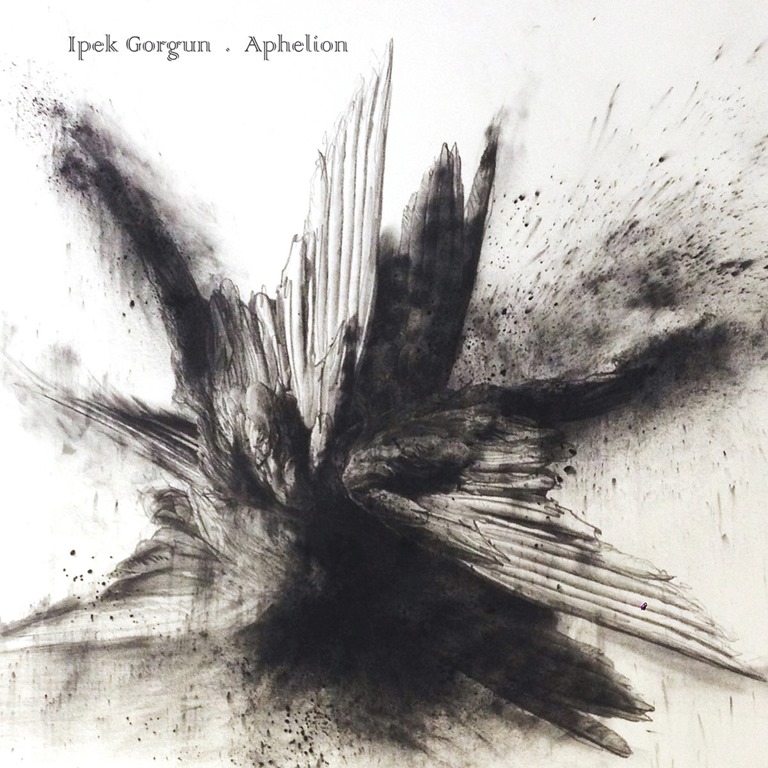
Ipek Gorgun – Aphelion

Posted: 2 February 2016 in Albums

Self-Released – 16th February 2016

Christopher Nosnibor

With a first degree in Political Science from Bilkent University, a Masters in Philosophy from Galatasaray University and a PhD in Sonic Arts under way at Istanbul Technical University-Center for Advanced Studies in Music, it’s clear that Ipek Gorgun’s interests are diverse and that she possesses a rare intellect.

She’s a published poet, and a photographer, who’s had her pictures featured far and wide, including in National Geographic. Her musical achievements are pretty impressive, too: as a bass player and vocalist for projects such as Bedroomdrunk (avant-garde rock) and Vector Hugo (electro-acoustic), she’s also opened for Jennifer Finch from L7 and Simon Scott from Slowdive, as well as performing live with David Brown from Brazzaville.

While her age is undisclosed, she looks barely old enough to have completed a degree. Most people achieve barely a fraction during a lifetime. It’s both sickening and awe-inspiring, but ultimately, her obvious drive is beyond admirable.

‘Aphelion’ is her debut album, although the fact she is currently working on an electroacoustic solo project and conducting research on how sonic arts can be incorporated with emotional and cognitive alteration, I doubt it will be her last, or that it will be long before subsequent albums follow.

Splintered bleeps phase in and out across funnelling drones make for a delicate introduction, but they’ve very soon obliterated, bulldozed buy a barelling blast of deep, droning, high-volume electronic noise and scraping feedback, fuzzed out at the edges with distortion. On Aphelion, Gorgun exploits the full dynamic range, moving between soft and sometimes ominous quieter passages to louder, harsher tones; sometimes gliding, long notes hover, while at others, sharp, sudden sounds arrive unexpectedly to jolt the listener. In terms of frequencies, too, Gorgun explores the sonic spectrum to powerful and sometimes uncomfortable effect.

The parts are often difficult to pinpoint with specificity, but the sum is challenging, stimulating, and intriguing.


Ipek Gorgun - Aphelion


Ipek Horgun Online

The Fulford Arms, York, 30th January 2016

Christopher Nosnibor

There are many who dismiss local bands out of hand as being inferior. Usually, they’re the people who don’t bother to investigate what’s actually happening on their doorstep, and similarly, fail to appreciate that every band is local to somewhere. York is no exception: there are many who bemoan the lack of a scene in the city, or otherwise complain that there’s a lack of variety. Tonight’s show is as good an advertisement for the York scene as any you’ll see, the three bands on the lineup being complimentary to one another without being remotely similar – and not a sniff of indie, folk or acoustic singer-songwriter material to be found.

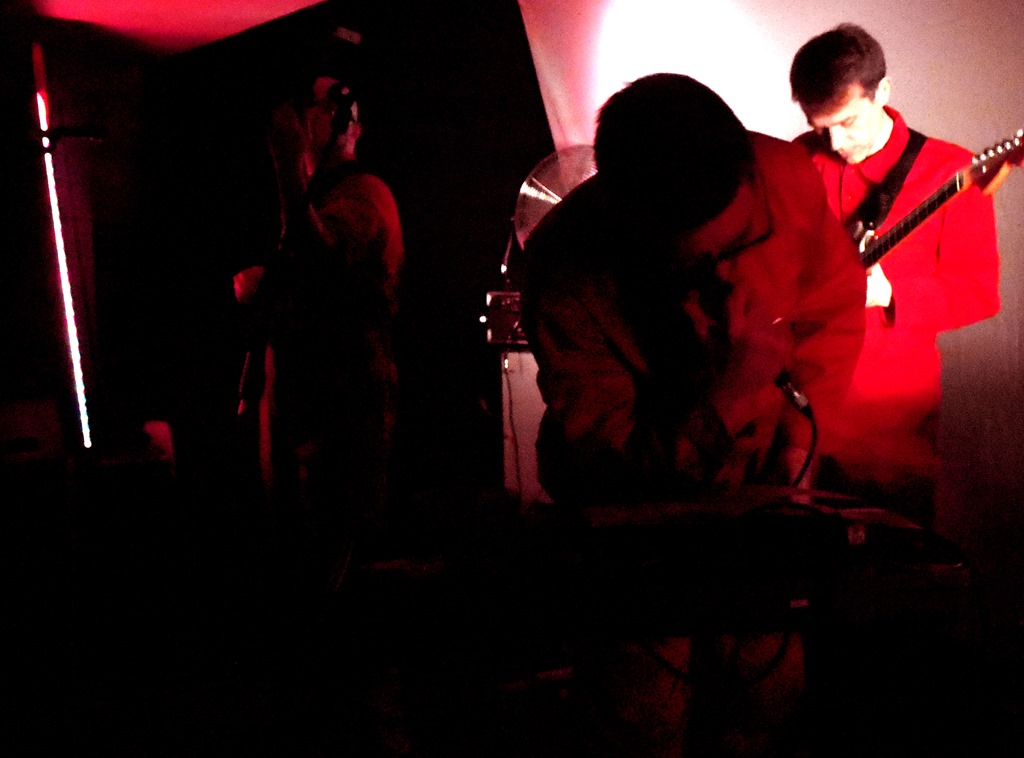
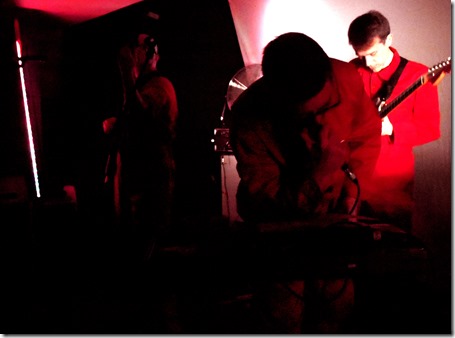
The place is already getting full by the time the Wharf Street Galaxy Band take the stage. Sporting matching red boiler suits with custom prints on the back, they open with the fractal dub of ‘Inhuman Resources’. As the set progresses, they churn out a succession of dense, bass-driven efforts that combine the scratchy krautrock repetitions of The Fall around the time of Dragnet and Grotesque with the jagged edges of early PiL. While Dave Procter occasionally adopts a Lydonesque sneer which is perfectly complimented by Ash Sagar’s Jah Wobble-worthy bass grooves, he mostly delivers his political (and occasionally surreal) lyrical outpourings in a techy, hectoring tone. John Tuffen hangs to the rear of the stage and remains static, and looks like he’s auditioning for a Kraftwerk tribute act. The band’s northern attitude is integral to their work: Procter admonishes Iain Duncan Smith with the reminder that this is how we do things in the north, and spins out the narrative of ‘Sergio Leone Comes to Keighley’ in an unashamedly Leeds accent, raising a metaphorical middle finger to both the Capitol-dwelling capitalists who run the country, and the London-centric music scenes which continue to dominate the press.
 

Wharf Street

The Wharf Street Galaxy Band

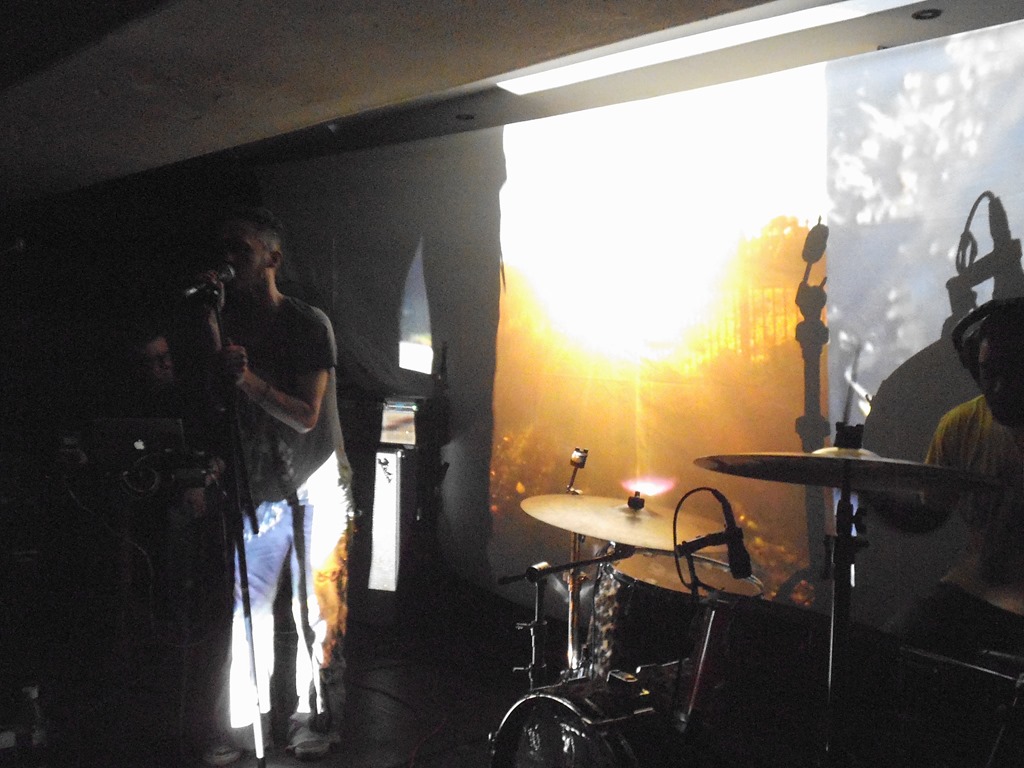
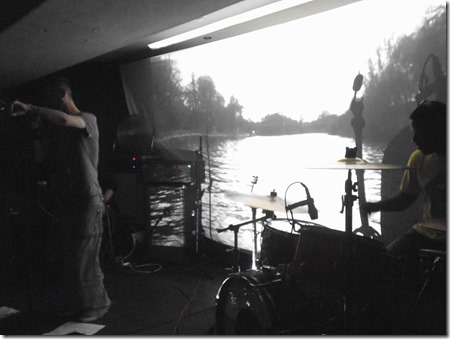
Expectations are high for Stereopscope’s debut. Emerging from the ashes of Viewer, the electropop duo consisting of Tim Wright and AB Johnson are reincarnated as a three-piece featuring Martell James, former drummer Honeytone Cody. The place is pretty heaving by the time the stage is plunged into darkness and black-and-white scenes from around the city flicker on the stage backdrop through a low electronic throb. Immediately, it’s clear this is no Viewer rebranding: the bright, club-friendly indie trappings are gone, along with the immediacy of the songs. Stereoscope are all about the slow-build: the throb goes on, and on, seemingly interminably. The tension mounts. Finally, AB Johnson takes to the stage, and things build around his dry monotone vocals. And build. And build.
DSCF2614

Stereoscope

The songs are long, dark and designed to challenge the audience. There are no chirpy choruses or bouncy basslines. Instead, layer upon layer of sound evolve as rhythms and counter-rhythms intersect; the programmed drums are stark and mechanoid, while Martell’s live drumming adds depth and dynamic, not to mention weight. While Johnson still banters between songs and berates Wright for ‘pressing the space bar’ too hastily, he’s no longer the cynical, jaded but ultimately groove-orientated front man he was with Viewer, but a tortured cipher of anguish. He wears it well. The backdrop bursting into colour for the set’s final pop flourish, it’s a hugely triumphant debut.

DSCF2631

Stereoscope

This is where having a diverse lineup is astute. If Soma Crew sounded anything like either of the preceding acts, they may have been in danger of being eclipsed. But the only real common element the three acts share is hypnotic repetition. Soma Crew are master of repetition. Any band that are content to bludgeon away at a single chord, or maybe two, for six minutes or more is always going to get my vote, and these guys are the absolute kings of the locked groove.

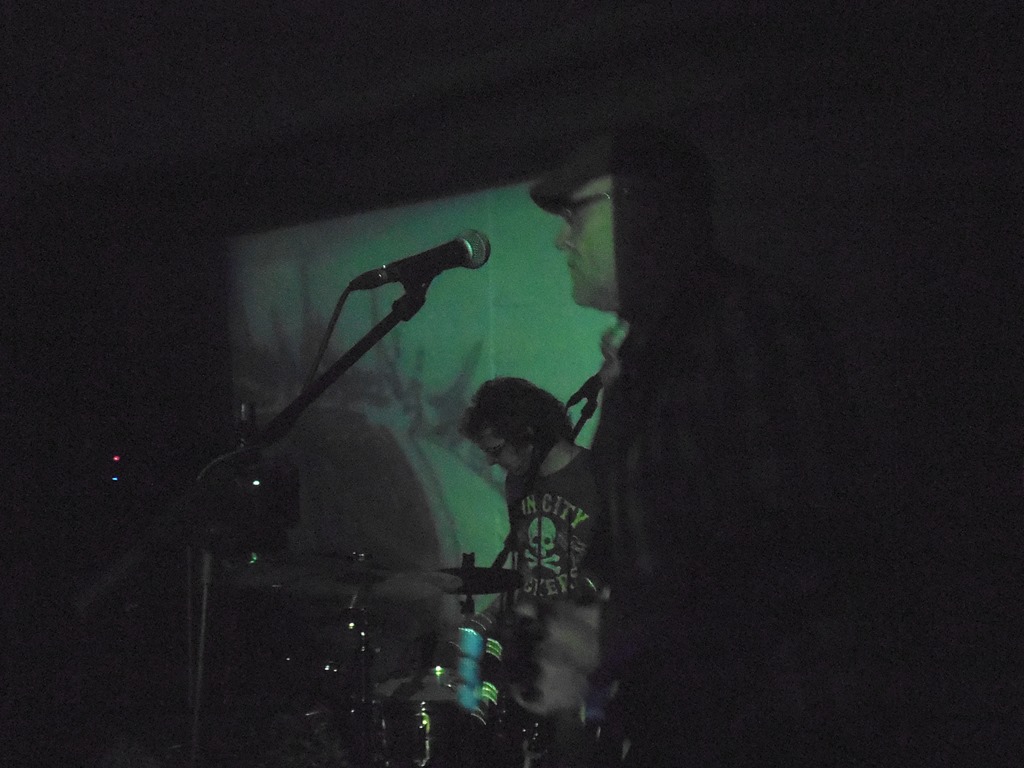
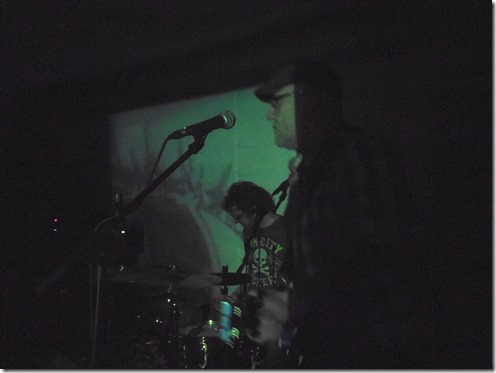
It’s six deep at the bar and I abandon the idea of another pint, and instead hunker down stage front where I can best immerse myself in their whirling smog of sound. They don’t disappoint. They play loud and crank out those endless grooves in near darkness, while kaleidoscopic patterns project behind their silhouettes. Merging the tripped-out energy of Spacemen 3 and the cavernous, reverb-heavy psychedelic grooves of Black Angels with a dash of the most motoric Krautrock (drummer Nick Clambake doesn’t go for the heroics, hammering out a steady beat without resorting to fills or cymbal crashes for almost he full duration of the 50-minute set), it’s utterly immersive.
DSCF2639

Soma Crew

The set builds to a monumental climax of sound, and rejecting calls for an encore, they exit the stage, drained and shredded, leaving the crowd wanting more. Credit to them: encores are just so predictable, and they’ve already done enough to leave us all half-deaf for the next three days. Take it from me, gigs don’t get much better than this, local or national, any time, any place.

Infernal Machines – Rife

Posted: 1 February 2016 in Albums

Clang Records – Clang034 – 12th February 2015

James Wells

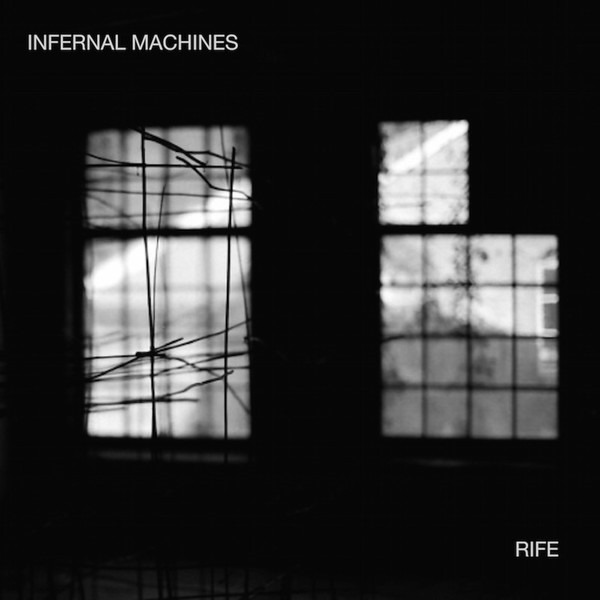
Infernal Machines is Lars Graugaard and Hans Tammen. Both respected composers in their own right, they’re also, independently sonic innovators. While Tammen is perhaps best known for his choking Disklavier, Rife features a guitar./computer hybrid in the form of the ‘endangered guitar’, while Graugaard brings interactive computer work to the table for forge rare patterns and grooves, with some interesting and, in parts, bamboozling and dizzying results.

Yes, this download album may only contain three tracks but it has an overall running time of 28 minutes and is so texturally rich than any more would be to be left beyond gorged.

‘Is That A Light?’ pings and pops, drones and groans over rapid percussion resembling bongos. Building an intense insectoid scratching clamour, it drills its way into the cranium. The album’s centrepiece, the eleven-and-a-half-minute ‘Ashen Lines’ hits as a laser attack. Pulses form hectic and cacophonous polyrhythms that shift and mutate. Scraping and rattling against one another, churning and circling.

‘Steady Jolt’ marks a radical departure, as a strolling bassline – remarkably conventional, by all accounts – wanders hesitantly toward a flickering curtain of electronic light that cascades and iridesces. Pulsing dance beats emerge as the sonic spectrum slides into another realm.

It’s not a work you can readily pin down, its shape in eternal flux. Constantly shifting, no two bars are entirely alike, as layers build and sounds evolve and transform. By the end, you find yourself wondering just how you arrived at the end destination – not that it matters, because it’s very much about the journey.

Infernal Machines - Rife


http://clang.cl/rife/